Professional Slab Foundation Repair Near Me — St. Louis Experts
Slab foundation repair near me is critical when your St. Louis home shows cracks, uneven floors, or settling — and you need a local contractor who understands Missouri clay soil and delivers fast, permanent fixes. Our team specializes in slab jacking, mudjacking, polyurethane foam injection, and slab leak detection across St. Louis County, St. Charles, Jefferson County, and the surrounding metro area. With 25+ years of experience repairing concrete slab foundations in St. Louis, we combine proven methods with cutting-edge technology to stabilize your home, protect your investment, and restore your peace of mind.
Concrete Slab Repair Cost — What to Expect in St. Louis
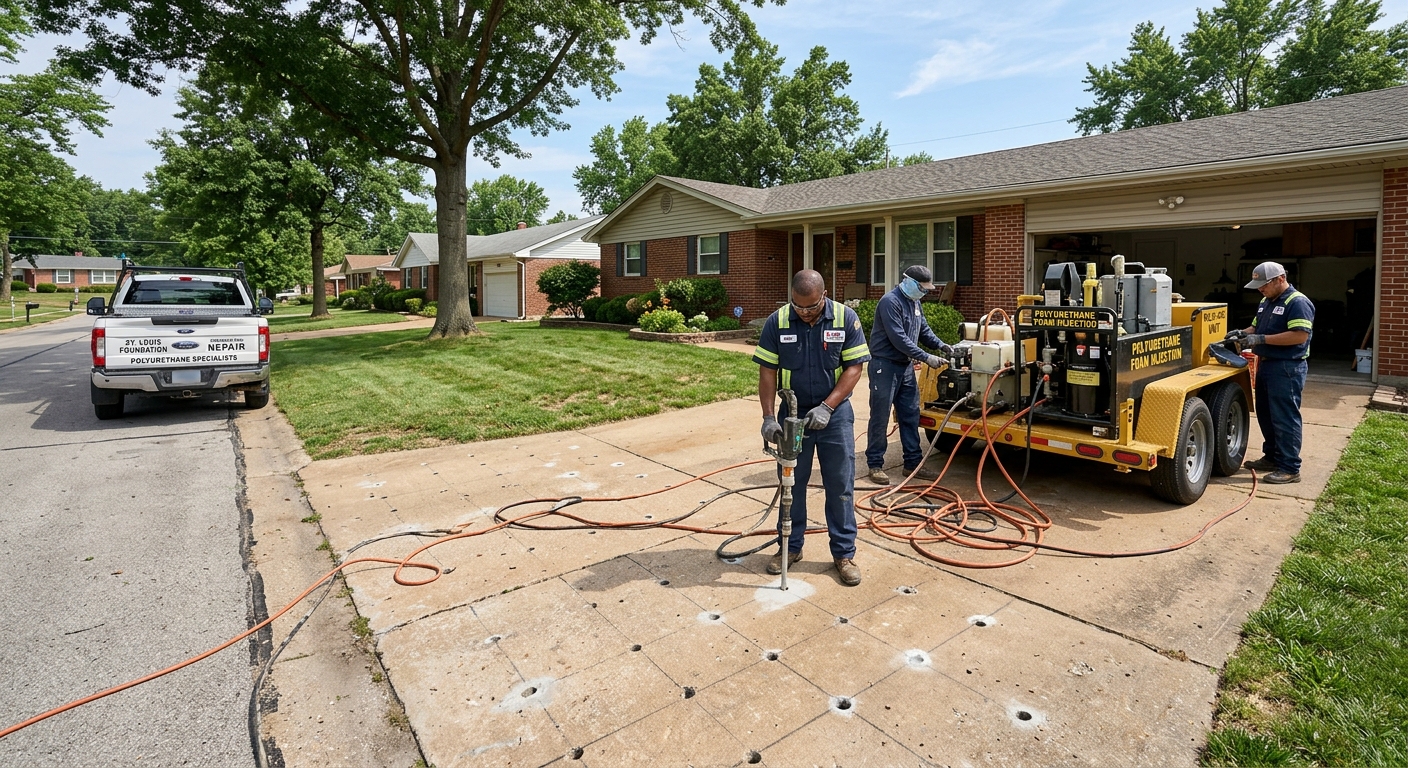
Concrete slab repair cost varies based on method, square footage, and severity of settling, but transparency matters when you're planning a foundation repair budget. In the St. Louis market, mudjacking typically runs $3 to $6 per square foot, while polyurethane slab jacking ranges from $5 to $12 per square foot. Full slab replacement — needed in cases of severe structural damage — starts around $6,000 for smaller homes and climbs significantly for larger properties. Most homeowners find their slab foundation repair near me projects fall between $1,500 and $7,000, with the majority of issues resolved through leveling rather than replacement.
Mudjacking vs. Polyurethane: Price Breakdown
Choosing between mudjacking concrete slab and polyurethane slab jacking comes down to budget, soil conditions, and speed. Mudjacking uses a cement-based slurry pumped under the slab to lift and level it — it's cost-effective and proven over decades of use. Polyurethane foam injection costs more upfront but cures in 15 minutes, weighs far less than slurry, and performs better in wet or unstable soil. For homes with moisture issues or lightweight fill requirements, polyurethane often delivers better long-term value despite the higher initial investment.
- Mudjacking: $3–$6/sq ft, 24–48 hour cure, ideal for heavy-load areas and cost-conscious repairs
- Polyurethane: $5–$12/sq ft, 15-minute cure, best for wet soil, basements, and quick turnaround needs
- Full replacement: $6,000+ for small slabs, reserved for cases where lifting is no longer viable
- Emergency slab leak detection and repair: pricing depends on access method and plumbing reroute needs
Factors That Drive Slab Repair Costs
Several variables influence the final price of your concrete slab repair in St. Louis. Depth of settling determines how much material we inject — slabs that have sunk 2+ inches require more foam or slurry than those with minor settlement. Accessibility matters: interior slab jacking under finished floors costs more than outdoor patio leveling due to access point drilling and restoration. Soil type also plays a role — St. Louis clay soil that's highly expansive may require additional drainage solutions or soil stabilization to prevent re-settling. Finally, emergency service requests outside normal business hours carry premium pricing, but we prioritize getting your foundation stable before further damage occurs.
Free In-Home Foundation Assessment
We provide a no-obligation, free in-home foundation assessment for every St. Louis homeowner who contacts us. During this visit, our licensed technician inspects your slab for cracks, measures elevation changes with precision leveling equipment, evaluates drainage patterns, and checks for signs of slab leaks or soil erosion. You receive a detailed written report explaining the issue, recommended repair method, and an upfront price quote with no hidden fees. Call (314) 555-0190 to schedule your free inspection — most appointments available within 48 hours.
Polyurethane Slab Jacking — Fast & Durable Repair
Polyurethane slab jacking uses high-density expanding foam injected through dime-sized holes to lift and stabilize settled concrete slabs with precision and speed. This modern method has revolutionized foundation repair for St. Louis homeowners dealing with wet soil conditions, tight timelines, or concerns about adding weight to already-compromised ground. Unlike traditional mudjacking, polyurethane weighs just 2-4 pounds per cubic foot (compared to 100+ pounds for cement slurry), making it ideal for areas where soil compaction is poor or moisture is present. The material is waterproof, environmentally inert, and expands to fill voids completely, ensuring long-term stability.
How Polyurethane Foam Injection Works
Our technicians drill small ⅝-inch holes through the settled concrete slab at strategic injection points determined by elevation mapping. We then insert injection ports and pump two-part polyurethane resin beneath the slab. The chemical reaction between components generates rapid expansion — the foam grows to 20 times its liquid volume, filling voids, compacting loose soil, and exerting controlled upward pressure to lift the slab. Real-time monitoring ensures we achieve exact elevation targets, typically within 1/8 inch. Once lifting is complete, we remove the ports, patch the holes with color-matched concrete, and your slab is ready for use in 15 minutes.
- Precision lifting controlled to 1/8-inch accuracy using laser levels and real-time adjustments
- Minimal disruption: small drill holes, no heavy equipment tearing up landscaping or driveways
- Waterproof and chemical-resistant — won't break down in St. Louis clay soil or during wet seasons
- Permanent solution: polyurethane maintains strength and volume for decades without settling
15-Minute Cure Time: Why It Matters
The 15-minute cure time of polyurethane slab jacking is a game-changer for St. Louis homeowners who need their foundation repair completed fast. Traditional mudjacking concrete slab requires 24 to 48 hours of curing before you can walk on the surface or place furniture — during that window, moisture infiltration or premature loading can compromise the repair. Polyurethane cures almost instantly, allowing you to resume normal use the same day. For businesses, this means zero downtime. For homes, it means no temporary relocation of appliances, no overnight disruption, and immediate protection against further settling or water intrusion under the slab.
Best For Wet Soil & Lightweight Fill
St. Louis experiences high seasonal moisture variation — clay soil absorbs water in spring and contracts during dry summer months. Polyurethane slab jacking excels in these conditions because the foam is hydrophobic (water-repelling) and doesn't add significant weight to already-saturated or weak soil. Mudjacking slurry, by contrast, can add 100+ pounds per cubic foot, increasing load on unstable ground and potentially causing secondary settlement. If your slab leak detection and repair revealed plumbing issues, polyurethane is often the better choice post-repair because it won't wash out if residual moisture remains. Our team evaluates soil conditions during your free assessment to recommend the best method for your specific foundation slab settling scenario.
Mudjacking Concrete Slab — Proven Method for Heavy Loads
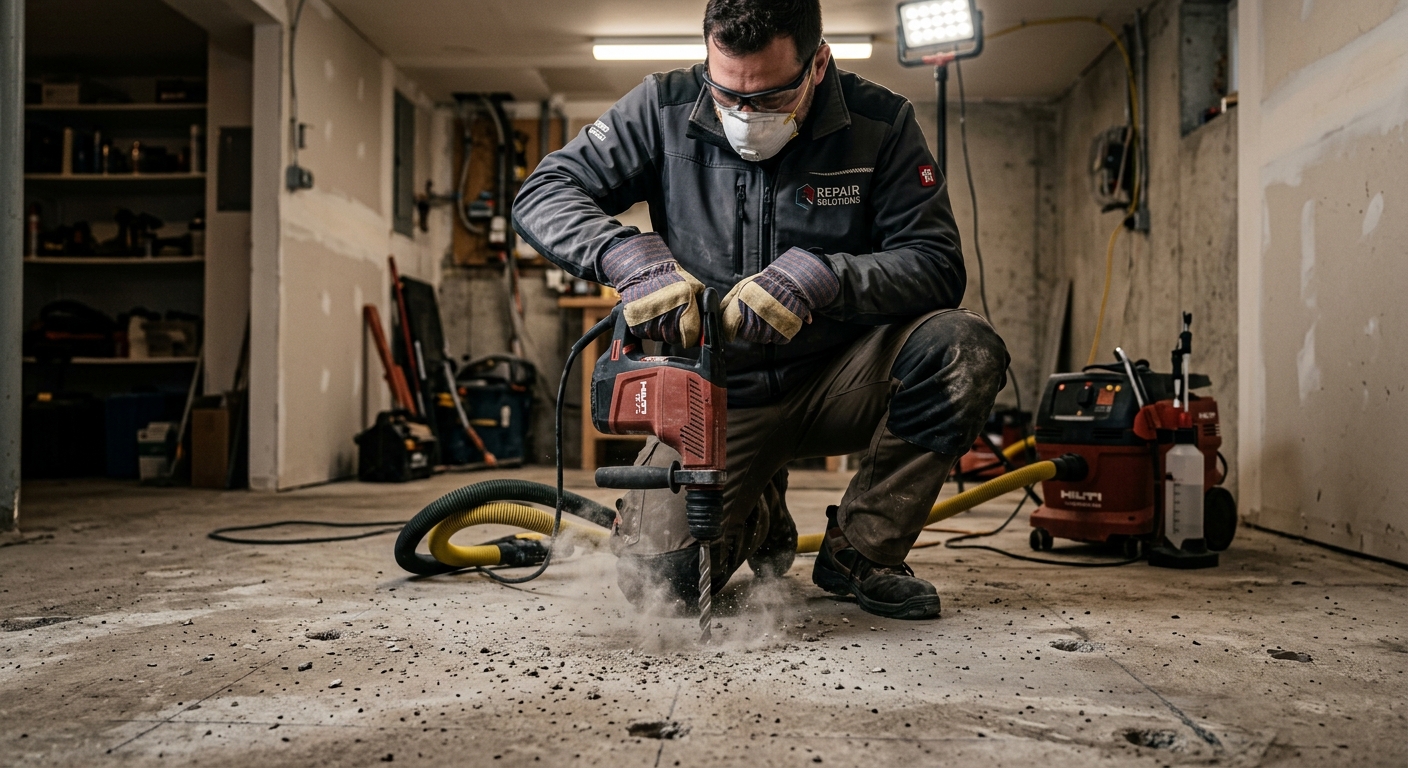
Mudjacking concrete slab has been the gold standard for slab foundation repair for over 80 years, and it remains the most cost-effective solution for heavy-load applications and structurally sound slabs that simply need leveling. This method uses a cement-based slurry pumped beneath the slab through 2-inch holes, filling voids and exerting hydraulic pressure to lift the concrete back to its original grade. In St. Louis, mudjacking is especially popular for driveways, garage floors, sidewalks, and basement slabs where weight capacity and budget constraints make it the logical choice. When executed by experienced technicians, mudjacking delivers decades of performance at a fraction of the cost of replacement.
The Traditional Slurry Lifting Process
Our mudjacking process begins with a thorough inspection to map settlement patterns and identify underlying causes like soil erosion or poor compaction. We drill 2-inch holes at calculated intervals across the settled slab, then mix a slurry of Portland cement, sand, and proprietary additives to achieve optimal viscosity and strength. Using high-pressure pumps, we inject the mixture beneath the slab — it flows into voids, displaces air pockets, and exerts controlled upward force. Our technicians monitor lift in real time, adjusting pressure and slurry volume to achieve level alignment. Once the slab is raised, we plug the holes with fresh concrete, blend the patches to match the existing surface, and allow 24-48 hours for full cure before heavy use resumes.
Cost-Effective Concrete Slab Repair
For homeowners prioritizing budget without sacrificing quality, mudjacking offers unbeatable value. At $3 to $6 per square foot in the St. Louis market, it costs roughly half what polyurethane slab jacking does — and for many applications, it performs just as well. Large-area repairs like sunken patios, driveways, or warehouse floors benefit most from mudjacking's economies of scale. The materials are durable, locally sourced, and proven across millions of installations nationwide. If your foundation slab settling is caused by soil compaction rather than ongoing moisture issues, and you can tolerate a 1-2 day cure window, mudjacking delivers a permanent fix at the lowest possible cost.
- Up to 50% less expensive than polyurethane for comparable square footage
- High compressive strength — ideal for driveways, garage slabs, and heavy equipment areas
- Time-tested reliability: mudjacking has lifted millions of slabs across North America since the 1930s
- Environmentally safe materials with no off-gassing or chemical concerns
When Mudjacking Outlasts Polyurethane
While polyurethane dominates headlines for speed and lightweight performance, mudjacking concrete slab actually outlasts foam in certain conditions. The cement slurry's higher density and weight provide superior performance under heavy static loads like machinery, vehicles, or multi-story structures. In well-drained soil with minimal moisture fluctuation, mudjacking can last 20+ years without re-leveling. Polyurethane, though waterproof and lightweight, can be susceptible to compression under extreme loads over time. Our St. Louis team evaluates load requirements, soil stability, and long-term use patterns during your free assessment to recommend the method that will give you the longest service life.
Slab Leak Detection and Repair — Stop Water Damage Now
Slab leak detection and repair is one of the most urgent foundation services we provide, because undetected plumbing leaks beneath your slab erode soil, accelerate settling, and waste thousands of gallons of water. A slab leak occurs when pressurized water or sewer lines embedded in or beneath your concrete foundation develop cracks, corrosion, or joint failures. In St. Louis, shifting clay soil and freeze-thaw cycles stress these pipes, increasing the risk of failure. Left unchecked, a slab leak can undermine your entire foundation, create mold hazards, spike your water bills, and cause catastrophic structural damage. Early detection and professional repair are non-negotiable.
Signs Your Home Has a Slab Leak
Recognizing slab leak symptoms early can save you tens of thousands in repair costs. Watch for unexplained increases in your water bill — even a small leak wastes 40+ gallons per day. Listen for the sound of running water when all fixtures are off, or notice warm spots on your floor where hot water lines are leaking. Visible cracks in your concrete slab, especially if they appear suddenly or widen over weeks, often indicate soil erosion from a leak below. You may also see mold growth along baseboards, dampness in carpets with no apparent source, or a drop in water pressure. If you notice any of these signs, call (314) 555-0190 immediately for professional slab leak detection — waiting even a few days can turn a $1,500 repair into a $15,000 foundation crisis.
- Unexplained water bill increases of 20% or more month-over-month
- Sound of running water when all taps and appliances are turned off
- Warm or hot spots on floors, especially over hot water lines
- Sudden appearance of cracks or heaving in concrete slab
- Mold, mildew, or damp carpet with no visible leak source
Acoustic & Infrared Detection Methods
We use state-of-the-art acoustic listening devices and infrared thermal imaging to pinpoint slab leaks with precision, eliminating guesswork and minimizing invasive exploration. Acoustic detection picks up the sound frequency of water escaping pressurized pipes — our technician uses sensitive ground microphones and amplification equipment to trace the leak to within inches. Infrared cameras detect temperature differentials caused by hot or cold water pooling beneath the slab, creating a thermal map that reveals the exact location. These non-destructive methods allow us to access the leak with a single, targeted cut rather than tearing up your entire floor, saving you time, money, and restoration hassle.
Repair Options: Access or Reroute
Once we've located the leak, we offer two primary repair strategies. Access repair involves cutting through the slab at the leak point, excavating soil, repairing or replacing the damaged pipe section, then backfilling and patching the concrete — this is preferred when the leak is isolated and the rest of the plumbing is sound. Rerouting abandons the leaking pipe and runs new supply or drain lines through walls, ceilings, or trenches around the slab — this is often more cost-effective when multiple leaks are present or pipes are nearing end-of-life. After repair, we perform pressure testing to confirm the fix, then coordinate any necessary concrete slab repair, mudjacking, or polyurethane slab jacking if the leak caused foundation settling. Our goal is a complete, permanent solution that addresses both the plumbing failure and any resulting structural damage.
Foundation Slab Settling — St. Louis Clay Soil Challenges
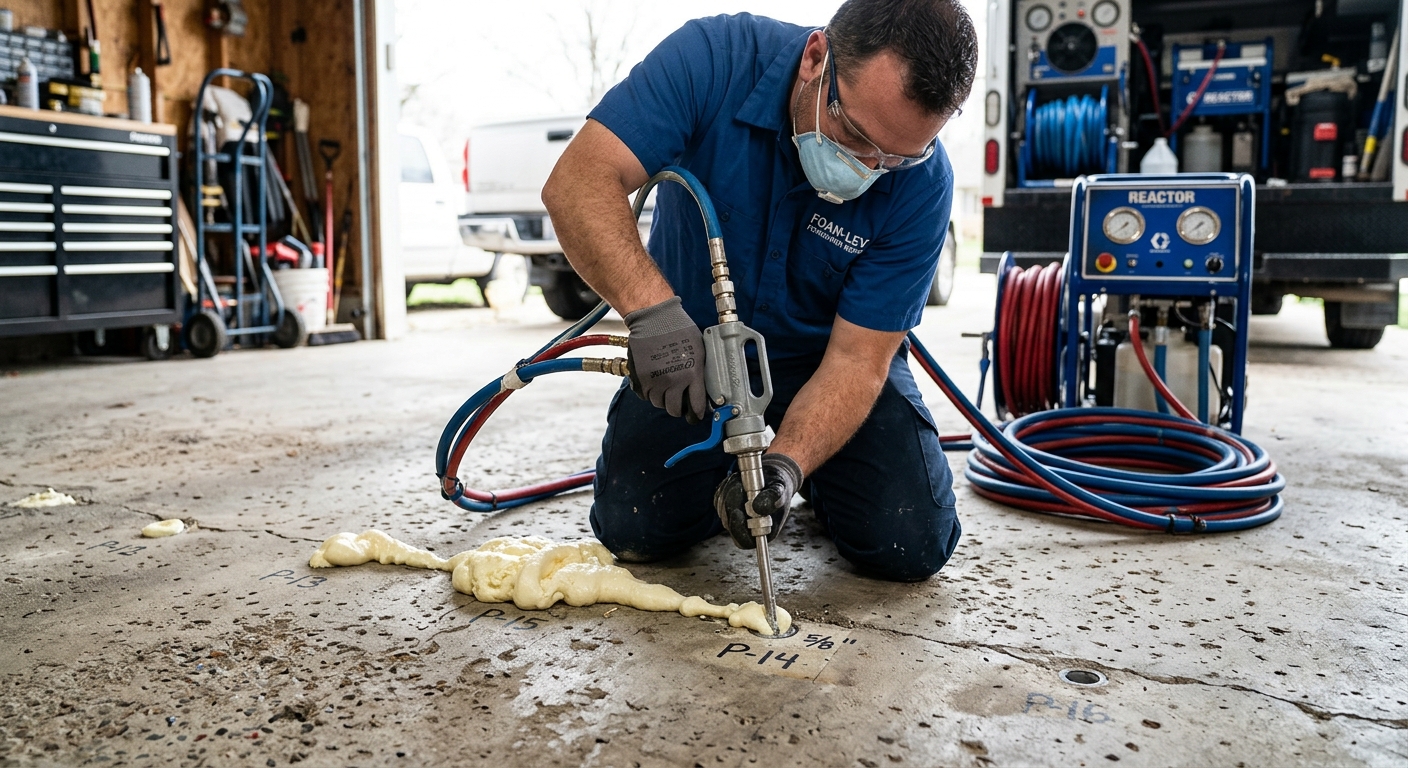
Foundation slab settling in St. Louis is driven primarily by the region's expansive clay soil, which undergoes dramatic volume changes in response to moisture fluctuations. During wet seasons, clay absorbs water and swells, exerting upward pressure on your slab. In dry periods, the same soil contracts and shrinks, creating voids beneath the concrete. This expansion-contraction cycle — repeated year after year — causes uneven settling, cracks, and structural stress. Poor initial compaction during construction, inadequate drainage, and plumbing leaks further accelerate the process. Understanding these local soil conditions is essential for effective, long-lasting slab foundation repair near me.
Why St. Louis Clay Expands & Contracts
St. Louis sits atop highly plastic clay soil that can shrink by up to 10% of its volume during drought and expand significantly when saturated. This soil type — classified as "expansive" by the Missouri Geological Survey — contains minerals like montmorillonite that bond with water molecules, causing the soil structure to swell. When rain is abundant or snow melts, the clay pushes upward against your foundation. When summer heat dries the ground, the soil contracts and pulls away, leaving air gaps and unsupported zones beneath your slab. Trees and large shrubs near your foundation compound the problem by drawing moisture from the soil, creating localized dry zones that accelerate settling. Effective slab jacking and repair near St. Louis requires addressing these soil dynamics, not just lifting the concrete.
Cracks & Uneven Floors: What They Mean
Visible cracks in your concrete slab and uneven floors are symptoms, not causes — they tell you the foundation is responding to movement below. Hairline cracks (less than 1/8 inch wide) are often cosmetic and result from normal concrete curing or minor settling. Wider cracks, especially those that grow over time, indicate active foundation slab settling and require professional evaluation. Diagonal cracks radiating from corners, door frames, or windows suggest differential settlement — one part of the slab is sinking faster than another. Floors that slope, doors that stick, or gaps appearing between walls and baseboards are red flags that your slab has settled enough to affect the structure above. These signs mean it's time to call a licensed foundation
Frequently Asked Questions
Do you offer free foundation inspections?
Yes, we provide free foundation inspections throughout St. Louis and surrounding areas. Our certified specialists visit your property to assess cracks, settling, moisture damage, and structural issues affecting your slab foundation. The inspection includes a detailed report with repair recommendations and a no-obligation quote. We use laser levels and advanced diagnostic tools to measure settlement patterns and identify the root cause of foundation problems. Most inspections take 45-60 minutes and can be scheduled within 24-48 hours of your call.
Are your repairs covered by a warranty?
All slab foundation repairs in St. Louis come with a transferable lifetime warranty on materials and workmanship. Our warranty covers polyurethane foam injection, slab jacking, pier systems, and structural reinforcement against future settling or movement. If any warrantied repair fails due to installation issues, we return at no cost to make it right. The warranty transfers to new homeowners if you sell your property, adding value to your home. We stand behind every repair because we use proven methods that address the underlying soil and drainage problems causing foundation damage.
What types of foundation problems do you fix?
We repair all slab foundation issues common to St. Louis homes, including cracked concrete slabs, settling and sinking foundations, uneven floors, gaps between walls and floors, and door or window misalignment. Our services include polyurethane slab jacking to lift sunken concrete, slab leak detection and repair for hidden plumbing breaks, foundation crack sealing, and soil stabilization. We also fix problems caused by expansive Missouri clay soils, poor drainage, tree root intrusion, and plumbing leaks that erode soil beneath the slab.
How much does slab foundation repair cost in St. Louis?
Slab foundation repair costs in St. Louis typically range from $800 for minor crack sealing to $8,000 or more for extensive polyurethane slab jacking or piering systems. Simple mudjacking projects average $1,200-$2,500, while slab leak detection and repair runs $500-$3,000 depending on accessibility. Factors affecting cost include the extent of settling, number of injection points needed, square footage of the affected area, and underlying soil conditions. We provide free inspections with detailed written estimates so you know exact costs before any work begins.
What is the difference between mudjacking and polyurethane slab jacking?
Mudjacking pumps a heavy cement-based slurry under sunken slabs, while polyurethane slab jacking injects lightweight expanding foam. Polyurethane cures in 15 minutes versus 24-48 hours for mudjacking, costs 20-30% more but weighs 90% less, preventing future soil compression. The foam expands to fill voids precisely, requires smaller injection holes, and resists moisture and erosion better than concrete slurry. For St. Louis foundations dealing with clay soil movement and freeze-thaw cycles, polyurethane offers superior long-term stability and performance despite the higher upfront investment.
How quickly can you start my slab foundation repair in St. Louis?
Most St. Louis slab foundation repair projects can begin within 3-7 days of your free inspection and approval. Emergency repairs for severe settling, active slab leaks, or structural hazards often start within 24-48 hours. Typical polyurethane slab jacking and mudjacking projects take 4-8 hours to complete, while more extensive repairs requiring multiple days are scheduled to minimize disruption. Weather conditions affect outdoor work, but we maintain year-round service availability. After you approve the estimate, we coordinate scheduling to match your timeline and ensure minimal impact on your daily routine.
Do you serve all areas of St. Louis County and surrounding regions?
We provide slab foundation repair throughout St. Louis City, St. Louis County, St. Charles County, Jefferson County, and surrounding Missouri communities within a 50-mile radius. Our service area includes Chesterfield, Clayton, Ballwin, O'Fallon, Wentzville, Florissant, Kirkwood, and hundreds of other neighborhoods. We understand the unique soil conditions and foundation challenges specific to the greater St. Louis region, including expansive clay soils and seasonal moisture fluctuations. Call to confirm service availability for your specific location and schedule a free foundation inspection at your property.
How long do slab foundation repairs last?
Professional slab foundation repairs using polyurethane injection or piering systems typically last 25-30 years or longer when proper drainage and soil management are maintained. Mudjacking repairs generally last 5-10 years before potential re-settling occurs due to the weight of the material. Our lifetime warranty on polyurethane slab jacking in St. Louis reflects the permanence of the solution. Repair longevity depends on addressing root causes like poor grading, gutter problems, plumbing leaks, and tree root intrusion that originally damaged your foundation.