Carbon fiber crack repair is the most advanced, non-invasive solution for stabilizing foundation walls in St. Louis homes. When you spot horizontal cracks, stair-step fractures in block walls, or basement wall bowing, carbon fiber reinforcement stops crack growth and prevents further structural damage without the cost and disruption of excavation. Our locally owned foundation repair team serves St. Louis, Chesterfield, Clayton, and the wider Metro East area with engineered carbon fiber solutions that restore your home's structural integrity while preserving your landscaping and daily routine.
Carbon Fiber Foundation Repair for St. Louis Homes
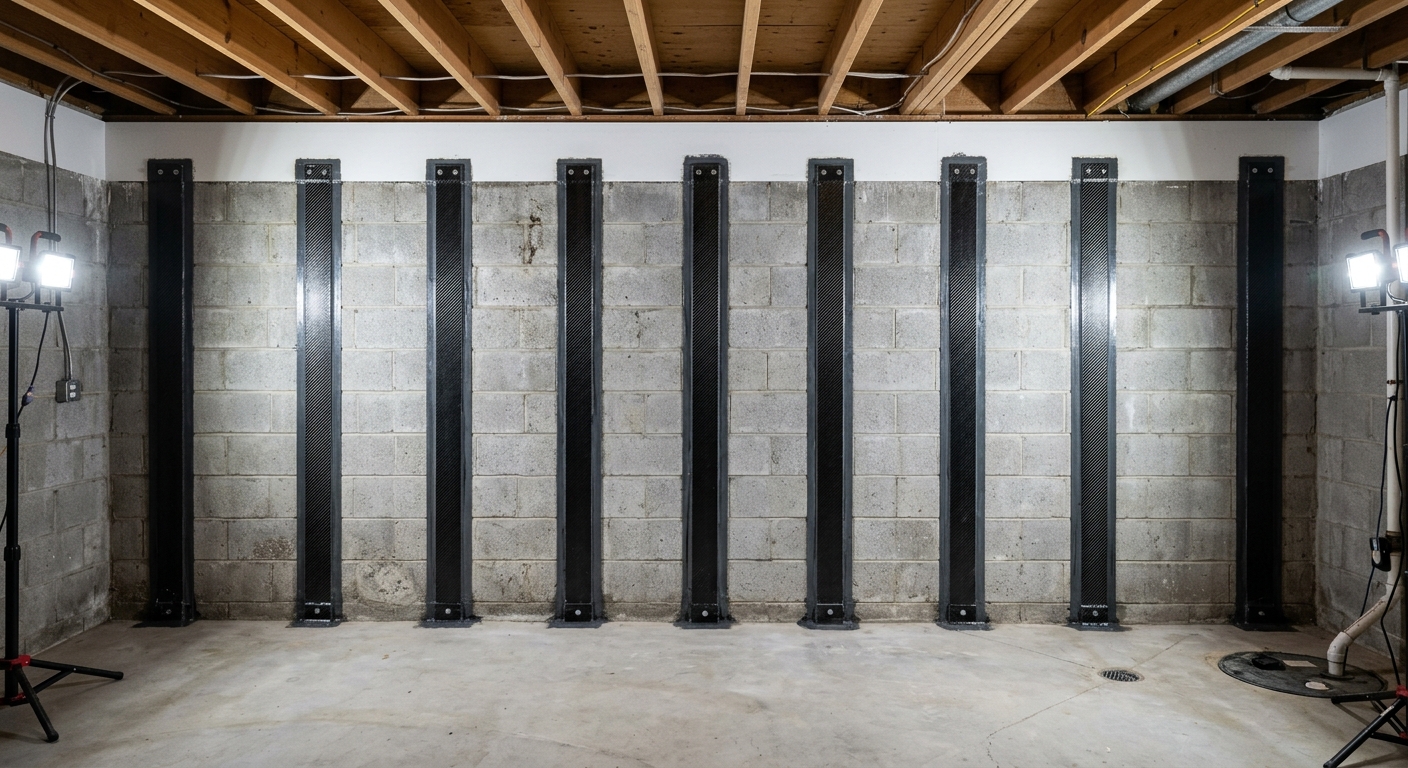
Carbon fiber foundation repair St. Louis homeowners trust delivers permanent crack stabilization using high-tensile-strength composite straps bonded directly to basement walls. Unlike temporary patching methods, carbon fiber reinforcement transfers lateral soil pressure away from damaged areas, arresting crack expansion and preventing future wall movement. This method works exceptionally well in St. Louis because it adapts to the constant soil movement our region experiences year-round.
Your foundation wall faces relentless pressure from expansive clay soil, seasonal freeze-thaw cycles, and hydrostatic water pressure from our high water table near the Mississippi River floodplain. Traditional repairs often fail because they don't address the ongoing forces causing the damage. Carbon fiber straps distribute structural loads across the entire wall surface, creating a reinforced grid that maintains wall integrity even as soil conditions shift.
- Permanently stabilizes horizontal foundation cracks without excavation or interior demolition
- Installs in 4-6 hours for typical basement wall sections — you stay in your home during repair
- Increases home resale value with transferable 25-year warranty documentation
- Costs 40-60% less than steel I-beam installation requiring excavation and landscape restoration
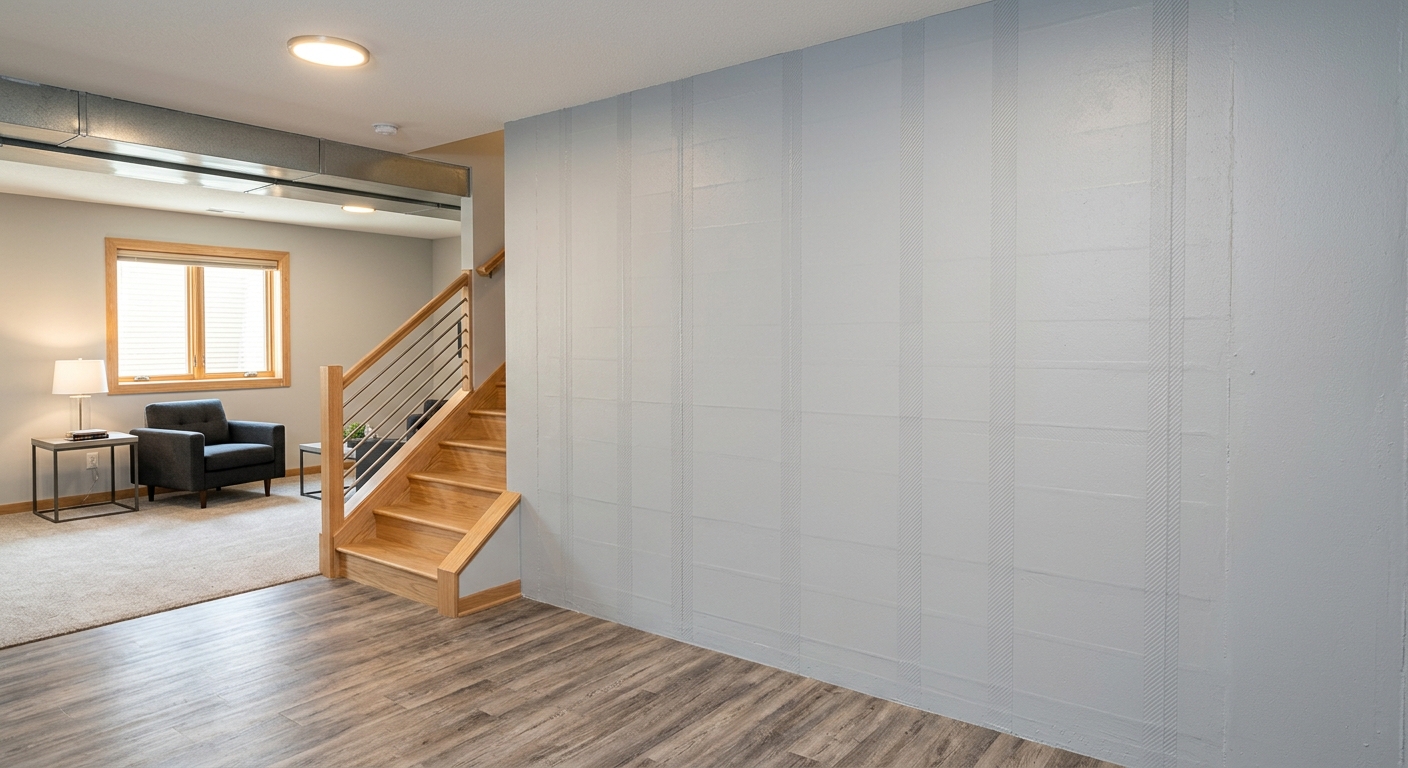
- Invisible repair — carbon fiber straps hide completely behind drywall or finishing panels
Our foundation specialists conduct laser-level wall deflection measurements during your free inspection to determine exact strap spacing and coverage area. We pull St. Louis building permits for every structural repair and provide engineered drawings that meet Missouri residential code requirements. Call (314) 798-9554 to schedule your same-day foundation assessment.
Why St. Louis Clay Soil Demands Carbon Fiber Reinforcement
St. Louis sits on montmorillonite clay soil that swells up to 10% when saturated and shrinks dramatically during drought periods. This expansion-contraction cycle creates cyclical lateral pressure against your foundation walls — pressure that increases every time we get heavy rain followed by dry summer heat. Traditional rigid repairs crack again because they can't flex with soil movement. Carbon fiber's composite structure absorbs and redistributes these forces without breaking down.
During wet spring months, clay soil absorbs moisture and pushes inward on basement walls with thousands of pounds of force per square foot. When summer heat bakes the ground, soil pulls away from the foundation, creating voids that fill with water during the next storm. This constant push-pull motion is why you see horizontal cracks at the midpoint of basement walls and stair-step cracks in concrete block foundations. Carbon fiber wall straps prevent further deflection by anchoring the damaged section to stronger wall areas above and below the crack.
Our team treats foundation repair projects in Kirkwood, Webster Groves, University City, and South St. Louis neighborhoods where soil conditions vary from dense clay to river silt. We adjust strap layout and spacing based on soil test data and wall deflection measurements — not one-size-fits-all templates. This engineering-first approach is why our repairs last decades while quick-fix contractors return every few years to re-patch the same cracks.
How Carbon Fiber Stops Foundation Cracks in Missouri's Freeze-Thaw Cycle
Missouri winters bring temperature swings of 60°F in 24 hours — freezing rain one day, 50-degree sun the next. Water infiltrates foundation cracks, freezes overnight, expands with 9% greater volume, then thaws and refreezes multiple times each winter. This freeze-thaw action wedges cracks wider every season. Carbon fiber reinforcement stops this progressive damage by preventing the crack faces from separating further.
When we install carbon fiber straps across a crack, we're creating a structural bond stronger than the concrete itself. The epoxy-saturated fabric cures into a rigid composite with 550,000+ psi tensile strength. Even when water freezes inside the crack, the carbon fiber strap holds both sides of the fracture in place, preventing expansion. Over multiple freeze-thaw cycles, unreinforced cracks widen from hairline fractures to quarter-inch gaps. Reinforced cracks remain stable year after year.
St. Louis homeowners often discover foundation damage in late winter or early spring when they notice new cracks or see existing cracks have widened. If you're seeing this pattern, you're watching freeze-thaw damage in real time. Our foundation repair process includes crack sealing with flexible polyurethane or epoxy injection to block water infiltration, then carbon fiber strap application to prevent future movement. Schedule your inspection before next winter's freeze-thaw cycle causes additional damage.
Carbon Fiber Wall Straps: Cost & Installation Details
Carbon fiber wall straps cost between $200 and $400 per strap installed, depending on wall height, crack length, and accessibility. Most St. Louis basement wall repairs require 8 to 20 straps spaced 12 to 24 inches apart, bringing typical project costs to $3,500 to $8,000 for moderate foundation damage. This price includes professional-grade epoxy resin, engineered strap layout, building permit fees, and our 25-year transferable warranty. You're paying for permanent structural repair, not temporary crack filling.
Several factors affect your final repair cost. Wall height matters — 8-foot basement walls require less material than 10-foot walls in walkout basements. Crack severity determines strap spacing — a single horizontal crack may need straps every 16 inches, while severe bowing requires 12-inch on-center spacing with full-wall coverage. Accessibility impacts labor time — open basement walls take 4-6 hours to repair, while walls behind finished drywall require removal and restoration, adding $800 to $1,500 to the project.
- Single horizontal crack repair: $1,800-$3,200 (6-10 straps at 16-inch spacing)
- Multiple cracks or stair-step damage: $3,500-$6,500 (12-18 straps covering damaged sections)
- Full basement wall reinforcement: $6,000-$12,000 (20-30 straps in engineered grid layout)
- Combination repair (carbon fiber + crack injection): add $600-$1,200 for epoxy or polyurethane injection to seal active water leaks
- Emergency same-day service: available for active foundation failures with water infiltration
Compare this to excavation-based steel I-beam installation at $10,000 to $18,000 per wall, which requires removing landscaping, destroying driveways or patios, and 2-3 days of heavy equipment operation. Carbon fiber delivers equivalent structural reinforcement at half the cost with zero exterior disruption. Call (314) 798-9554 for your free written estimate with exact strap count and spacing diagram.
Carbon Fiber Strap Pricing & What Affects Your Repair Cost
Strap width and tensile rating directly impact pricing. Standard residential foundation repair uses 4-inch-wide straps rated for 3,000+ pounds tensile load, adequate for walls with up to 1 inch of deflection. Severe bowing or commercial foundation applications require 6-inch or 10-inch straps with higher load ratings, increasing material cost by 30-50%. Our foundation engineers calculate required strap width based on wall deflection measurements taken during your inspection.
Epoxy resin quality makes the difference between a repair that lasts 25 years and one that fails in 5. We use only two-part structural epoxy systems with 3,000+ psi bond strength, specifically formulated for concrete and masonry substrates. Discount contractors cut costs by using general-purpose epoxy or polyester resin that doesn't achieve full bond strength in damp basement conditions. You'll pay $50-$80 more per strap for professional-grade epoxy, but you're buying a repair that won't delaminate when your basement experiences seasonal humidity changes.
Wall preparation labor affects cost more than most homeowners realize. Carbon fiber bonds only to clean, structurally sound concrete. If your wall has loose mortar, efflorescence mineral deposits, or failing paint, we grind those areas down to solid substrate before applying primer coat. Heavily damaged block walls may require mortar joint repair or concrete resurfacing before carbon fiber installation. These prep steps add 1-2 hours of labor but ensure your repair achieves full design strength. Skipping prep work is why DIY carbon fiber kits fail — the strap delaminates because it never bonded properly.
Installation Process: From Crack Cleaning to Final Curing
Our foundation wall carbon fiber straps installation follows a six-step engineered process that takes 4-6 hours for typical basement wall sections. First, we use angle grinders and wire brushes to clean the crack and surrounding wall surface, removing all loose concrete, paint, efflorescence, and contaminants down to solid substrate. Clean surface area extends 6 inches beyond each side of the strap location — this ensures maximum epoxy bond area.
Step two applies structural epoxy primer coat to the prepared wall surface. This primer coat penetrates concrete pores and creates a bonding bridge between the wall and the carbon fiber fabric. We let primer cure for 30-45 minutes until tacky but not fully hardened. Step three saturates the carbon fiber fabric in thick structural epoxy resin, working the resin through every fiber to eliminate air pockets. Proper saturation is critical — dry spots create weak points where the strap can delaminate under load.
Step four positions the epoxy-saturated strap onto the primed wall surface, centering it over the crack with equal coverage on both sides. We use grooved rollers to press the strap firmly against the wall, squeezing out excess epoxy and eliminating air bubbles trapped between fabric and concrete. Step five applies a second epoxy coat over the installed strap, fully encapsulating the carbon fiber and creating a smooth finish surface. Final step allows 24-hour cure time before we inspect bond quality and apply any finishing coats needed for drywall installation.
During curing, your basement must maintain 50-90°F temperature and below 80% humidity. St. Louis summer humidity can slow epoxy cure time — we monitor conditions and adjust cure schedules accordingly. You'll see us return 24-48 hours after installation to verify full cure and perform pull-test inspections on sample areas. This quality control step separates professional foundation repair from quick-fix contractors who install and leave without verification.
Structural Carbon Fiber Reinforcement vs. Traditional Repairs
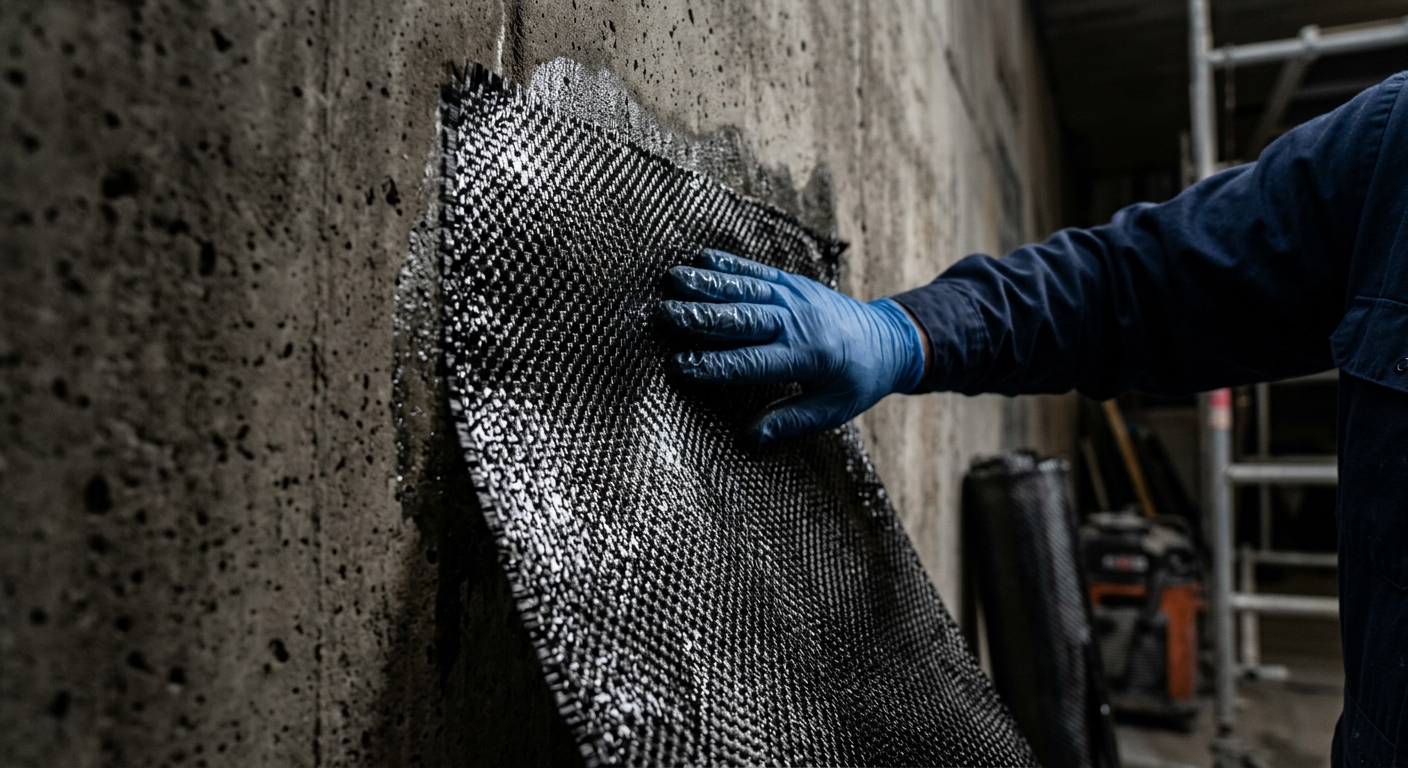
Structural carbon fiber reinforcement outperforms traditional foundation repair methods in cost, installation time, and long-term durability for St. Louis basement walls with horizontal cracks and moderate bowing. Steel I-beams require excavation, create permanent interior obstructions, and cost 40-60% more than carbon fiber for equivalent structural support. Epoxy crack injection alone stops water infiltration but provides zero reinforcement against future wall movement. Carbon fiber combines crack stabilization with structural reinforcement in a single non-invasive installation.
Wall anchors, another common St. Louis foundation repair method, require exterior excavation to install earth anchors 10-15 feet from your foundation, then steel rods drilled through basement walls to connect interior plates to exterior anchors. This system works for severe bowing but destroys landscaping, creates permanent wall penetrations, and requires ongoing tightening maintenance. Carbon fiber installs entirely from inside your basement with zero exterior work — your landscaping, driveway, and patio remain untouched.
- Carbon fiber: 4-6 hour installation, no excavation, $3,500-$8,000 typical cost, 25-year warranty
- Steel I-beams: 2-3 day installation, full excavation, $10,000-$18,000 per wall, loses 6-8 inches of basement space per beam
- Wall anchors: 1-2 day installation, exterior excavation, $4,000-$9,000 per wall, requires periodic tightening and landscape restoration
- Epoxy injection only: 2-4 hour installation, no structural reinforcement, $800-$2,000, stops water but doesn't prevent future cracking
The right repair method depends on wall deflection severity. Carbon fiber handles walls with up to 2 inches of inward bowing — this covers 80% of residential foundation damage in St. Louis. Walls bowed beyond 2 inches or showing active progressive movement need steel beam or anchor systems to pull the wall back toward original position before stabilization. Our free foundation inspection includes laser deflection measurement and engineered repair recommendation. We'll tell you honestly when carbon fiber isn't the right solution. Call (314) 798-9554 to get the repair method your foundation actually needs, not the one that maximizes our profit.
How Carbon Fiber Reinforcement Prevents Future Wall Bowing
Carbon fiber reinforcement prevents future wall bowing by creating a structural grid that redistributes lateral soil pressure across the entire wall surface instead of concentrating force at crack locations. Think of it as adding a secondary structural layer bonded to your existing foundation wall. When soil pushes against the wall, the carbon fiber straps transfer that load vertically to the stronger upper and lower wall sections, plus horizontally to undamaged wall areas on either side of the crack.
Unreinforced foundation walls fail at their weakest points — existing cracks become stress concentration zones where additional bowing occurs. Each seasonal soil expansion cycle pushes the cracked section inward another fraction of an inch. Over years, that eighth-inch horizontal crack becomes a two-inch inward bow requiring expensive beam installation. Carbon fiber straps arrest this progressive damage by preventing the crack faces from separating further, no matter how much pressure soil applies.
Our strap layout engineering calculates required coverage area based on wall deflection measurements and soil pressure estimates. Walls with minor deflection (under half an inch) may need straps only at crack locations with 24-inch spacing. Walls showing active bowing get full-coverage grid layouts with 12-inch spacing covering the entire lower 4-6 feet where soil pressure concentrates. This engineered approach prevents future bowing in areas that haven't cracked yet — stopping problems before they start.
Carbon Fiber vs. Steel Beams: Which Method Your Foundation Needs
Carbon fiber works for foundation walls with up to 2 inches of inward deflection that aren't showing active progressive movement. If your wall cracked years ago, hasn't moved noticeably since, and measures less than 2 inches out of plumb, carbon fiber stabilization prevents further damage without excavation. Steel I-beams become necessary when walls have bowed beyond 2 inches, show cracks widening month-to-month, or have structural failure at the top plate connection where wall meets floor joists.
Steel beams provide two capabilities carbon fiber doesn't: they can pull bowed walls back toward original position, and they handle unlimited deflection severity. A wall bowed 4 inches inward needs steel beams to restore structural alignment before stabilization. But steel comes with major tradeoffs — each beam requires excavation along your foundation perimeter, 24-48 hours for concrete footer installation, and permanent loss of 6-8 inches of basement floor space where beams install every 6-8 feet along the damaged wall.
Many St. Louis foundation contractors push steel beams on every project because installation generates higher revenue. Carbon fiber costs less and installs faster, reducing their profit margin. We take laser deflection measurements, show you the readings, and recommend the most cost-effective repair that meets structural requirements. Sometimes that's carbon fiber. Sometimes it's steel. Sometimes it's a combination — steel beams at the most severely bowed sections plus carbon fiber straps across the remaining wall. You'll receive written documentation explaining our recommendation with photos of your wall deflection measurement.
Structural Engineering Behind Carbon Fiber Reinforcement
Structural carbon fiber reinforcement relies on composite material science that combines carbon fiber's extreme tensile strength with structural epoxy's bonding capability to create a reinforced concrete system stronger than the original wall. Carbon fiber fabric consists of thousands of individual carbon filaments woven into unidirectional or bidirectional cloth. When saturated with epoxy resin and bonded to concrete, these filaments act as external rebar, preventing crack propagation and distributing structural loads
Frequently Asked Questions
How much does carbon fiber crack repair cost in St. Louis?
Carbon fiber foundation repair in St. Louis typically costs between $400 and $800 per crack, depending on length and severity. Most residential foundation cracks require one to three carbon fiber straps for proper reinforcement. The final price depends on crack length, wall accessibility, and the number of straps needed. We provide free inspections and written estimates for all St. Louis homeowners before starting any work.
What is carbon fiber foundation repair and how does it work?
Carbon fiber foundation repair uses high-strength composite straps applied to cracked basement walls to prevent further movement and structural damage. The carbon fiber straps are bonded to the wall with industrial epoxy, creating a repair that is stronger than the original concrete. This method stabilizes hairline cracks, vertical cracks, and bowing walls without invasive excavation. The repair takes 2 to 4 hours and can be completed from inside your basement.
How long does carbon fiber crack repair last in Missouri foundations?
Carbon fiber reinforcement for foundation cracks is a permanent solution that typically lasts the lifetime of your home when properly installed. The carbon fiber material does not corrode, rust, or deteriorate like steel reinforcement bars. We back our carbon fiber crack repairs with a transferable 25-year warranty. Missouri soil conditions and freeze-thaw cycles will not compromise the integrity of properly installed carbon fiber straps on your foundation walls.
Are carbon fiber straps better than steel for foundation wall repair?
Carbon fiber wall straps offer significant advantages over traditional steel braces for foundation repair. Carbon fiber is ten times stronger than steel by weight, will never rust or corrode in damp basement environments, and requires no exterior excavation to install. Steel braces are more intrusive, take up usable basement space, and can rust over time in Missouri's humid climate. Carbon fiber straps lie flat against the wall and can be painted or finished over for a cleaner appearance.
How quickly can you repair foundation cracks in St. Louis?
Most carbon fiber crack repairs in St. Louis can be scheduled within 3 to 7 days of your free inspection. The actual installation typically takes 2 to 4 hours for standard basement wall cracks. We understand foundation problems cause stress, so we prioritize emergency situations where water intrusion or structural movement is active. After repair, the epoxy cures fully within 24 hours, and your basement wall is immediately stabilized and protected.
Do carbon fiber straps stop foundation cracks from getting worse?
Yes, structural carbon fiber reinforcement prevents foundation cracks from expanding and stabilizes walls against further bowing or movement. The high-tensile strength of carbon fiber straps locks the crack in place and distributes stress across the entire wall surface. This stops the crack from widening due to soil pressure, settling, or seasonal freeze-thaw cycles common in the St. Louis region. Without repair, foundation cracks typically worsen over time and allow water infiltration.
Are you licensed and insured for foundation repair in Missouri?
Yes, we are fully licensed, bonded, and insured to perform foundation repair throughout Missouri, including all St. Louis neighborhoods and surrounding counties. Our technicians are certified in structural carbon fiber reinforcement installation and follow manufacturer specifications for every repair. We carry comprehensive liability insurance and workers' compensation coverage. All work is performed to local building codes, and we provide documentation for your records and future home sales.
Can carbon fiber repair work on both poured concrete and block foundations?
Carbon fiber crack repair works effectively on both poured concrete and concrete block foundation walls. For poured concrete, the straps bond directly to the smooth surface over the crack. For block foundations, we may use additional surface preparation to ensure proper epoxy adhesion across mortar joints. Both foundation types respond well to carbon fiber reinforcement, providing long-term structural stability. We assess your specific foundation type during the free inspection to recommend the optimal repair approach.
Book your free foundation inspection
Tell us what you are seeing and where the home is. The inspection is free, there is no obligation, and you get a written estimate showing the repair method, the number of piers or anchors and the total before anything is scheduled.