Crawl space foundation repair protects your St. Louis home from structural damage caused by shifting soil, moisture intrusion, and seasonal ground movement. If you've noticed sagging floors, cracks in your walls, or a musty smell rising from beneath your home, you're facing a problem that won't resolve itself—and waiting only makes repairs more expensive and disruptive. Our certified team delivers permanent crawl space foundation solutions engineered specifically for St. Louis's expansive clay soil and freeze-thaw cycles. We've spent over 25 years stabilizing foundations across St. Louis County, Webster Groves, Clayton, and the wider metro area, and we respond to your call within 24 hours. You deserve a safe, stable home, and we deliver the structural repairs that make it possible.
Signs Your Crawl Space Foundation Needs Repair
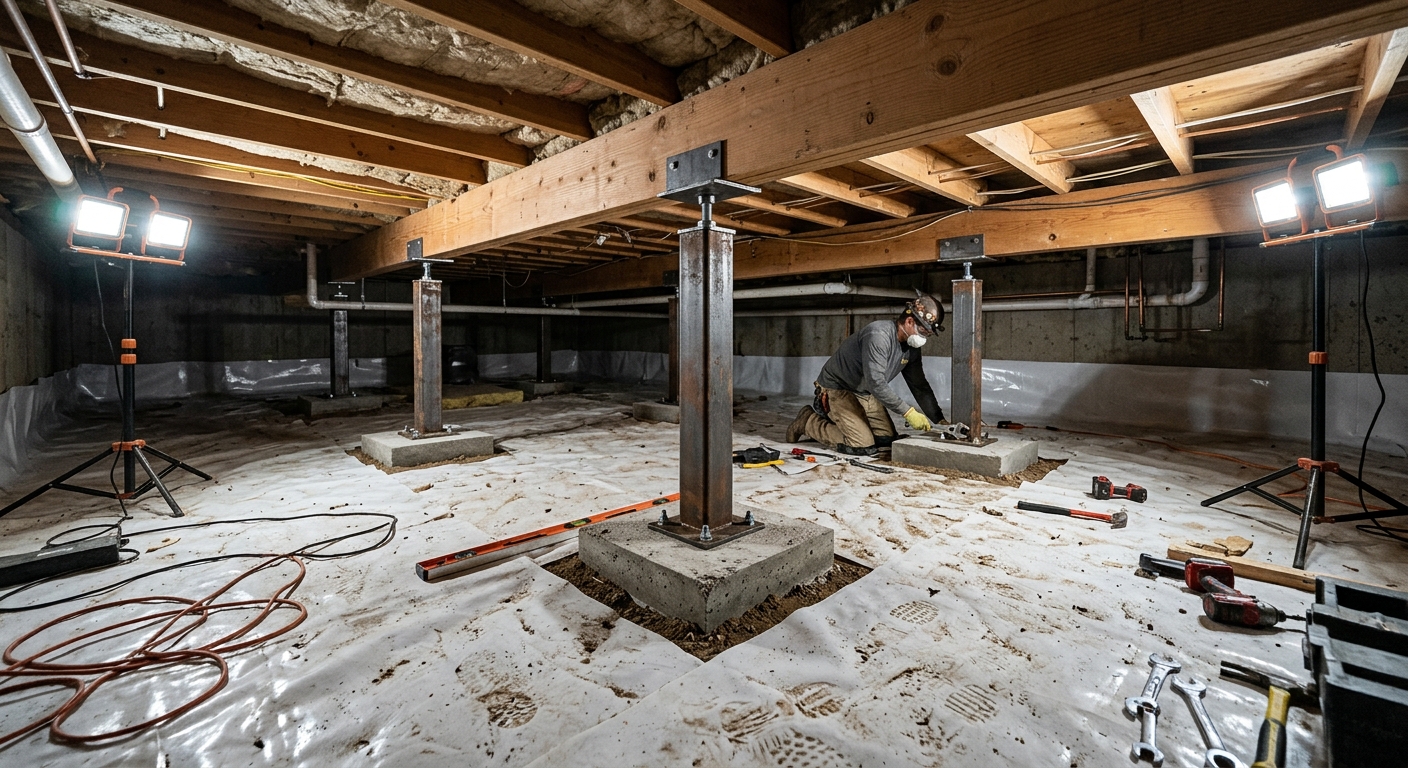
Crawl space foundation repairs become necessary when your home's structural support system begins to fail, and the warning signs appear inside your living space long before you see damage in the crawl space itself. Homeowners often dismiss early symptoms as "normal settling," but foundation movement is progressive—small cracks become major fractures, minor floor slopes turn into dangerous sags, and moisture problems escalate into mold infestations that compromise your family's health. Recognizing these signs early allows you to address the root cause before repair costs triple and your home's resale value plummets. Our structural engineer performs a comprehensive inspection of both your interior symptoms and the crawl space conditions causing them, so you understand exactly what's happening beneath your feet and why immediate action protects your investment.
- Doors and windows that stick or no longer close properly—a clear indicator your frame has shifted
- Gaps between walls and ceilings, or between walls and floors, showing separation as the foundation settles unevenly
- Cracked tile, especially in kitchens and bathrooms where floor movement stresses rigid surfaces
- Visible diagonal cracks in drywall, particularly near door frames and corners where stress concentrates
- Bouncy or springy floors that feel unstable when you walk across rooms
If you're experiencing any combination of these symptoms, your crawl space foundation is already compromised. Call our St. Louis foundation repair team at (314) 798-9554 to schedule your free professional inspection—we'll identify the exact cause and provide a detailed repair plan within 48 hours.
Sagging or Uneven Floors in Your Home
Repairing crawl space foundation issues starts with understanding why your floors have lost their level support. Sagging floors occur when the wooden beams and floor joists in your crawl space lose their load-bearing capacity due to moisture damage, inadequate support spacing, or foundation settlement that shifts the piers and footers underneath. In St. Louis homes, the problem accelerates when our region's high humidity saturates crawl space wood, weakening structural members while the clay soil beneath shifts with seasonal moisture changes. You'll notice balls rolling across the floor, furniture that rocks on legs that used to sit flat, and a visible slope when you place a level on the surface. These aren't cosmetic issues—they indicate your home's structural integrity is actively degrading, and the longer you wait, the more floor joists and beams require replacement alongside the foundation stabilization work.
Our crawl space jacks provide immediate load transfer, lifting sagging floors back to their original elevation while we install permanent steel push piers or helical piers beneath to prevent future settlement. This combination addresses both the symptom and the cause, delivering a repair that lasts decades rather than failing within a few years like temporary shims and posts. We've restored level floors in hundreds of St. Louis homes, from historic bungalows in Tower Grove to mid-century ranches in Kirkwood, and our 25-year transferable warranty guarantees your floors stay level long after we complete the work.
Visible Cracks in Crawl Space Walls and Beams
Crawlspace foundation repair becomes urgent when you see cracks in the concrete block walls, poured concrete footers, or wooden support beams that carry your home's weight. Horizontal cracks in crawl space walls signal inward pressure from exterior soil—common in St. Louis when our expansive clay swells after heavy rain and pushes against foundation walls with thousands of pounds of lateral force. Vertical cracks often indicate settlement, where portions of your foundation sink as the soil beneath loses its bearing capacity due to erosion, poor compaction, or organic material decay. Diagonal cracks combine both forces, showing rotation and tilting that compromise your home's structural stability. When these cracks appear in load-bearing beams and posts, the risk escalates—wood rot from moisture intrusion weakens the members while termites exploit the damage, creating hidden voids that can lead to sudden failure.
We document every crack with measurements and photos during your inspection, then engineer solutions that stop the movement causing the damage. Wall anchors stabilize crawl space walls by connecting interior steel plates to exterior earth anchors driven into stable soil, creating a counter-force that prevents further inward movement. For settlement cracks, our underpinning systems transfer your home's load to deeper, more stable soil layers that won't shift with seasonal moisture changes. This isn't patch-and-pray work—it's structural engineering applied to your specific soil conditions and foundation type, designed to eliminate the forces that created the cracks in the first place.
Moisture, Musty Odors, and Standing Water
Crawl space foundation problems and moisture issues feed each other in a destructive cycle that threatens both your home's structural stability and your family's health. Standing water in your crawl space indicates poor drainage, a high water table, or foundation cracks that allow groundwater intrusion—and that moisture accelerates foundation deterioration by softening the soil beneath your footers, rotting wooden beams, and creating hydrostatic pressure against concrete walls. The musty odor you smell isn't just unpleasant—it's airborne mold spores rising through your floor and circulating through your HVAC system, triggering allergies and respiratory problems while silently degrading your home's air quality. St. Louis's humid climate makes crawl space moisture problems particularly aggressive, with our region's average 70% summer humidity providing ideal conditions for mold growth and wood decay that can destroy structural members within months rather than years.
Our moisture barrier installation creates a sealed crawl space environment that blocks ground moisture, while our drainage solutions—including sump pumps and perimeter drain systems—remove water before it accumulates. When combined with crawl space foundation repairs, this encapsulation approach delivers a permanent solution that protects your investment from both structural damage and indoor air quality degradation. We've eliminated moisture problems in crawl spaces across University City, Maplewood, and Brentwood, restoring dry, stable conditions that preserve your home's structural integrity and your family's health for decades to come.
Why St. Louis Crawl Space Foundations Fail: Local Soil & Climate Factors
Crawl space foundation repair in St. Louis addresses challenges that don't exist in many other regions, because our specific combination of expansive clay soil, dramatic seasonal moisture changes, and freeze-thaw cycles creates foundation stresses that generic repair methods can't solve. Understanding why St. Louis foundations fail helps you recognize why engineered solutions cost more than simple cosmetic patches—and why those engineered solutions are the only repairs that actually work long-term in our geological conditions. The clay soil beneath most St. Louis homes swells up to 10% when saturated and shrinks by similar amounts during dry periods, creating an annual cycle of uplift and settlement that constantly shifts your foundation. Add winter freeze-thaw cycles that push footers upward and spring rains that saturate the soil, and you have a recipe for progressive foundation damage that accelerates every year you delay repairs. Our approach accounts for these specific local factors, designing repair systems that work with St. Louis's soil rather than fighting against it.
- Clay soil plasticity that allows dramatic volume changes with moisture content shifts
- Seasonal moisture swings from 80% summer humidity to winter freeze-dry conditions
- Shallow frost depth (12-18 inches) that affects footer placement and frost heave risk
- High water table areas near the Mississippi and Missouri Rivers that increase hydrostatic pressure
- Poor original drainage in older neighborhoods where downspouts discharge directly against foundations
When you call (314) 798-9554, our structural engineer assesses how these factors have specifically affected your property, identifying which combination of soil movement, drainage failure, and structural stress requires correction. This site-specific analysis is why our repairs succeed where competitors' generic approaches fail within a few years.
Expansive Clay Soil and Seasonal Swelling
Repairing crawl space foundation damage in St. Louis requires understanding that our region's clay soil doesn't just settle—it actively moves up and down with moisture changes, creating forces that exceed the bearing capacity of shallow footers and push foundation walls inward with relentless pressure. The clay layer beneath St. Louis extends 15 to 30 feet deep in most areas, and this soil type has a high plasticity index that allows it to absorb water like a sponge during wet periods and contract during droughts. When your crawl space soil swells after spring rains, it lifts portions of your foundation, creating uneven floor elevation and diagonal cracks as different areas rise at different rates. When summer heat dries the soil, those same areas settle back down—but never to exactly the same position, resulting in progressive tilting and rotation that worsens every year. This cycle explains why cosmetic crack repairs fail so quickly in St. Louis: unless you address the soil movement causing the damage, the cracks simply reappear after the next seasonal moisture change.
Our steel push piers and helical piers solve this problem by bypassing the active clay layer entirely, extending down to stable soil or bedrock that doesn't shift with moisture changes. This underpinning approach transfers your home's weight to a stable foundation depth of 40 to 60 feet or more, eliminating seasonal movement regardless of what the surface clay does. We've stabilized foundations throughout Ladue, Frontenac, and Chesterfield using this method, delivering repairs that remain stable through decades of St. Louis's dramatic weather swings. Your home deserves a solution that works with our local geology, not a temporary fix that ignores it.
Freeze-Thaw Cycles and Frost Heave
Crawl space foundation repairs in St. Louis must account for frost heave—the upward movement that occurs when moisture in the soil freezes, expands, and pushes your foundation upward during winter months. Although St. Louis experiences milder winters than northern cities, our freeze-thaw cycles are actually more damaging because temperatures fluctuate above and below freezing repeatedly throughout the season, creating multiple expansion-contraction events rather than a single freeze and thaw. When soil moisture freezes beneath your footer, it creates ice lenses that expand with tremendous force, lifting portions of your foundation and cracking concrete walls and beams. When temperatures rise above freezing, the ice melts and the soil settles—but the settlement is uneven, leaving your foundation tilted or rotated from its original position. Older crawl space foundations in St. Louis often have footers placed at insufficient depths (8 to 12 inches rather than the current code-required 18 inches), making them particularly vulnerable to frost heave that newer homes avoid.
Our repair methods address frost heave by installing piers that extend well below the frost line, transferring loads to soil depths that never freeze regardless of surface conditions. This eliminates the annual uplift cycle that causes progressive damage to shallow footers and posts. We also improve crawl space drainage to reduce soil moisture content, minimizing the ice formation that drives frost heave in the first place. These combined approaches deliver stability that lasts through St. Louis's unpredictable winter weather, protecting your investment from the freeze-thaw damage that undermines inadequately engineered repairs.
Poor Drainage and High Water Table Issues
Crawlspace foundation repair projects in St. Louis frequently uncover drainage failures that have been saturating the soil beneath your home for years, creating the soft, unstable ground conditions that allow settlement and the hydrostatic pressure that cracks crawl space walls. Poor drainage occurs when gutters discharge too close to your foundation, when yard grading slopes toward your home rather than away, or when perimeter drains installed during original construction have failed due to clogging or collapse. In neighborhoods near the Mississippi River—including South City, Carondelet, and Lemay—the water table rises seasonally, bringing groundwater within a few feet of your crawl space floor and creating constant moisture pressure that no amount of surface drainage can eliminate. This saturated soil loses bearing capacity, allowing your foundation to settle as the ground beneath it turns to mud, while hydrostatic pressure forces water through any crack or joint in your crawl space walls, creating the standing water and moisture problems that destroy wooden structural members.
We address these drainage challenges with comprehensive solutions that work together: perimeter drain systems that intercept groundwater before it reaches your foundation, sump pumps that remove water from your crawl space even when the water table rises above your footer level, and proper grading and gutter extensions that direct surface water away from your home. When combined with moisture barriers and encapsulation, these drainage improvements create a dry crawl space environment that preserves your foundation repair work and prevents the moisture-related damage that would otherwise undermine our structural solutions. We've solved complex drainage problems throughout Richmond Heights, Shrewsbury, and Affton, delivering dry, stable crawl spaces that protect your home's structural integrity through St. Louis's wettest seasons.
Crawl Space Foundation Repair Methods We Use
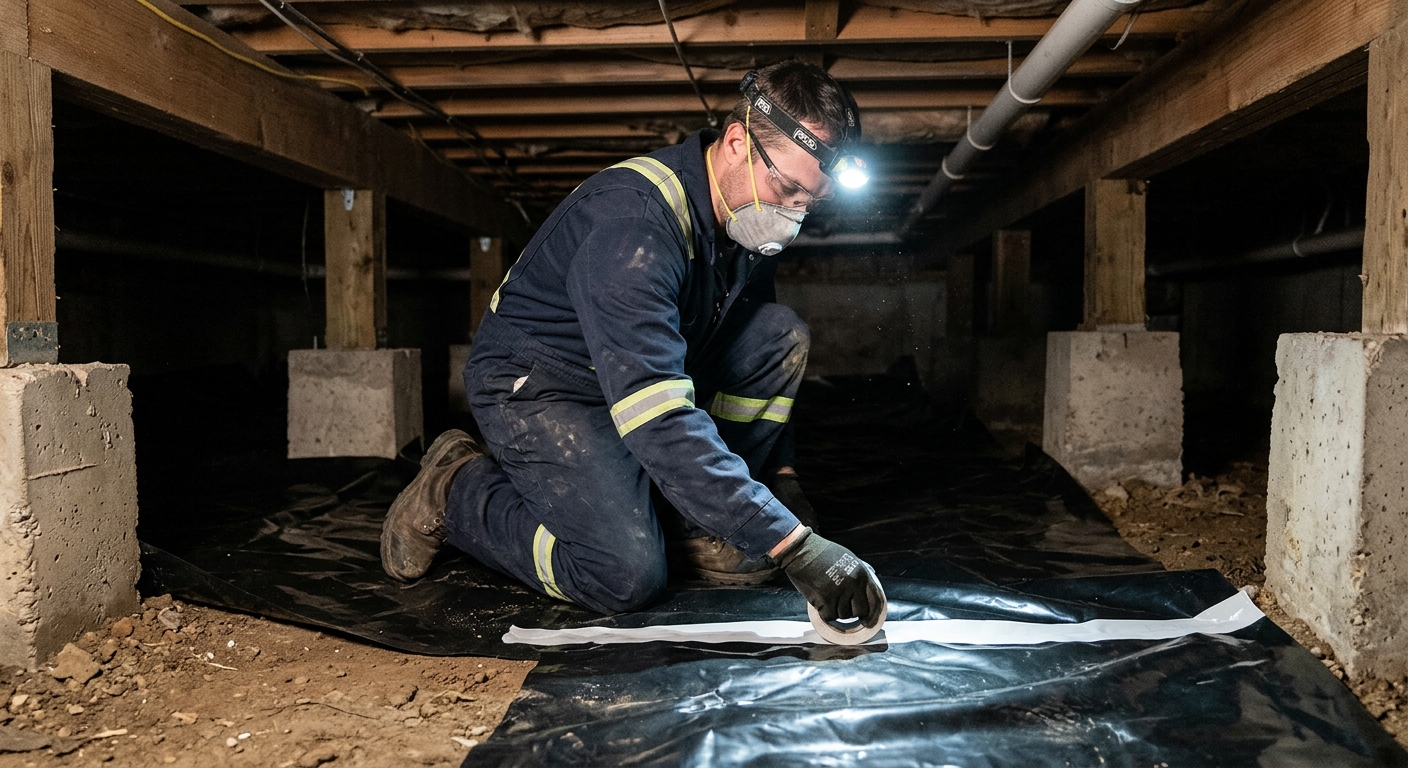
Crawl space foundation repair solutions vary based on your specific damage type, soil conditions, and structural goals—but all our methods share one critical characteristic: they're engineered to deliver permanent stability in St. Louis's challenging geological environment, not temporary cosmetic fixes that fail within a few years. We don't install generic solutions that work in stable soil regions but collapse in our expansive clay—every repair system we deploy is specifically designed for the load-bearing demands of your home and the soil movement patterns beneath it. Our structural engineer calculates the exact pier depth, spacing, and capacity required to stabilize your foundation based on soil boring data and structural load analysis, ensuring we're not guessing about what might work but installing a precisely engineered solution that will work. This engineering-first approach costs more than the "free inspection, low bid" competitors who install inadequate systems, but it's the only approach that delivers the decades of stability St. Louis homeowners need to protect their investment and maintain their home's resale value.
- Steel push piers driven to bedrock or load-bearing strata 40+ feet deep—the permanent solution for settlement
- Helical piers that screw into stable soil with calibrated torque for instant load transfer
- Adjustable crawl space jacks that lift sagging floors and provide load transfer to stable points
- Wall anchors that stabilize bowing crawl space walls and prevent further inward movement
- Moisture barriers and encapsulation systems that eliminate the water intrusion driving deterioration
When you schedule your free inspection at (314) 798-9554, we explain exactly which combination of these methods your home requires and why, providing transparent documentation of the engineering calculations that drive our recommendations. You'll understand what we're installing, where it's going, and how it solves your specific foundation problem—no confusing jargon or high-pressure sales tactics.
Steel Push Piers and Helical Piers for Deep Stabilization
Crawl space foundation repairs achieve permanent stability only when your home's weight transfers to soil or bedrock that won't shift with St. Louis's seasonal moisture changes—and steel push piers and helical piers are the two proven methods for reaching that stable depth. Steel push piers are driven into the ground using hydraulic pressure, pushing through the unstable clay layer until they hit refusal on bedrock or dense soil strata with sufficient bearing capacity to support your home's load. We then connect the piers to your existing footer with steel brackets, creating a new load path that bypasses the failing soil entirely and transfers your home's weight to depths of 40 to 60 feet or more. Helical piers use a different installation method—large steel screws that twist into the ground with calibrated torque, creating immediate load-bearing capacity through the mechanical advantage of the helical plates. Both systems deliver comparable long-term stability, with the choice between them determined by your soil type, access constraints, and structural load requirements.
These underpinning systems aren't just stabilization—they also allow us to perform hydraulic lift, raising settled portions of your foundation back toward their original elevation and closing the cracks that settlement created. We lift slowly and carefully, monitoring your home's response to avoid creating new stress damage, and we stop when we've achieved maximum practical recovery. The result is a foundation that's not only stable but also restored to near-original elevation, eliminating the floor slopes and wall cracks that diminish your home's value and functionality. We've installed thousands of piers across St. Louis County, University City, and
Frequently Asked Questions
How much does crawl space foundation repair cost in St. Louis?
Crawl space foundation repair costs in St. Louis typically range from $2,500 to $15,000, depending on the severity of damage and repair method required. Minor crack sealing and moisture control may cost $2,500–$5,000, while extensive structural repairs with pier installation can reach $10,000–$15,000. Our team provides free on-site inspections and detailed estimates for homeowners throughout the St. Louis metro area. Every crawl space is unique, so pricing varies based on accessibility, soil conditions, and the extent of foundation settlement or shifting.
What are the warning signs my crawl space foundation needs repair?
Common warning signs include sagging or uneven floors above the crawl space, visible cracks in interior walls or exterior brick, doors and windows that stick or won't close properly, and gaps between walls and ceilings. You may also notice moisture buildup, musty odors, or standing water in the crawl space itself. Bouncy or soft spots in your flooring indicate structural support issues below. If you observe any of these signs in your St. Louis home, schedule a professional crawl space inspection immediately to prevent further damage and costlier repairs down the road.
How long does crawl space foundation repair take to complete?
Most crawl space foundation repair projects in St. Louis take between one to five days, depending on the scope of work and crawl space size. Simple pier installations or minor crack repairs may be completed in one to two days, while comprehensive repairs involving multiple support systems, drainage installation, and moisture barriers can take three to five days. Weather conditions and crawl space accessibility also affect timeline. Our crew works efficiently to minimize disruption to your daily routine while ensuring every repair meets structural engineering standards and local building codes.
Are you licensed and insured for foundation repair work in Missouri?
Yes, we are fully licensed, bonded, and insured to perform foundation repair services throughout Missouri, including all St. Louis metro counties. Our technicians hold current certifications and undergo regular training in the latest crawl space repair techniques and safety protocols. We carry comprehensive general liability and workers' compensation insurance to protect your property and our crew during every project. All work complies with Missouri building codes and manufacturer specifications. We provide proof of licensing and insurance upon request before starting any crawl space foundation repair work at your home.
What is the difference between crawl space jacks and foundation piers?
Crawl space jacks are adjustable steel posts installed inside the crawl space to support sagging floor joists and provide temporary or supplemental support. Foundation piers are permanent structural supports driven deep into stable soil or bedrock beneath the foundation to lift and stabilize settling foundations. Piers address the root cause of foundation movement by transferring weight to load-bearing strata, while jacks reinforce floor systems above compromised foundations. Many St. Louis homes require both solutions—piers to stabilize the foundation perimeter and jacks to support interior floor spans affected by settlement or moisture damage.
Do you serve areas outside of St. Louis city limits?
Yes, we provide crawl space foundation repair services throughout the entire St. Louis metropolitan area, including St. Louis County, St. Charles County, Jefferson County, and surrounding Missouri communities. Our service area extends to Chesterfield, O'Fallon, Florissant, Maryland Heights, Ballwin, Kirkwood, Webster Groves, and many other suburbs. We also serve homes in Metro East Illinois communities across the river. Distance is rarely an issue—we routinely travel 30–50 miles from our St. Louis location to assess and repair crawl space foundation problems for homeowners throughout the region.
How quickly can you respond to crawl space foundation issues?
We typically schedule crawl space inspections within 24–48 hours of your initial call, and emergency assessments are available for severe foundation failures or structural safety concerns. After your inspection, we provide a detailed repair proposal within two to three business days. Most repair projects begin within one to two weeks of approval, though scheduling depends on current demand and weather conditions. For urgent situations like major settling or structural instability in St. Louis homes, we prioritize rapid response and can often expedite both inspection and repair timelines to protect your home from further damage.
Do you offer a warranty on crawl space foundation repairs?
Yes, we provide a comprehensive transferable warranty on all crawl space foundation repair work, covering both materials and workmanship. Our foundation pier systems carry a 25-year to lifetime manufacturer warranty, while our installation labor is guaranteed for a minimum of five years. Crawl space support jacks, drainage systems, and vapor barriers also include product-specific warranties ranging from five to twenty-five years. All warranty details are clearly outlined in your repair contract. This warranty protection gives St. Louis homeowners long-term peace of mind and can increase property value when selling your home.
Book your free foundation inspection
Tell us what you are seeing and where the home is. The inspection is free, there is no obligation, and you get a written estimate showing the repair method, the number of piers or anchors and the total before anything is scheduled.