Basement waterproofing cost in St. Louis ranges from $3,500 to $15,000+ depending on your foundation type, water severity, and chosen system. Whether you're dealing with minor dampness in South City or active seepage near the Meramec River, understanding local pricing factors helps you budget for a solution that actually works. St. Louis homeowners face unique challenges — clay soil that expands with moisture, older brick and stone foundations, and seasonal water table fluctuations — all of which directly impact your waterproofing investment. This guide breaks down every cost factor, system option, and local consideration so you can make an informed decision and protect your home's value.
Basement Waterproofing Cost Factors in St. Louis
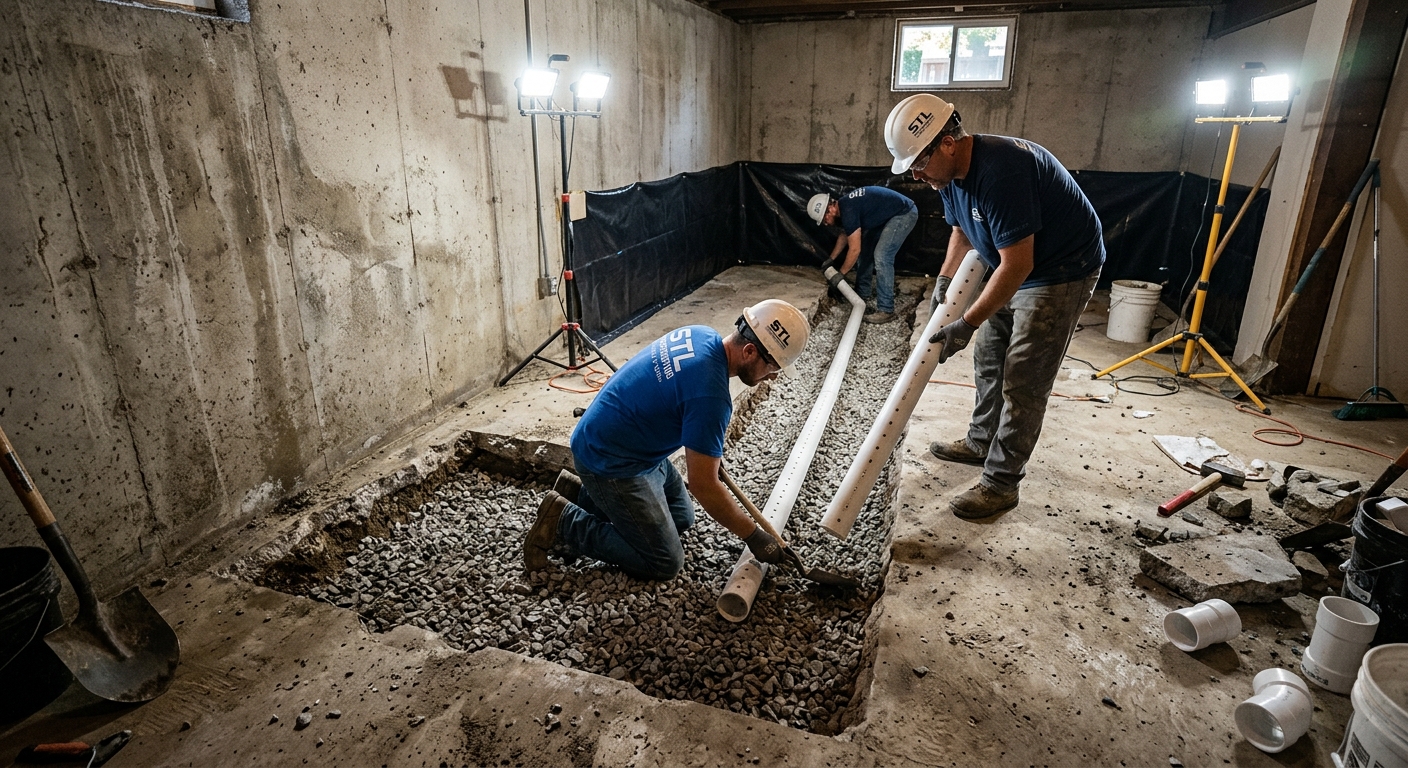
Several basement waterproofing sealing St. Louis-specific variables drive your final price tag. Understanding these cost drivers helps you interpret contractor quotes and avoid paying for unnecessary work. The three primary factors that determine your investment are soil conditions, foundation construction, and the severity of your water intrusion problem.
How Clay Soil Affects Your Waterproofing Cost
St. Louis sits on Alfisol clay soil that expands 10–15% when saturated, creating over 3,000 pounds of lateral pressure against your foundation walls. This hydrostatic pressure makes surface treatments like paint-on sealers ineffective and requires deeper excavation for exterior waterproofing systems. Contractors must dig down 8+ feet to install membrane waterproofing properly, and the clay's sticky consistency requires trench shoring equipment that increases labor costs. If you live in Dogtown, South City, or areas west of Tower Grove Park, expect a clay soil surcharge of $1,500–$3,000 on exterior waterproofing quotes. The soil conditions also extend project timelines — wet clay cannot be properly compacted during backfill, so many contractors schedule work during dry summer months when demand peaks and prices rise.
Foundation Type & Age: Stone vs. Brick vs. Concrete
Foundation sealing waterproofing costs vary dramatically based on construction material. Poured concrete foundations built after 1980 typically require straightforward membrane application or interior drainage systems. Brick foundations common in pre-1950 St. Louis homes present more complex challenges — deteriorated mortar joints allow water penetration at dozens of points, and the porous material absorbs moisture even when intact. Stone foundations, found in many historic neighborhoods, often lack proper footers and require hybrid interior/exterior solutions that cost 30–40% more than standard jobs. A concrete foundation basement might need $5,000 in interior waterproofing, while the same square footage in a brick foundation home could require $8,500–$10,000 due to repointing, membrane installation, and reinforced drainage systems.
Basement Size and Water Severity Impact on Pricing
Your basement's square footage determines material quantities and labor hours, but water severity drives system complexity. Minor dampness appearing after heavy rain might need only perimeter drainage and a single sump pump — budget $3,500–$5,000 for an 800 square foot basement. Active seepage through floor cracks or wall joints requires French drain installation, vapor barriers, and backup sump systems — expect $6,000–$9,000 for the same space. Severe flooding that fills window wells or creates standing water demands exterior excavation, foundation crack repair, and comprehensive drainage — these projects start at $12,000 and climb based on accessibility and soil conditions. Every additional 200 square feet of basement space adds roughly $800–$1,200 to interior system costs and $1,500–$2,500 to exterior waterproofing.
Concrete Foundation Waterproofing Methods & Costs
Concrete foundation waterproofing offers multiple approaches, each suited to different water intrusion patterns and budget constraints. Modern poured concrete foundations respond well to both exterior and interior treatments, while older concrete block foundations may require combination approaches. Choosing the right method depends on whether you're addressing active leaks, preventing future moisture, or preparing for basement finishing.
Exterior Membrane Waterproofing: Full System Installation
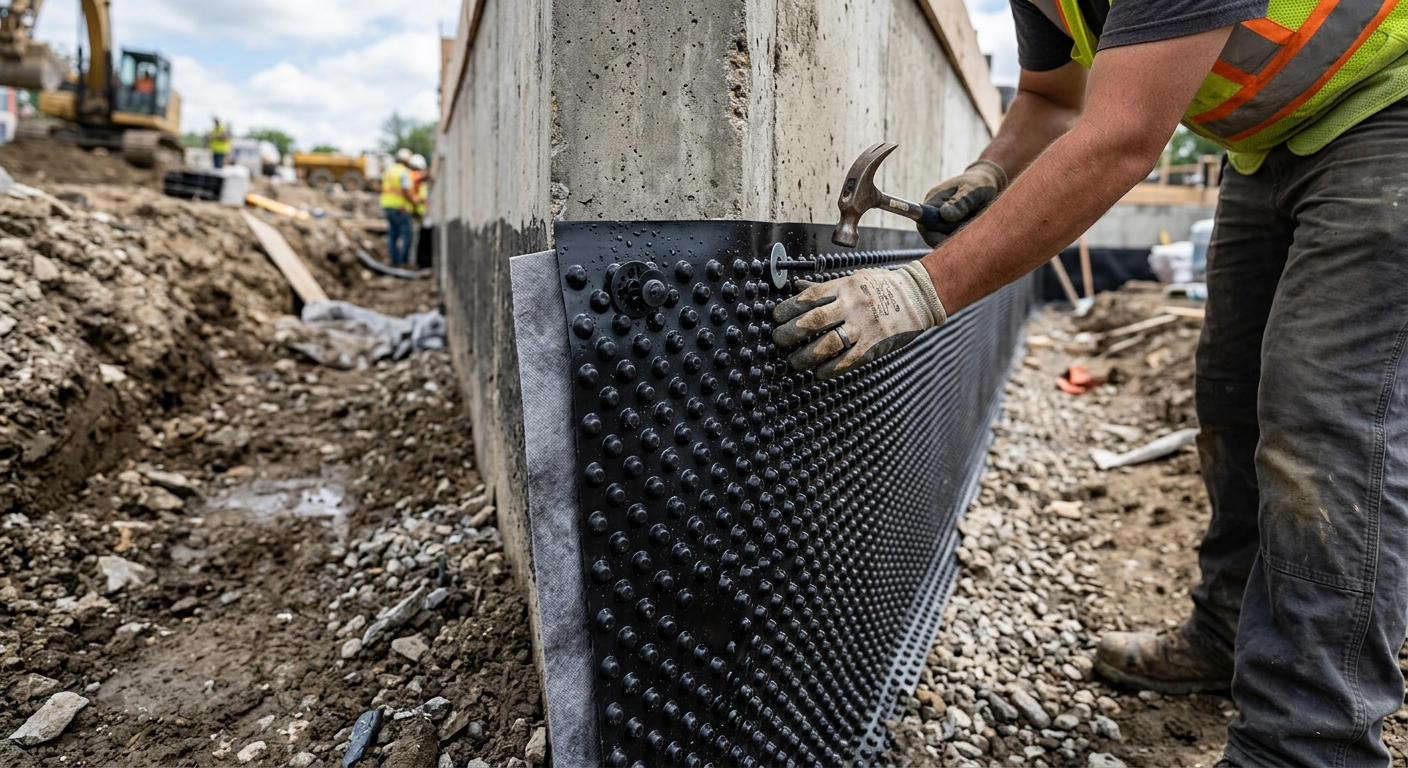
Exterior membrane waterproofing provides the most comprehensive protection by creating a barrier between your foundation and the surrounding soil. Contractors excavate to your footer depth, clean and repair the foundation surface, apply rubberized or polymer membrane coating, install drainage board, and add perimeter footer drains connected to daylight discharge or a sump system. In St. Louis, this method costs $80–$150 per linear foot depending on excavation depth and site accessibility. An average 30-foot by 30-foot basement perimeter (120 linear feet) runs $9,600–$18,000 including excavation, membrane, drainage board, new drain tile, and backfill. This approach works best for homes with exterior access on all sides, unfinished basements, and budgets that prioritize permanent solutions over initial cost.
Interior Concrete Sealing vs. Professional Drainage Systems
Interior approaches range from simple sealing products to engineered drainage systems. Crystalline concrete sealers penetrate the surface and cost $0.50–$1.50 per square foot for materials and DIY application, but only address minor dampness — they fail when hydrostatic pressure exceeds 5 psi, a common condition in St. Louis basements below the water table. Professional interior drainage systems install a perimeter French drain along the basement floor, connect to a sump pump, and include vapor barriers on walls. This method costs $40–$70 per linear foot ($4,800–$8,400 for a 120-foot perimeter) and works even when exterior excavation is impossible due to driveways, decks, or lot lines. Interior systems relieve hydrostatic pressure rather than blocking it, making them effective for both concrete and block foundations in finished or unfinished spaces.
Hydraulic Cement & Crack Injection: When It Works
Hydraulic cement and polyurethane crack injection repair specific leak points rather than treating the entire foundation. Hydraulic cement costs $15–$25 per crack for DIY application and stops active water flow through holes and gaps, but cannot flex with foundation movement and often re-cracks within 2–5 years. Polyurethane or epoxy crack injection performed by professionals costs $300–$800 per crack depending on length and depth, creates a flexible seal that moves with seasonal expansion, and comes with warranties. This method works when you have 3–5 isolated cracks in otherwise sound concrete and no signs of widespread seepage or floor moisture. If you're seeing water at multiple points or dealing with settlement cracks wider than ¼ inch, crack injection becomes a temporary fix rather than a permanent waterproofing solution — invest in a comprehensive drainage system instead.
Basement Wall Sealer Options: When DIY Works & When It Doesn't
Basement wall sealer products appeal to budget-conscious homeowners facing minor moisture issues, but understanding their limitations prevents wasted money on solutions that fail within months. Wall sealers treat symptoms — visible dampness, efflorescence, musty odors — without addressing the root cause of hydrostatic pressure. This section explains which sealer types work for specific conditions and when you need to upgrade to professional waterproofing.
Crystalline Concrete Sealers: Cost & Effectiveness
Crystalline concrete sealers contain reactive chemicals that penetrate 12–36 inches into poured concrete, forming crystals within the pores that block water molecules while allowing vapor transmission. A five-gallon bucket covering 250 square feet costs $150–$300, making material expense $0.60–$1.20 per square foot. These sealers work effectively on hairline cracks and minor dampness in above-grade foundations or basements with exterior drainage already installed. They fail when applied to actively wet surfaces, concrete block foundations with hollow cores, or any basement experiencing hydrostatic pressure from a high water table. If you can see water droplets forming on walls after rain or notice damp spots that don't dry within 48 hours, crystalline sealers will temporarily reduce visible moisture but won't stop the pressure causing it. Save this approach for preventative treatment on new construction or recently waterproofed basements, not active leak repair.
Epoxy Coatings for Minor Dampness
Epoxy coatings create a waterproof film on basement walls, bridging hairline cracks up to 1/16 inch and preventing moisture vapor transmission. Professional-grade epoxy systems cost $2.50–$4.00 per square foot installed, while DIY products run $0.80–$1.50 per square foot for materials only. These coatings work best on interior concrete walls experiencing humidity condensation rather than water intrusion — think visible dampness without actual dripping or puddling. St. Louis homeowners often apply epoxy before finishing basements, which creates a dangerous scenario: the coating hides moisture problems until hydrostatic pressure builds enough to cause floor cracks or push water through untreated areas. Use epoxy coatings only after installing proper drainage systems, never as a standalone waterproofing method. They provide a clean, moisture-resistant surface for drywall installation but offer zero protection against the clay soil pressure common in our area.
Why Wall Sealers Fail Under Hydrostatic Pressure
Hydrostatic pressure is the force of groundwater pushing against your foundation — in saturated St. Louis clay soil, this pressure reaches 5–15 psi during spring water table rise. Wall sealers, regardless of thickness or chemical composition, cannot withstand this force because they lack a drainage component to relieve pressure. Water always finds the path of least resistance: it will push through floor joints, travel laterally to unsealed sections, or cause spalling (surface flaking) as pressure builds behind the coating. The analogy is simple — a sealer is like painting the inside of a bucket with waterproof paint while the bucket sits in a pool of water. It might slow seepage, but physics guarantees failure. Professional waterproofing systems work by redirecting water rather than blocking it, using interior or exterior drainage to eliminate pressure before it reaches living spaces. If you're seeing active water, save the cost of sealers and invest in French drain installation or exterior membrane systems that address the actual problem.
Interior Basement Waterproofing Systems Explained
Interior basement waterproofing provides effective protection without excavation, making it the preferred solution for finished basements, homes with limited exterior access, or properties where landscaping and hardscaping surround the foundation. These systems work by managing water after it enters the foundation cavity rather than attempting to block it at the exterior surface, a principle that often proves more reliable in St. Louis's challenging soil conditions.
French Drain & Sump Pump Systems: Cost Breakdown
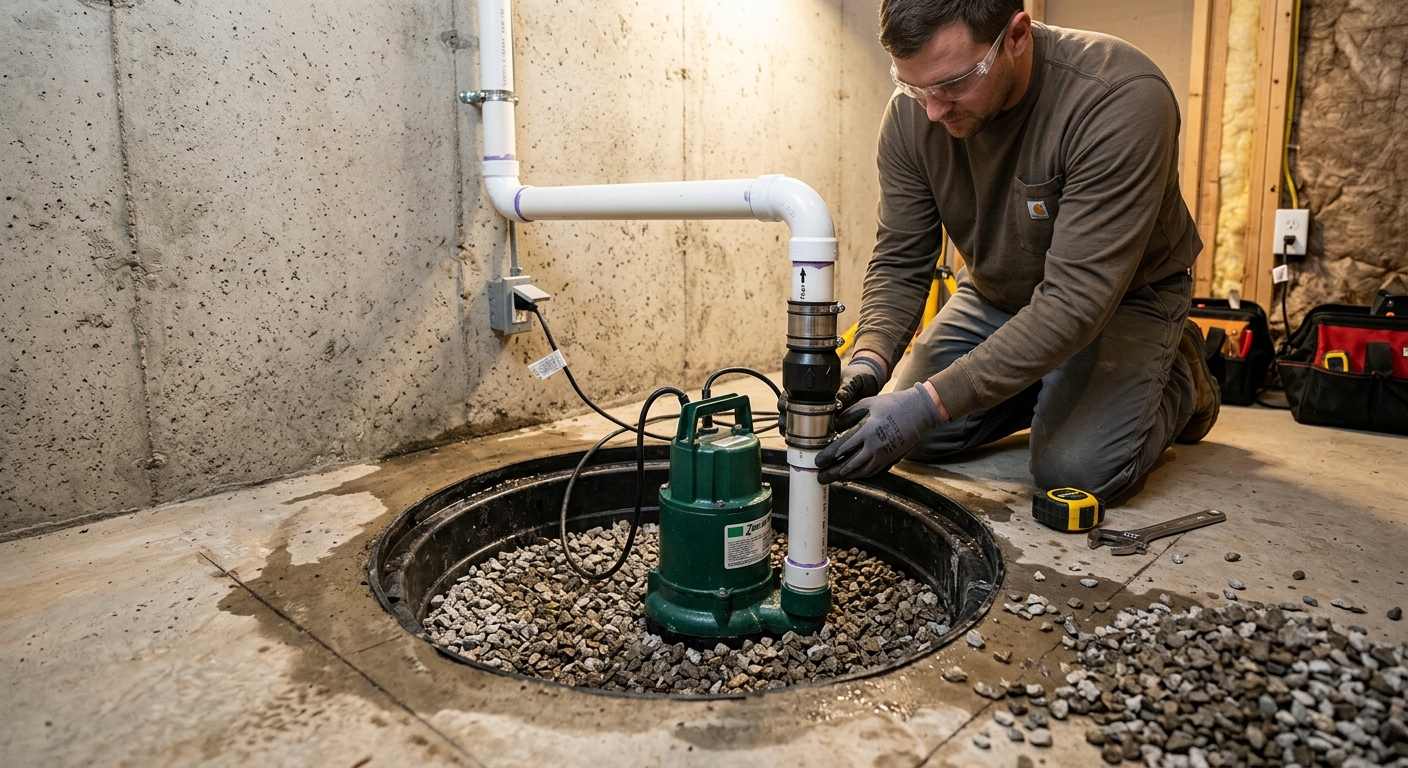
An interior French drain system involves removing a 12–18 inch strip of basement floor along the perimeter, excavating a trench to footer depth, installing perforated drain pipe in a gravel bed, and connecting to a sump basin with pump. In St. Louis, expect to pay $40–$70 per linear foot for professional installation. An 800 square foot basement with 120 linear feet of perimeter costs $4,800–$8,400 including concrete removal, drainage installation, sump pump (½ HP submersible), and new concrete floor patch. Add $400–$900 for battery backup or water-powered backup systems — essential protection given that 40% of repeat waterproofing jobs trace to sump pump failure during storms when you need them most. The system relieves hydrostatic pressure by capturing water at the foundation-floor joint and evacuating it before it enters living space, working continuously even as clay soil expands and contracts with seasonal moisture changes. Installation takes 2–3 days for average basements, and modern systems include vapor barriers that direct wall moisture into the drainage channel.
Vapor Barriers & Interior Perimeter Protection
Vapor barriers installed on basement walls work in conjunction with French drain systems to create comprehensive interior waterproofing. These barriers — typically 20-mil plastic or foil-faced panels — mount to walls and direct moisture vapor downward into the perimeter drainage channel rather than allowing it to evaporate into basement air. Material costs run $0.80–$1.50 per square foot, with professional installation adding $1.50–$3.00 per square foot. In a basement with 8-foot walls and 120 linear feet of perimeter (960 square feet of wall space), vapor barrier installation adds $2,200–$4,300 to your waterproofing budget. The barriers create a finished appearance suitable for covering with drywall on furring strips, prevent efflorescence (white mineral deposits) from appearing on walls, and dramatically reduce basement humidity even when exterior moisture remains present. They're especially valuable in St. Louis homes with brick or stone foundations where exterior sealing proves cost-prohibitive — the barrier contains moisture within the wall cavity while drainage removes it safely.
Why Interior Solutions Protect Finished Basements
Interior basement waterproofing systems excel for finished or partially finished spaces because they require minimal demolition and provide immediate protection without disturbing exterior landscaping. If you've invested in basement living space, recreational areas, or bedroom additions, tearing out drywall for a 12-inch perimeter strip costs far less than excavating around the entire house and risking damage to patios, decks, or HVAC equipment. Interior systems also adapt to St. Louis's unpredictable water table fluctuations — as the Meramec River corridor and low-lying areas experience seasonal flooding, interior French drains activate automatically to handle increased volume. The closed-loop nature of interior waterproofing (barrier + drainage + discharge) means you can finish walls immediately after installation with confidence that moisture won't compromise materials. Exterior waterproofing provides excellent prevention, but interior systems offer superior protection for the investment when your basement already serves as living space and excavation costs would exceed $12,000 due to site challenges.
St. Louis Basement Waterproofing: Local Considerations That Affect Cost
Basement waterproofing sealing St. Louis projects face unique challenges that don't appear in national pricing guides. Our combination of clay soil, proximity to major waterways, older housing stock, and seasonal weather extremes creates cost factors you won't encounter in cities with sandy soil or modern construction standards. Understanding these local variables helps you budget accurately and choose contractors familiar with regional conditions.
Meramec River Flooding & Seasonal Water Table Rise
The Meramec River watershed affects basement waterproofing costs throughout south and west St. Louis County, even in homes miles from the river itself. During spring flooding events, the water table can rise 6–8 feet within 48 hours, overwhelming undersized sump systems and creating pressure that pushes water through floor cracks in homes that stayed dry for years. If your property sits in the Meramec floodplain or within a half-mile of tributary creeks, contractors should specify high-capacity sump pumps (¾ HP or 1 HP), oversized discharge lines (1.5-inch minimum), and battery backup systems as standard equipment rather than upgrades. This flood-zone specification adds $800–$1,500 to installation costs but prevents the $8,000–$12,000 average damage from a single basement flood. The seasonal water table rise also compresses the waterproofing work season — contractors avoid excavation during March through May when soil saturation makes proper compaction impossible, creating summer and fall scheduling bottlenecks that can push prices up 15–20% during peak demand.
South City & Dogtown: Clay Soil Surcharges Explained
South City neighborhoods and Dogtown experience some of St. Louis's most challenging basement waterproofing conditions due to dense clay soil composition and the prevalence of pre-1950 brick foundations. The clay in these areas contains higher montmorillonite content, which expands more aggressively than clay in north county or Illinois bottomlands. Contractors familiar with South City conditions charge $1,500–$3,000 clay soil surcharges on exterior waterproofing to cover trench shoring equipment, additional excavation time, and the risk of encountering deteriorated foundation sections during excavation. The brick foundations common in these neighborhoods often require repointing (mortar joint repair) before waterproofing membranes can seal properly — add $8–$15 per square foot of foundation surface for repointing, which can increase a standard $10,000 waterproofing job to $14,000–$16,000. If you're buying a home in these areas, always budget for waterproofing based on local conditions rather than generic square footage estimates, and request foundation inspections before closing to identify existing moisture damage.
Permit Requirements & Local Contractor Standards
St. Louis City requires permits for sump pump discharge modifications and exterior excavation within 5 feet of property lines, while St. Louis County mandates permits for any waterproofing work involving structural alterations or new drainage connections to public systems. Permit costs run $75–$200 depending on project scope, and inspections add 1–2 days to installation
Frequently Asked Questions
What is exterior excavation and waterproofing for basements in St. Louis?
Exterior excavation and waterproofing involves digging around your foundation's perimeter to expose basement walls, then applying waterproof membranes and installing drainage systems. In St. Louis, this method addresses water intrusion at the source by creating a barrier before moisture penetrates your foundation. The process typically takes 3-5 days and costs $8,000-$15,000 depending on your home's size and soil conditions. This approach works best for homes with severe water problems or when combined with other foundation repairs.
How do interior drainage systems prevent basement flooding?
Interior drainage systems capture water that enters through foundation walls and floor joints, channeling it to a sump pump before it floods your basement. St. Louis contractors install perforated pipes along the interior perimeter beneath your basement floor, covered with gravel and concrete. The system directs groundwater away continuously, protecting your space even during heavy Missouri rainstorms. Installation typically takes 2-3 days and costs $4,000-$8,000, making it more affordable than exterior excavation while providing reliable long-term protection.
What does crack injection and sealing cost for basement walls?
Crack injection and sealing uses polyurethane or epoxy materials to permanently seal foundation cracks and prevent water seepage. For St. Louis homeowners, this targeted repair addresses specific problem areas without excavation. Small crack repairs start around $300-$500 per crack, while extensive sealing of multiple cracks ranges from $1,000-$3,000. The process stops active leaks within hours and prevents further structural damage. Most contractors offer warranties of 5-10 years on properly injected cracks, making this a cost-effective solution for minor water issues.
How much does sump pump installation cost in St. Louis?
Sump pump installation in St. Louis typically costs $800-$2,500 depending on pump quality, basin size, and backup system options. A standard submersible pump with basic installation runs $800-$1,200, while systems with battery backup and water-powered secondary pumps cost $1,500-$2,500. Given St. Louis's heavy spring rainfall and flood risks, many homeowners invest in backup systems to ensure continuous protection during power outages. Professional installation includes proper basin excavation, discharge piping, and testing to handle your basement's specific water volume needs.
Are vapor barriers and waterproof coatings effective for basement moisture?
Vapor barriers and waterproof coatings provide an affordable first line of defense against basement moisture in St. Louis homes. Interior waterproof coatings cost $3-$6 per square foot and seal minor seepage through concrete walls, while vapor barriers prevent humidity and condensation. These solutions work best for preventing dampness rather than stopping active water intrusion. Application takes 1-2 days for most basements and costs $1,500-$4,000 total. However, homes with significant groundwater pressure need more robust drainage systems rather than relying solely on surface treatments.
Is waterproofing a basement worth it in St. Louis?
Basement waterproofing is absolutely worth the investment for St. Louis homeowners dealing with moisture issues or planning to finish basement space. Professional waterproofing prevents mold growth, protects stored belongings, and preserves your foundation's structural integrity against Missouri's wet climate. The average project costs $4,000-$12,000 but prevents tens of thousands in future water damage, foundation repairs, and health issues. Waterproofing also increases home resale value and makes your basement usable year-round. Most systems come with transferable warranties of 10-25 years, providing long-term protection and peace of mind.
How much does it cost to waterproof a basement in St. Louis?
Basement waterproofing costs in St. Louis range from $2,000 for basic interior sealers to $15,000+ for comprehensive exterior excavation systems. Most homeowners spend $4,500-$9,000 for interior drainage systems with sump pump installation, the most common solution for Missouri's clay soil and water table conditions. Factors affecting price include basement size, severity of water problems, chosen waterproofing method, and accessibility. Foundation repair specialists typically offer free inspections and quotes. While the investment seems significant, proper waterproofing prevents costly foundation damage and protects your home's value for decades.
Do St. Louis foundation repair companies offer warranties on basement waterproofing?
Reputable foundation repair companies in St. Louis offer transferable lifetime or 25-year warranties on basement waterproofing systems. These warranties typically cover both materials and labor, guaranteeing your basement stays dry or the contractor returns to fix issues at no charge. Interior drainage systems and sump pumps usually include the longest coverage periods. Before signing contracts, verify warranty terms in writing, including what situations are covered, annual inspection requirements, and whether the warranty transfers to future homeowners. Strong warranties demonstrate contractor confidence and protect your significant waterproofing investment.
Book your free foundation inspection
Tell us what you are seeing and where the home is. The inspection is free, there is no obligation, and you get a written estimate showing the repair method, the number of piers or anchors and the total before anything is scheduled.