Concrete foundation repair is the most critical investment you can make to protect your St. Louis home from structural damage, safety hazards, and lost property value. Our licensed foundation repair specialists serve homeowners across St. Louis and surrounding Missouri communities with fast, proven concrete slab stabilization, crack sealing, and soil void filling. Whether you're dealing with hairline cracks that appeared last spring or settling that's caused doors to stick and floors to slope, our team delivers minimally invasive repairs backed by transferable warranties.
Professional Concrete Foundation Repair in St. Louis
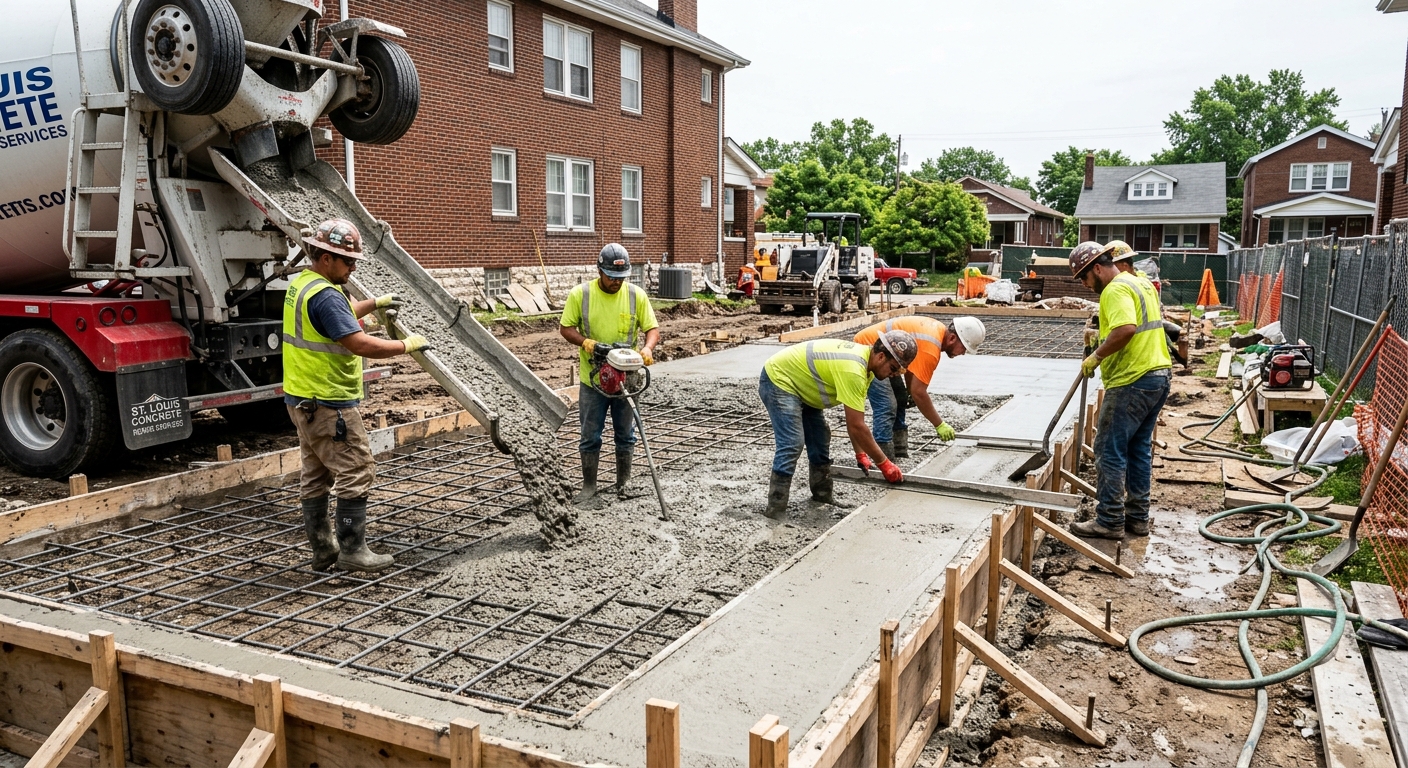
Concrete foundation repair addresses the structural damage caused when your home's concrete slab or footing shifts, cracks, or settles unevenly. In St. Louis, the primary culprit is our region's Alfisol clay soil — a highly reactive soil type that expands 10-15% when saturated and contracts dramatically during dry periods. This seasonal cycle creates constant upward and downward pressure on your foundation, leading to cracks, voids beneath slabs, and differential settlement that can compromise your entire structure.
Why St. Louis Concrete Foundations Fail: Alfisol Clay & Seasonal Movement
The Alfisol clay soil dominant throughout St. Louis County, St. Charles County, and Jefferson County behaves like a sponge. During wet spring months and heavy summer rains, the clay absorbs moisture and swells, pushing upward against your concrete slab. When drought conditions hit or winter freeze cycles pull moisture out, the soil shrinks and creates voids beneath the foundation. Over 20 years, this cycle causes concrete slabs to settle an average of 2-4 inches in the Midwest. The result: cracked foundation walls, uneven floors, and gaps around door frames that worsen every season.
- Clay soil expansion creates upward pressure that cracks concrete at weak points
- Soil contraction forms voids beneath slabs, removing support and causing settling
- Poor drainage around your home accelerates the swell-shrink cycle
- Tree roots near foundations pull moisture from soil, creating uneven settlement patterns
- Freeze-thaw cycles expand existing cracks exponentially each winter
How to Identify Structural vs. Cosmetic Foundation Damage
Not every crack requires immediate foundation repair, but knowing the difference between cosmetic settling and structural failure protects your home and your wallet. Hairline cracks less than 1/16 inch wide are typically cosmetic — normal shrinkage as concrete cures. Structural cracks are ¼ inch or wider, especially if they're horizontal, stair-step through mortar joints, or widening at the top. If you can slide a dime into the crack, it's structural. Other red flags: doors and windows that suddenly won't close properly, floors that slope more than 1 inch over 10 feet, and visible gaps between walls and ceilings.
- Vertical cracks narrower than 1/16 inch: monitor annually, typically cosmetic
- Horizontal or diagonal cracks ¼ inch or wider: structural movement requiring repair
- Stair-step cracks in brick or block: indicates differential settlement
- Cracks that widen toward the top: active upward pressure from soil expansion
- Multiple cracks radiating from one corner: localized void beneath slab
If you're seeing any structural indicators, schedule a professional foundation inspection today. Our St. Louis team provides same-day assessments with no-obligation repair estimates. Call (314) 798-9554 to book your inspection.
Slab Foundation Repair for St. Louis Homes
Concrete slab foundation repair is specifically engineered for the slab-on-grade construction common in St. Louis ranch homes, bi-levels, and mid-century residential neighborhoods built between 1950 and 1985. Unlike basement foundations, slabs sit directly on the soil with no crawlspace beneath. When soil voids form or compaction occurs, the entire slab settles unevenly, creating cracks and floor slopes. Repairing concrete slab foundation issues requires lifting the settled sections back to level, filling the voids beneath, and sealing cracks to prevent moisture intrusion.
Polyurethane Foam Leveling vs. Mud Jacking for Concrete Slabs
Two primary methods lift and stabilize settled concrete slabs: polyurethane foam injection and traditional mud jacking. Polyurethane foam leveling injects expanding foam through dime-sized holes drilled every 4-6 feet along the settled area. The foam expands within seconds, filling voids and lifting the slab back to level. It cures in 1 hour and weighs just 2-4 pounds per cubic foot, adding no additional load to already compromised soil. Mud jacking pumps a heavy slurry of sand, cement, and water beneath the slab through larger 2-inch holes. It cures in 24-48 hours and weighs 100+ pounds per cubic foot, which can cause re-settling on weak soils.
- Polyurethane foam: lightweight, cures in 1 hour, minimal drilling, 10+ year performance
- Mud jacking: heavier, 24-48 hour cure time, larger holes, lower upfront cost but higher re-settlement risk
- Foam works in tight spaces and requires no excavation around perimeter plantings
- Mud jacking may re-settle on St. Louis clay soils within 3-5 years
For most St. Louis slab foundation repairs, we recommend polyurethane foam leveling. It's faster, longer-lasting, and better suited to our region's reactive clay soils.
When Your Slab Can Be Saved vs. Full Replacement
Most concrete slab foundation damage can be repaired without full slab replacement. If your slab has settled unevenly but the concrete itself remains structurally sound — no severe spalling, exposed rebar, or large sections broken into pieces — leveling and stabilization will restore structural integrity. However, full slab replacement becomes necessary when the concrete has deteriorated beyond repair: multiple large cracks exceeding 2 inches wide, severe erosion beneath 40% or more of the slab, or concrete that crumbles when you scrape it with a screwdriver. Replacement typically costs $30,000-$60,000, while targeted slab foundation repairs range from $3,500-$12,000 depending on the affected area.
- Repair if: isolated settling, cracks under 1 inch wide, concrete surface intact
- Replace if: severe spalling, rebar exposure, crumbling concrete, or settlement exceeding 6 inches
- Repair saves 60-80% compared to full replacement costs
How We Repair Concrete Slab Foundations
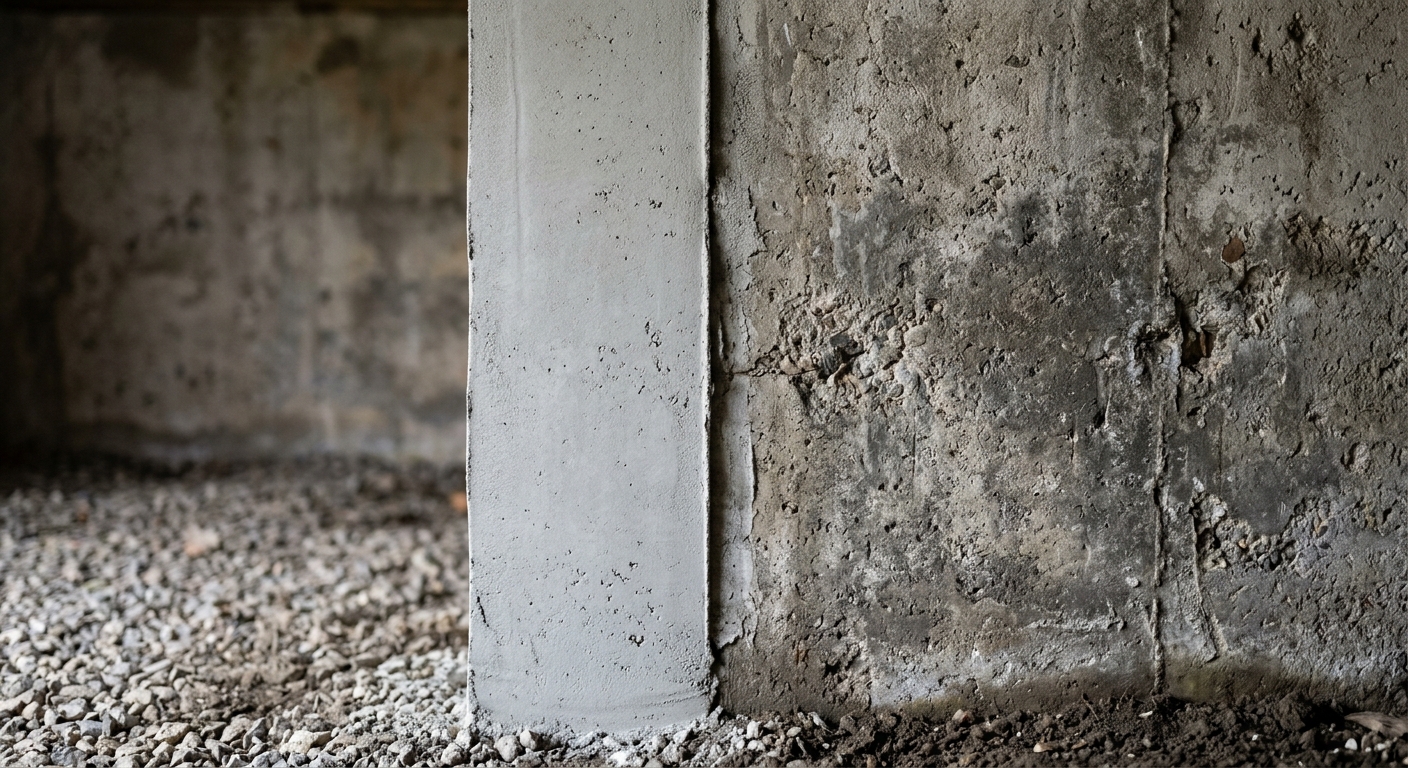
Repairing concrete slab foundation issues follows a systematic process designed to lift settled sections, fill voids, seal cracks, and prevent future movement. Our team starts with a detailed foundation inspection using laser levels to measure floor slopes and thermal imaging to detect hidden voids beneath the slab. Once we've mapped the problem areas, we drill small injection points and pump polyurethane foam or install steel piers depending on the severity of settlement. After leveling, we seal all cracks with flexible polyurethane or epoxy sealants and apply exterior waterproofing where moisture intrusion contributed to the damage.
Step-by-Step Slab Foundation Repair Process
Our concrete foundation repair process begins with a foundation inspection at your St. Louis home. We measure floor elevations in every room, photograph all visible cracks, and use soil probes to check compaction levels around the perimeter. Next, we drill injection points through the slab at calculated intervals based on void locations. Polyurethane foam is pumped through these points in controlled lifts — we monitor slab elevation continuously to prevent over-lifting. The foam expands to fill voids and exerts upward pressure, raising the slab back to level. Once leveling is complete, we seal the injection holes with color-matched concrete patch and move to crack repair.
- Inspection and elevation mapping: laser level readings establish baseline
- Drill injection points every 4-6 feet in settled areas
- Pump polyurethane foam in controlled lifts while monitoring slab elevation
- Seal injection holes and cracks with flexible polyurethane or epoxy
- Apply exterior waterproofing or install drainage if moisture contributed to settling
The entire slab foundation repair process for a typical St. Louis home takes 1-2 days from start to finish. You can walk on the repaired areas within hours, and there's no need to vacate your home during the work.
Waterproofing & Crack Sealing After Leveling
After we level and stabilize your concrete foundation, sealing cracks and controlling moisture are essential to prevent future damage. We inject flexible polyurethane sealant into all cracks wider than ⅛ inch. This sealant remains flexible as the concrete expands and contracts with temperature changes, preventing the crack from reopening. For homes where poor drainage contributed to soil erosion beneath the slab, we install perimeter drains or extend downspouts to move water at least 6 feet away from the foundation. Waterproofing the exterior foundation wall with a rubberized membrane adds a final layer of protection against moisture intrusion that can restart the settlement cycle.
- Flexible polyurethane crack sealant prevents water infiltration and freeze-thaw damage
- Perimeter drainage redirects water away from foundation footprint
- Exterior waterproofing membranes stop moisture migration into concrete
Common Slab Foundation Repairs We Handle
Slab foundation repairs vary in scope and cost depending on the severity and location of the damage. Our St. Louis team handles everything from minor crack sealing to full slab stabilization with pier systems. Understanding the types of repairs available helps you set realistic expectations and budget for the work your home needs.
Crack Repair & Void Filling (Minimal Disruption)
Crack repair and void filling are the least invasive concrete foundation repairs and address early-stage settling before it becomes a structural emergency. If your slab has settled less than 1 inch and cracks are isolated to one or two areas, polyurethane foam injection fills the voids beneath the slab and stabilizes the concrete without the need for piers. We drill small holes, inject foam to fill voids, and seal surface cracks. This repair typically costs $1,200-$3,500 depending on the number of voids and total foam volume required. It's a same-day repair with minimal disruption — no need to move furniture or leave your home.
- Best for isolated settling under 1 inch and cracks narrower than ½ inch
- Polyurethane foam fills voids and prevents further settlement
- Completed in 4-6 hours with same-day cure time
- Cost range: $1,200-$3,500 for typical St. Louis slab repair
Pier Installation & Full Slab Stabilization
When settlement exceeds 2 inches or when soil conditions are too unstable for foam alone, pier installation provides permanent slab stabilization. We install helical steel piers or push piers beneath the slab at strategic load-bearing points. These piers extend down through the weak clay soil until they reach stable load-bearing strata, often 10-20 feet deep. Hydraulic jacks mounted on the piers lift the slab back to level, and the piers remain in place to permanently support the weight. Pier installation costs $1,000-$1,500 per pier, and most slab foundation repairs require 6-12 piers depending on the home's footprint and settlement pattern. Total costs for pier-supported slab stabilization range from $8,000-$18,000.
- Helical piers extend 10-20 feet to stable soil or bedrock
- Hydraulic jacks lift slab incrementally to prevent concrete fracture
- Permanent solution for homes with severe or recurring settlement
- Cost: $1,000-$1,500 per pier; 6-12 piers typical for St. Louis slab homes
Foundation Repair Cost Guide for St. Louis
Concrete foundation repair costs in St. Louis vary based on the severity of damage, repair method, and square footage of the affected area. Here's a breakdown of typical costs for the most common slab foundation repairs we perform:
- Crack sealing only (cosmetic cracks, no lifting): $400-$1,200
- Polyurethane foam void filling (minor settling): $1,200-$3,500
- Slab leveling with foam (moderate settlement, 1-2 inches): $3,500-$7,000
- Pier installation and slab stabilization (severe settlement): $8,000-$18,000
- Full slab replacement (severe deterioration): $30,000-$60,000
We provide free foundation inspections and no-obligation written estimates. Call (314) 798-9554 to schedule your assessment and receive a detailed cost breakdown for your specific situation.
Signs You Need Concrete Foundation Repairs Now
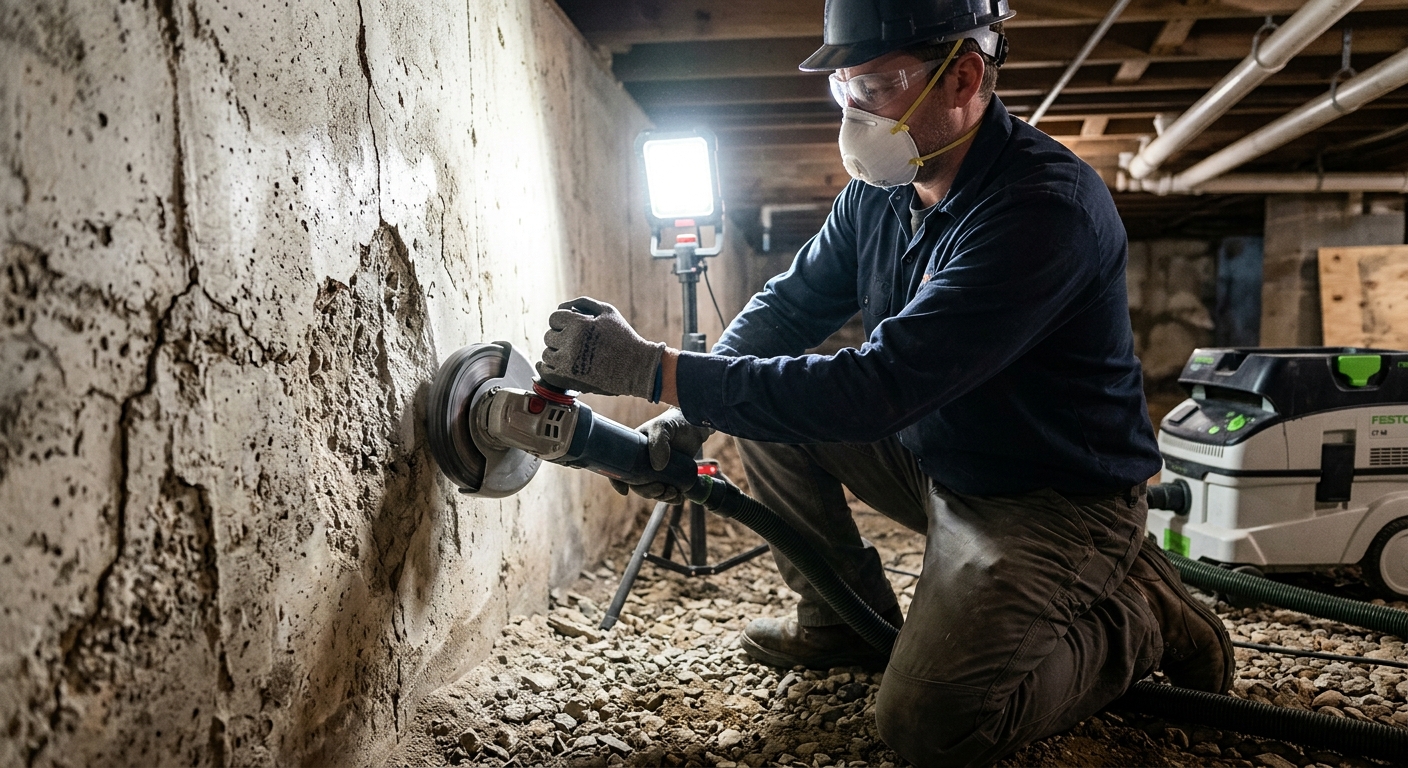
Concrete foundation repairs become necessary when you observe specific warning signs that indicate active structural movement. Knowing when to monitor a crack versus when to schedule immediate repair can save you thousands of dollars and prevent catastrophic damage. In St. Louis, the freeze-thaw cycle from November through March accelerates foundation damage exponentially — cracks that seem minor in October can double in width by February as water infiltrates, freezes, and expands.
Monitor vs. Schedule vs. Urgent: The Crack Severity Scale
Use this severity scale to determine your timeline for concrete foundation repair:
Monitor annually (not urgent): Hairline vertical cracks less than 1/16 inch wide, no floor slope, doors and windows operate normally. These are cosmetic shrinkage cracks common in curing concrete. Check them each spring and fall to confirm they're not widening.
Schedule repair within 3-6 months: Cracks ¼ inch wide or wider, minor floor slope (less than ½ inch over 10 feet), one or two doors sticking seasonally. These indicate early settling that will worsen but hasn't reached emergency status. Schedule a foundation inspection and plan repairs before winter.
Urgent (schedule within 2 weeks): Horizontal cracks in foundation walls, stair-step cracks in masonry, cracks wider at the top than the bottom, floor slopes exceeding 1 inch over 10 feet, multiple doors that won't close, visible gaps between walls and ceilings, or cracks that have widened noticeably in the past 6 months. These are active foundation failures requiring immediate stabilization.
- Horizontal cracks indicate serious lateral pressure — repair immediately
- Cracks wider than ¼ inch allow moisture infiltration that accelerates damage
- Floor slopes over 1 inch suggest voids beneath the slab have formed
- Stair-step cracks in brick or block: differential settlement in progress
Why Acting Before Winter Protects Your Home's Value
Completing concrete foundation repairs before winter freeze-thaw cycles begin protects both your home's structural integrity and its resale value. When water enters cracks and freezes, it expands with 9% greater volume, forcing cracks to widen. A ¼-inch crack in September can become a ½-inch crack by March after just one winter. Beyond the structural risk, foundation issues create a stigma during home sales. According to National Association of Realtors data, foundation repairs completed before listing recover 80-90% of their
Frequently Asked Questions
How much does concrete foundation repair cost in St. Louis?
Concrete foundation repair costs in St. Louis typically range from $2,000 to $8,000 depending on the severity of damage and repair method needed. Minor crack sealing may cost $500 to $1,500, while extensive slab foundation repairs involving mudjacking or polyurethane foam injection can reach $5,000 to $10,000. Foundation underpinning for severe settlement issues may exceed $10,000. We provide free inspections and detailed estimates so you know exactly what your specific foundation issue will cost to repair properly.
What are the signs my concrete slab foundation needs repair in St. Louis?
Common signs your St. Louis concrete slab foundation needs repair include visible cracks in floors or walls wider than one-quarter inch, uneven or sloping floors, doors and windows that stick or won't close properly, gaps between walls and ceiling or floor, and cracks in exterior brickwork. You may also notice water pooling near your foundation after rain or separated baseboards. Missouri's clay soil expands and contracts with moisture changes, making foundation settlement a frequent issue that requires professional evaluation and timely repair.
How long does concrete foundation repair take to complete?
Most concrete foundation repair projects in St. Louis take one to three days to complete depending on the extent of damage and repair method used. Simple crack injection repairs can be finished in just a few hours, while slab foundation repairs using mudjacking or polyurethane foam typically take one full day. More extensive repairs involving multiple piers or underpinning may require two to five days. We work efficiently to minimize disruption to your home while ensuring repairs meet structural engineering standards and local building codes.
Are you licensed and insured for foundation repair work in Missouri?
Yes, we are fully licensed, bonded, and insured to perform concrete foundation repair throughout Missouri including St. Louis and surrounding counties. Our technicians hold proper certifications for structural foundation work and we carry comprehensive general liability and workers compensation insurance to protect your property and our team. We comply with all Missouri building codes and obtain necessary permits for foundation repairs. Our licensing and insurance credentials are available for review, and we provide written warranties on all foundation repair work we complete.
What is the difference between mudjacking and polyurethane foam injection for slab foundation repairs?
Mudjacking uses a cement-based slurry pumped beneath sunken concrete slabs to lift them back to level, while polyurethane foam injection uses expanding foam that is lighter and cures faster. Mudjacking costs less upfront, typically $500 to $1,500 per section, but adds significant weight to soil. Polyurethane foam is more expensive at $1,200 to $3,000 per area but weighs just two pounds per cubic foot compared to mudjacking's 100 pounds, reducing future settlement risk. Foam also cures in 15 minutes versus 24 hours for mudjacking.
Do you serve all areas of St. Louis including St. Charles and Jefferson County?
Yes, we provide concrete foundation repair services throughout the greater St. Louis metropolitan area including St. Louis City, St. Louis County, St. Charles County, Jefferson County, and surrounding communities. Our service area extends to Clayton, Chesterfield, O'Fallon, Florissant, Ballwin, Maryland Heights, Kirkwood, and Webster Groves. We regularly handle foundation repairs in both older city neighborhoods with historic homes and newer suburban developments. Contact us to confirm we serve your specific location and to schedule a free foundation inspection and repair estimate.
How long do concrete foundation repairs last?
Professional concrete foundation repairs in St. Louis typically last 25 to 30 years or longer when performed correctly using quality materials and methods. Steel piers and helical piers for foundation stabilization are engineered to provide permanent solutions. Polyurethane foam injection repairs remain stable for decades and won't break down. Epoxy and polyurethane crack injections create bonds stronger than surrounding concrete. We provide transferable lifetime warranties on many foundation repair systems. Proper drainage maintenance and gutter management help ensure repairs perform as designed for the maximum lifespan.
Can concrete foundation cracks be repaired or does the entire slab need replacement?
Most concrete foundation cracks can be effectively repaired without replacing the entire slab, saving thousands of dollars compared to full replacement. Hairline and minor cracks under one-quarter inch wide respond well to epoxy or polyurethane injection that seals and stabilizes the concrete. Wider structural cracks may require carbon fiber reinforcement, steel piers, or slab jacking to address underlying settlement issues before sealing. Complete slab replacement is rarely necessary and only recommended when more than 40 percent of the foundation is severely damaged or compromised beyond effective repair.
Book your free foundation inspection
Tell us what you are seeing and where the home is. The inspection is free, there is no obligation, and you get a written estimate showing the repair method, the number of piers or anchors and the total before anything is scheduled.