Professional Mudjacking Concrete Near Me in St. Louis — Fast & Affordable
Mudjacking concrete near me is the fastest, most affordable way to repair sunken slabs, driveways, and foundation concrete in St. Louis without the cost or hassle of full replacement. Our team specializes in concrete lifting across St. Louis, Clayton, Webster Groves, and the wider St. Louis County area, delivering same-day results that restore safety, drainage, and curb appeal. With over 15 years serving St. Louis homeowners, we understand the unique challenges of Missouri clay soil and how to fix settled concrete permanently. If you've noticed uneven slabs, water pooling near your foundation, or tripping hazards on your walkway, mudjacking offers a proven, cost-effective solution ready for use the same day.
Mudjacking Cost Per Square Foot in St. Louis
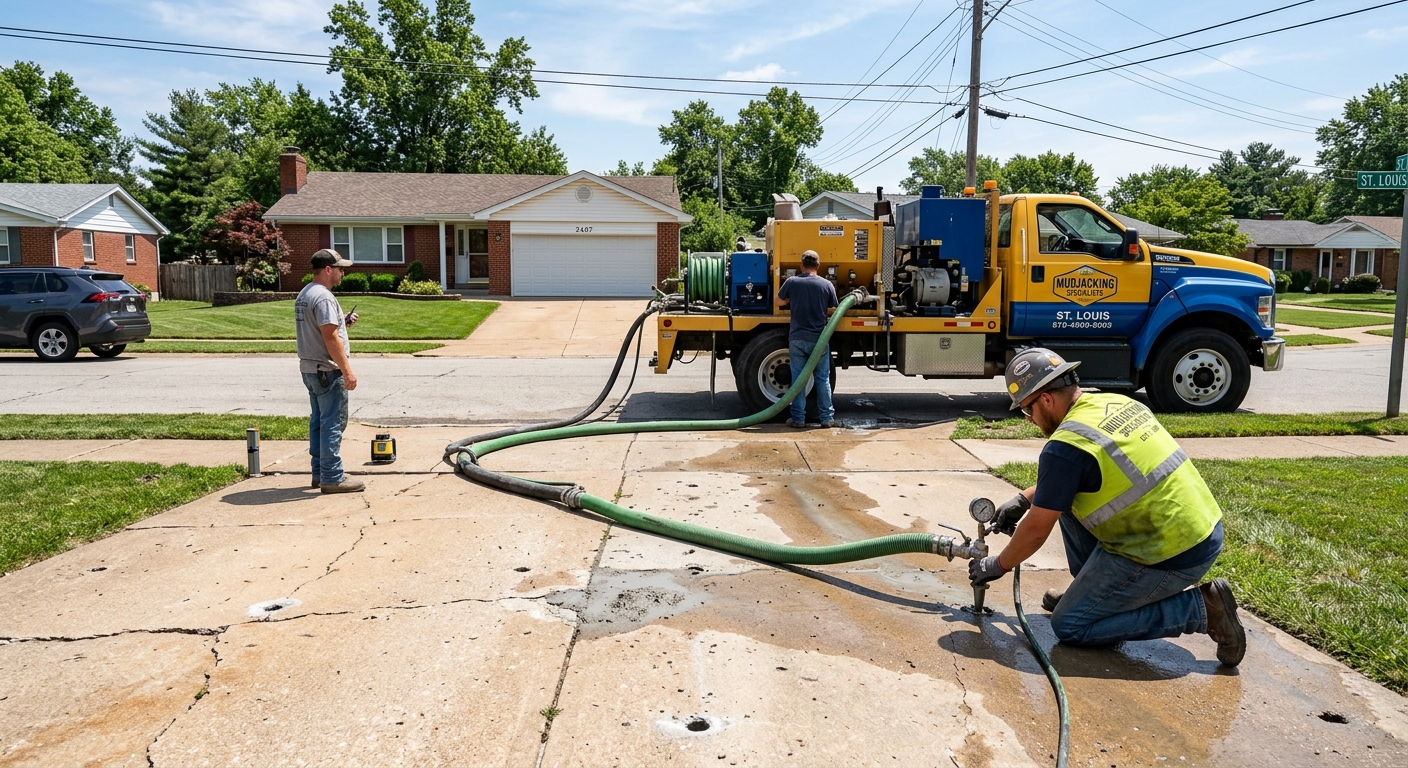
Mudjacking cost per square foot in St. Louis typically ranges from $3 to $6, making it one of the most budget-friendly concrete repair options available. The exact price depends on the size of the settled area, the thickness of your slab, and how much void space needs filling beneath the concrete. Most residential driveway and sidewalk projects average $4 per square foot, while larger commercial slabs or foundation work may approach the higher end of the range. Unlike concrete replacement, which requires demolition, hauling, and multi-day curing, mudjacking delivers results in hours at a fraction of the cost.
Why Mudjacking Costs 50–70% Less Than Concrete Replacement
Concrete replacement in St. Louis costs between $8 and $15 per square foot when you factor in tear-out, disposal, new rebar, pouring, and finishing. Mudjacking eliminates every one of those expenses by lifting your existing slab back to level using a pressurized grout slurry. You avoid the labor cost of demolition crews, the weight fees at the landfill, and the week-long wait for fresh concrete to cure. For a typical 400-square-foot driveway, mudjacking saves homeowners $2,000 to $4,000 compared to full replacement. The only time replacement makes sense is when the concrete itself is severely cracked, spalling, or structurally compromised — and even then, mudjacking can extend the life of borderline slabs by years.
St. Louis Mudjacking Pricing: Variables That Affect Your Quote
Several factors influence the final mudjacking cost for your project:
- Slab thickness: Thicker slabs (6 inches vs. 4 inches) require more grout to fill voids, increasing material cost.
- Void size: If soil erosion created large cavities beneath the concrete, we pump more slurry to achieve full support.
- Access difficulty: Tight spaces, gated areas, or slabs surrounded by landscaping may require smaller equipment or hand mixing, adding time.
- Number of injection points: We drill strategic holes to distribute grout evenly; more settled sections mean more drilling and pumping.
- Soil conditions: St. Louis clay soil compacts well, but if the subgrade is still eroding or saturated, we may recommend drainage work first to prevent recurrence.
Every project starts with a free on-site inspection where we measure settlement, probe for voids, and provide a transparent, no-obligation quote. Call (314) 555-0190 to schedule your assessment today.
Mudjacking vs. Polyjacking: Cost & Performance Comparison
Polyjacking (also called polyurethane foam lifting) is a newer alternative that injects expanding foam instead of cement-based grout. While foam cures faster and weighs less, it costs $5 to $25 per square foot — often double or triple the price of mudjacking. For St. Louis homeowners, mudjacking wins on value: our dense grout slurry adds structural mass, fills voids completely, and performs exceptionally well on stable clay soil. Polyurethane foam is best for weak or waterlogged soil where weight is a concern, but most residential driveways, patios, and foundation slabs don't require that premium solution. You get the same levelness, the same safety improvement, and decades of durability at half the cost with mudjacking.
How Concrete Lifting Works (Mudjacking Process)
Concrete lifting mudjacking is a precise, minimally invasive process that raises settled slabs back to their original elevation in just a few hours. Our technicians drill small holes through the concrete surface, insert a pump nozzle, and inject a cement-based grout slurry into the voids beneath the slab. As the grout fills empty space, it generates hydraulic pressure that lifts the concrete slab upward. We monitor the lift in real time, adjusting pressure and injection points until the slab reaches the target height. Once level, we patch the drill holes with color-matched concrete and clean the work area. The entire process causes minimal disruption, produces little noise, and leaves your concrete ready to use the same day.
Step-by-Step Mudjacking Process: From Drilling to Patching
Here's exactly how we lift your sunken concrete:
- Site inspection: We identify settlement points, mark injection locations, and measure the drop using a laser level.
- Drilling: We drill 1.5-inch diameter holes through the slab at strategic points above the voids — typically every 3 to 5 feet.
- Grout mixing: We prepare a high-strength slurry of Portland cement, sand, and water, adjusted for the specific void size and soil type.
- Pumping: A hydraulic pump injects the grout mixture through the holes at controlled pressure, filling voids from the bottom up.
- Lifting: As grout fills the space, it exerts upward force, raising the slab incrementally until it matches the surrounding concrete.
- Patching: We fill drill holes with fresh concrete mix, smooth the surface, and clean any residue.
The slab is immediately stable enough for foot traffic and can handle vehicle weight within 24 hours once the grout fully cures.
Why Mudjacking Concrete Is Ready to Use Same Day
Unlike poured concrete, which requires 7 to 10 days to reach full strength, mudjacking uses a dense grout that sets within hours. You can walk on the lifted slab as soon as we finish patching the holes, and you can drive on it within 24 hours. This same-day usability is a game-changer for busy homeowners and businesses that can't afford downtime. No barricades, no waiting, no rescheduling deliveries or parking off-site for a week. Mudjacking concrete restores function immediately while delivering the same long-term durability as traditional slab replacement.
Mudjacking Driveway & Slab Lifting: What to Expect
A typical mudjacking driveway project in St. Louis takes 2 to 4 hours from start to finish. You'll see our truck arrive with the pump rig and grout mixer, hear moderate drilling noise for 10 to 15 minutes, then watch the slab rise in real time as we inject the material. The process is surprisingly clean — we contain runoff with tarps and hose down any residue before we leave. Most homeowners are amazed at how little mess remains and how quickly the work goes. If you have settled sidewalks, garage floors, or patio slabs, the timeline is similar: fast, efficient, and minimally disruptive. Call (314) 555-0190 to discuss your project and get a same-day quote.
Slab Jacking vs. Mudjacking: What's the Difference?
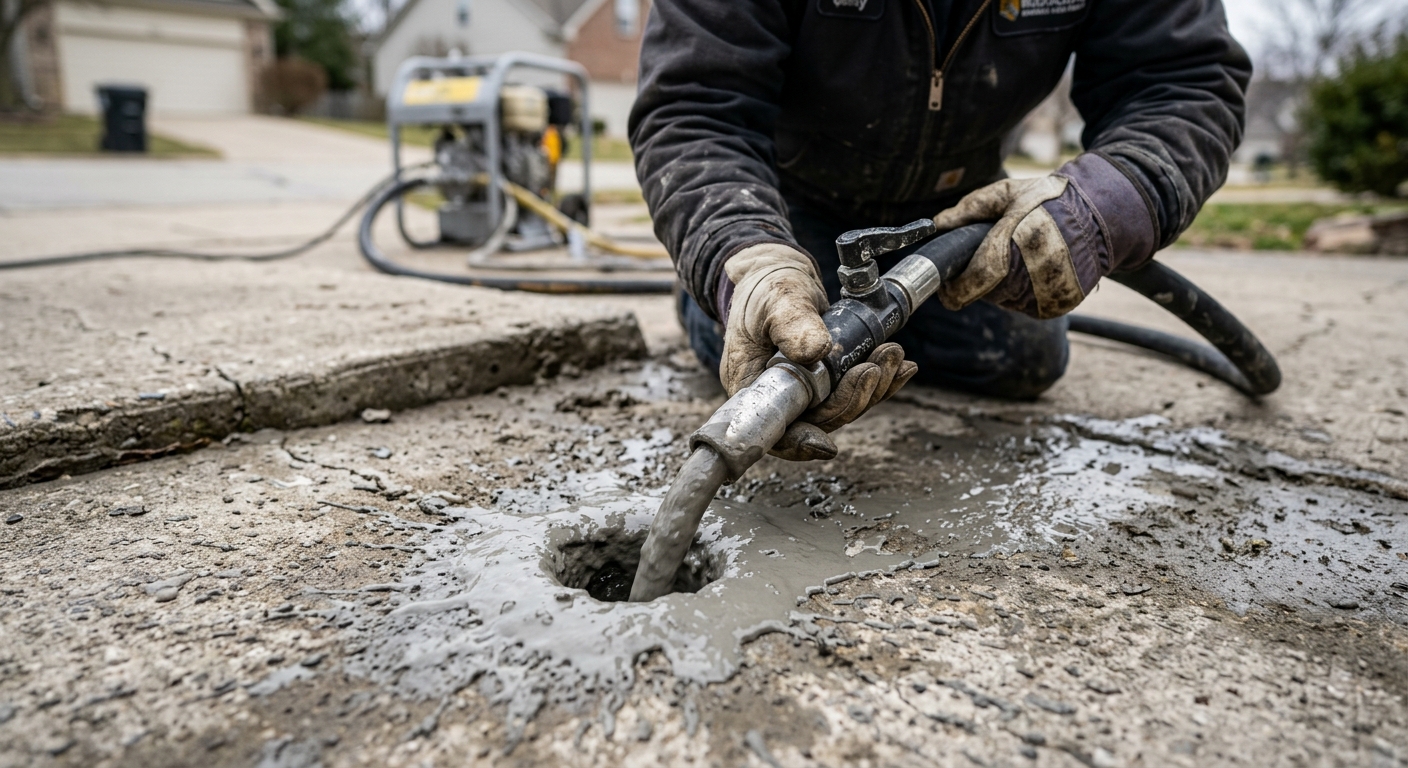
Slab jacking mudjacking is actually the same process — the terms are used interchangeably depending on your region or contractor. Both refer to the technique of drilling holes, pumping a cement-based slurry beneath a settled slab, and hydraulically lifting it back to level. Some contractors use "slab jacking" to emphasize the lifting action, while others prefer "mudjacking" to describe the grout material (historically called "mud" in the trade). In St. Louis, you'll hear both terms, but the equipment, materials, and results are identical. Whether you search for slab jacking or mudjacking, you're looking for the same proven concrete lifting solution.
Is Slab Jacking the Same as Mudjacking?
Yes. Slab jacking is simply another name for mudjacking — there is no technical difference between the two. The confusion arises because different contractors, regions, and online sources use the terms inconsistently. Some prefer "slab jacking" to sound more technical or modern, while "mudjacking" has been the industry standard for decades. Both describe the process of injecting grout beneath a sunken concrete slab to raise it. If a contractor offers "slab jacking," ask what material they inject — if it's a cement-sand slurry, it's mudjacking. If it's polyurethane foam, it's polyjacking (a different process entirely).
Mudjacking Concrete vs. Polyurethane Foam Lifting
Mudjacking and polyurethane foam lifting (polyjacking) both lift concrete, but the materials and costs differ significantly. Mudjacking uses a heavy cement-based grout that weighs about 100 pounds per cubic foot, fills voids completely, and adds structural support beneath the slab. Polyurethane foam weighs just 2 to 4 pounds per cubic foot, expands to fill voids, and cures in minutes. Foam is ideal for weak or waterlogged soil where weight is a concern, but it costs two to three times more than mudjacking. For St. Louis clay soil — which is dense, stable, and compacts well — the extra weight of mudjacking grout is an advantage, not a drawback. You get superior fill, better load distribution, and decades of proven performance at half the price of foam.
Why Mudjacking Wins for St. Louis Homeowners
St. Louis sits on expansive clay soil that shrinks and swells with seasonal moisture changes, creating voids beneath concrete slabs. Mudjacking addresses this perfectly: the dense grout fills those voids completely, compacts the remaining soil, and adds mass that resists future settlement. Polyurethane foam, while faster-curing, doesn't provide the same compaction or structural support. For driveways, garage floors, and foundation slabs in St. Louis, Clayton, and Webster Groves, mudjacking is the proven, cost-effective choice that local contractors have relied on for over 50 years. You get the same levelness and safety at a fraction of the cost, with materials perfectly suited to Missouri soil conditions.
When to Repair Sunken Concrete with Mudjacking
Sunken concrete repair mudjacking is the ideal solution when soil settlement, erosion, or washout creates voids beneath your slab, causing it to drop or tilt. The concrete itself must still be structurally sound — mudjacking lifts and stabilizes slabs, but it doesn't repair large cracks, spalling, or concrete that's crumbling from age or freeze-thaw damage. If your slab has settled 1 to 4 inches, shows no major structural cracks, and the surface is intact, mudjacking restores it to level quickly and affordably. If the concrete is severely damaged, replacement may be the better long-term investment, but mudjacking can still extend the life of borderline slabs by years while you plan for future work.
Warning Signs Your Concrete Needs Mudjacking
Watch for these common symptoms of settled concrete around your St. Louis property:
- Uneven driveway sections: One slab panel sits lower than adjacent sections, creating a "step" or bump when you drive over it.
- Gaps at garage doors: Settled garage floors create visible gaps at the bottom of your overhead door, letting in drafts, pests, and water.
- Water pooling near foundation: A sunken slab directs rainwater toward your home instead of away, increasing basement leak risk.
- Tripping hazards on sidewalks: Raised edges between settled and stable sections create dangerous lips that catch shoes and strollers.
- Tilted patio or pool deck: One side of your outdoor slab has dropped, creating an obvious slope or standing water after rain.
If you see any of these signs, call (314) 555-0190 for a free inspection. We'll assess the extent of settlement, identify the cause, and recommend mudjacking or alternative solutions based on your slab's condition.
St. Louis Soil Settlement: Why Your Concrete Sinks
St. Louis clay soil is highly expansive, meaning it swells when wet and shrinks when dry. Over the course of a year, this cycle can cause soil beneath your concrete to expand and contract by 10 to 15 percent, creating voids as the soil pulls away from the slab. Add poor drainage, downspouts that dump water near the foundation, or erosion from freeze-thaw cycles, and those voids grow larger. Eventually, the concrete loses support and settles into the empty space. Mudjacking fills those voids with dense grout, restoring the support your slab needs. However, if the root cause — poor grading, leaking gutters, or inadequate compaction during original construction — isn't addressed, settlement may recur. We inspect drainage and soil conditions during every estimate to ensure mudjacking delivers permanent results.
When Concrete Replacement Is Necessary Instead
Mudjacking is not the right solution for every settled slab. Replacement is the better option when:
- The concrete surface is severely cracked, with cracks wider than 1/4 inch or numerous interconnected fractures.
- Spalling or flaking has compromised the slab's structural integrity, especially if rebar is exposed.
- The slab has settled more than 4 to 6 inches, requiring excessive grout volume that makes replacement more cost-effective.
- Underlying soil is unstable, waterlogged, or still eroding, meaning the slab will settle again even after mudjacking.
- The concrete is decades old and nearing the end of its lifespan, with multiple previous repairs already performed.
During your free inspection, we'll give you an honest assessment of whether mudjacking or replacement is the smarter investment. Our goal is long-term results, not quick fixes that fail in a year.
Mudjacking for Driveways, Patios, and Foundation Slabs
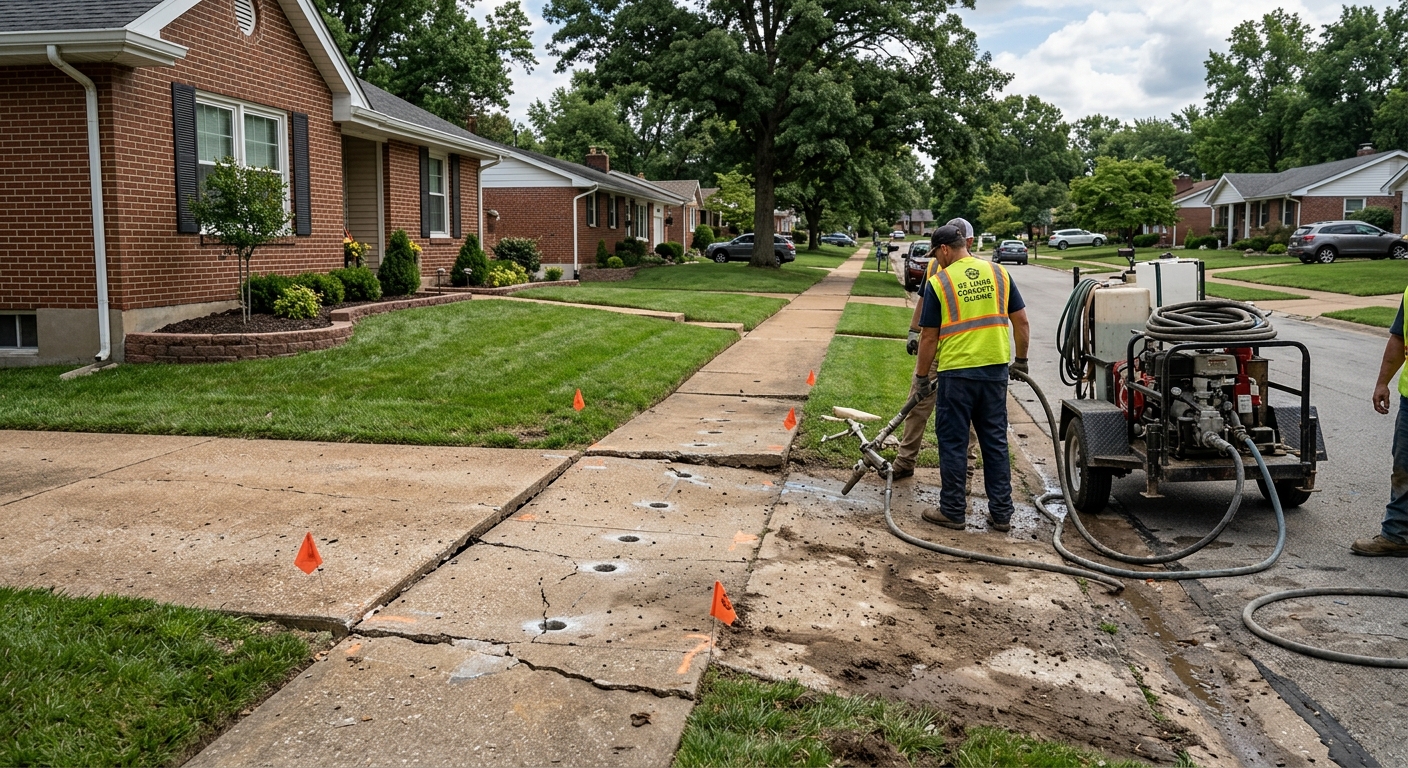
Mudjacking driveway foundation slabs, garage floors, sidewalks, and patios is one of the most common concrete lifting applications in St. Louis. These high-traffic areas settle first because they sit directly on compacted fill soil that erodes or shifts over time. Driveways bear the weight of vehicles daily, patios channel rainwater runoff, and foundation slabs carry the load of your entire home. When voids form beneath these surfaces, mudjacking restores the support, eliminates tripping hazards, and prevents water from pooling near your foundation. We've lifted thousands of square feet of concrete across St. Louis County, Clayton, and Webster Groves, solving settlement issues quickly and affordably without the disruption of full replacement.
Driveway Mudjacking: Fixing Settlement in St. Louis Clay Soil
St. Louis clay soil is notoriously unstable due to its high moisture sensitivity. When rain saturates the soil, it swells and exerts upward pressure on your driveway. When it dries out, it shrinks and pulls away, leaving voids. Over years, this cycle causes driveway slabs to settle unevenly, creating bumps, dips, and standing water. Mudjacking driveway slabs fills those voids with a dense cement-based grout that compacts the remaining soil and lifts the concrete back to its original grade. The result is a smooth, level surface that drains properly and looks like new. Most driveway mudjacking projects take 2 to 4 hours and cost a fraction of what you'd pay to tear out and repour the same area.
Garage Floors, Sidewalks & Pool
Frequently Asked Questions
Do you offer concrete leveling in St. Louis, MO?
Yes, we provide professional concrete leveling services throughout St. Louis, Missouri and surrounding areas including St. Charles, Chesterfield, and Ballwin. Our mudjacking and slab jacking solutions repair sunken driveways, sidewalks, patios, garage floors, and pool decks. We use proven lifting techniques to restore your concrete surfaces to their original level position, eliminating trip hazards and improving curb appeal. Our crews serve both residential and commercial properties across the greater St. Louis metro area with same-week availability in most cases.
What services does Saint Louis Polyjack provide?
We specialize in concrete lifting mudjacking for driveways, sidewalks, patios, garage slabs, basement floors, and commercial walkways throughout the St. Louis region. Our services include sunken concrete repair using traditional mudjacking and modern polyurethane foam injection methods. We also address foundation settlement issues that cause concrete to sink. Each project includes a thorough inspection to identify the root cause of sinking, professional leveling work, and clean-up. We handle small residential repairs to large commercial concrete restoration projects with the same attention to detail and quality workmanship.
How long does concrete leveling take?
Most residential mudjacking projects in St. Louis are completed in two to four hours depending on the size and number of slabs being lifted. A typical driveway leveling takes about three hours from start to finish. Smaller jobs like sidewalk panel lifting may only require one to two hours. Your concrete is ready for foot traffic immediately after we finish, and vehicles can use driveways within 24 hours. We schedule appointments to minimize disruption to your day and complete the work efficiently without sacrificing quality or precision in the lifting process.
Do I need to be home for an estimate?
You do not need to be home for us to inspect and measure your sunken concrete in most cases. Our estimators can assess driveway slabs, sidewalks, patios, and other exterior concrete from your property exterior and provide an accurate quote. However, if the concrete issue involves your garage floor, basement slab, or interior spaces, someone will need to provide access. We offer flexible scheduling for estimates including evenings and weekends to accommodate St. Louis homeowners. Most quotes are provided within 24 hours after the inspection, and we can discuss findings by phone or email.
Do you offer a warranty?
Yes, we provide a warranty on all mudjacking and concrete leveling work performed in the St. Louis area. Our warranty covers the lifting work and ensures your concrete remains at the corrected level. The specific warranty term depends on soil conditions and the type of repair, which we explain in detail before starting work. We stand behind our craftsmanship and use quality materials designed for Missouri soil and climate conditions. If you experience any settlement issues during the warranty period, we return to assess and address the problem at no additional charge to you.
How much does mudjacking cost per square foot in St. Louis?
Mudjacking costs in St. Louis typically range from three to six dollars per square foot, though final pricing depends on slab thickness, access difficulty, and how much lifting is required. A standard residential driveway leveling usually costs between 400 and 1200 dollars total. Smaller sidewalk repairs may start around 300 dollars, while larger commercial projects are quoted based on scope. We provide free estimates with transparent pricing before any work begins. The cost of mudjacking is significantly less than concrete replacement, which can run ten to fifteen dollars per square foot when you factor in demolition and disposal.
What causes concrete driveways and sidewalks to sink in St. Louis?
Concrete sinking in St. Louis occurs primarily due to soil erosion, compaction, and settlement beneath the slab. Heavy rain common to Missouri washes away supporting soil, creating voids under concrete. Poorly compacted fill dirt used during original construction settles over time under the weight of concrete and vehicles. Clay-rich St. Louis soils also shrink during dry periods and expand when wet, causing movement. Downspout water, broken pipes, and inadequate drainage accelerate soil washout. Tree roots can also displace soil and lift or drop concrete sections unevenly, creating the trip hazards and drainage problems you see.
Is mudjacking better than replacing my sunken concrete?
Mudjacking is typically the better solution for sunken concrete that remains structurally sound without major cracking or crumbling. The process costs 50 to 70 percent less than full replacement and is completed in hours rather than days. Your existing concrete is preserved, which maintains the original look and avoids the challenge of matching new concrete to old. Mudjacking also addresses the underlying soil settlement issue by filling voids and compacting base material. Replacement only makes sense when concrete is severely damaged, extensively cracked, or nearing the end of its functional lifespan regardless of leveling.
Frequently Asked Questions
Do you offer concrete leveling in St. Louis, MO?
Yes, we provide professional concrete leveling services throughout St. Louis, Missouri and surrounding areas including St. Charles, Chesterfield, and Ballwin. Our mudjacking and slab jacking solutions repair sunken driveways, sidewalks, patios, garage floors, and pool decks. We use proven lifting techniques to restore your concrete surfaces to their original level position, eliminating trip hazards and improving curb appeal. Our crews serve both residential and commercial properties across the greater St. Louis metro area with same-week availability in most cases.
What services does Saint Louis Polyjack provide?
We specialize in concrete lifting mudjacking for driveways, sidewalks, patios, garage slabs, basement floors, and commercial walkways throughout the St. Louis region. Our services include sunken concrete repair using traditional mudjacking and modern polyurethane foam injection methods. We also address foundation settlement issues that cause concrete to sink. Each project includes a thorough inspection to identify the root cause of sinking, professional leveling work, and clean-up. We handle small residential repairs to large commercial concrete restoration projects with the same attention to detail and quality workmanship.
How long does concrete leveling take?
Most residential mudjacking projects in St. Louis are completed in two to four hours depending on the size and number of slabs being lifted. A typical driveway leveling takes about three hours from start to finish. Smaller jobs like sidewalk panel lifting may only require one to two hours. Your concrete is ready for foot traffic immediately after we finish, and vehicles can use driveways within 24 hours. We schedule appointments to minimize disruption to your day and complete the work efficiently without sacrificing quality or precision in the lifting process.
Do I need to be home for an estimate?
You do not need to be home for us to inspect and measure your sunken concrete in most cases. Our estimators can assess driveway slabs, sidewalks, patios, and other exterior concrete from your property exterior and provide an accurate quote. However, if the concrete issue involves your garage floor, basement slab, or interior spaces, someone will need to provide access. We offer flexible scheduling for estimates including evenings and weekends to accommodate St. Louis homeowners. Most quotes are provided within 24 hours after the inspection, and we can discuss findings by phone or email.
Do you offer a warranty?
Yes, we provide a warranty on all mudjacking and concrete leveling work performed in the St. Louis area. Our warranty covers the lifting work and ensures your concrete remains at the corrected level. The specific warranty term depends on soil conditions and the type of repair, which we explain in detail before starting work. We stand behind our craftsmanship and use quality materials designed for Missouri soil and climate conditions. If you experience any settlement issues during the warranty period, we return to assess and address the problem at no additional charge to you.
How much does mudjacking cost per square foot in St. Louis?
Mudjacking costs in St. Louis typically range from three to six dollars per square foot, though final pricing depends on slab thickness, access difficulty, and how much lifting is required. A standard residential driveway leveling usually costs between 400 and 1200 dollars total. Smaller sidewalk repairs may start around 300 dollars, while larger commercial projects are quoted based on scope. We provide free estimates with transparent pricing before any work begins. The cost of mudjacking is significantly less than concrete replacement, which can run ten to fifteen dollars per square foot when you factor in demolition and disposal.
What causes concrete driveways and sidewalks to sink in St. Louis?
Concrete sinking in St. Louis occurs primarily due to soil erosion, compaction, and settlement beneath the slab. Heavy rain common to Missouri washes away supporting soil, creating voids under concrete. Poorly compacted fill dirt used during original construction settles over time under the weight of concrete and vehicles. Clay-rich St. Louis soils also shrink during dry periods and expand when wet, causing movement. Downspout water, broken pipes, and inadequate drainage accelerate soil washout. Tree roots can also displace soil and lift or drop concrete sections unevenly, creating the trip hazards and drainage problems you see.
Is mudjacking better than replacing my sunken concrete?
Mudjacking is typically the better solution for sunken concrete that remains structurally sound without major cracking or crumbling. The process costs 50 to 70 percent less than full replacement and is completed in hours rather than days. Your existing concrete is preserved, which maintains the original look and avoids the challenge of matching new concrete to old. Mudjacking also addresses the underlying soil settlement issue by filling voids and compacting base material. Replacement only makes sense when concrete is severely damaged, extensively cracked, or nearing the end of its functional lifespan regardless of leveling.