Foundation Repair Helical Piers for St. Louis Homes — Permanent Solutions
Foundation repair helical piers are the most reliable permanent solution for stabilizing settling or sinking foundations in St. Louis and surrounding areas. Unlike temporary fixes that fail after a few years, helical pier systems anchor your home to stable soil layers 60+ feet below the surface, transferring structural loads beyond the expansive clay that causes most foundation failures. You get a warrantied repair that protects your property value and prevents future settlement — year-round installation, minimal disruption, and same-day stabilization. If you're seeing cracks in walls, sticking doors, or sloping floors, helical piers deliver the long-term fix your home needs.
What Are Helical Piers for Foundation Repair?
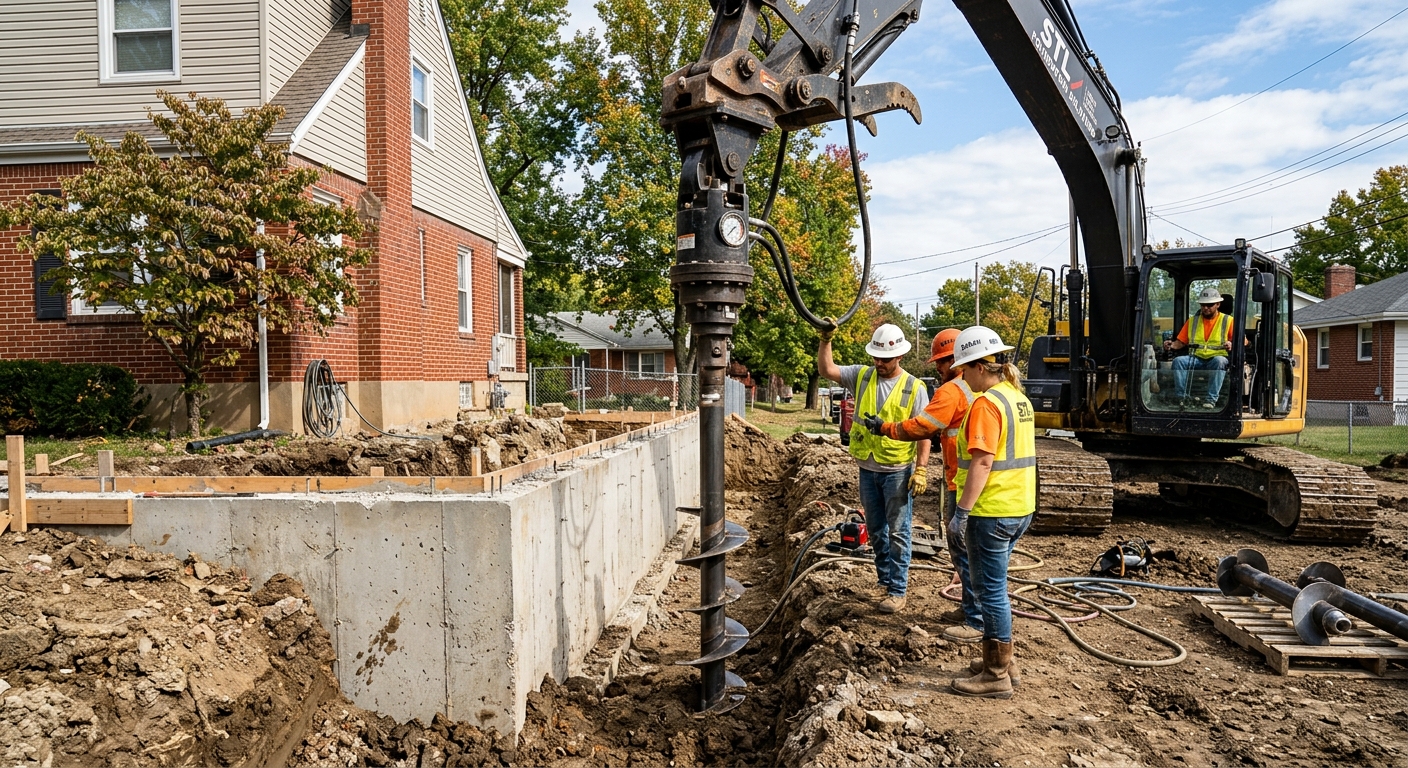
Helical piers for foundation repair are steel shaft systems with circular helical plates welded to the shaft, resembling giant corkscrews. When hydraulically driven into the ground, these helical blades pull the pier deep into stable soil or bedrock, creating a permanent anchor point for your foundation. Unlike surface-level repairs that only address symptoms, helical pier foundation repair targets the root cause of settlement by transferring your home's weight to load-bearing strata unaffected by seasonal moisture changes. Each pier can support 40,000 to 70,000 pounds, making them ideal for residential and light commercial structures across the St. Louis region.
- Galvanized steel construction resists corrosion for 75+ year service life in Missouri clay soil
- Helical plate diameters range from 8 to 14 inches depending on soil conditions and structural load requirements
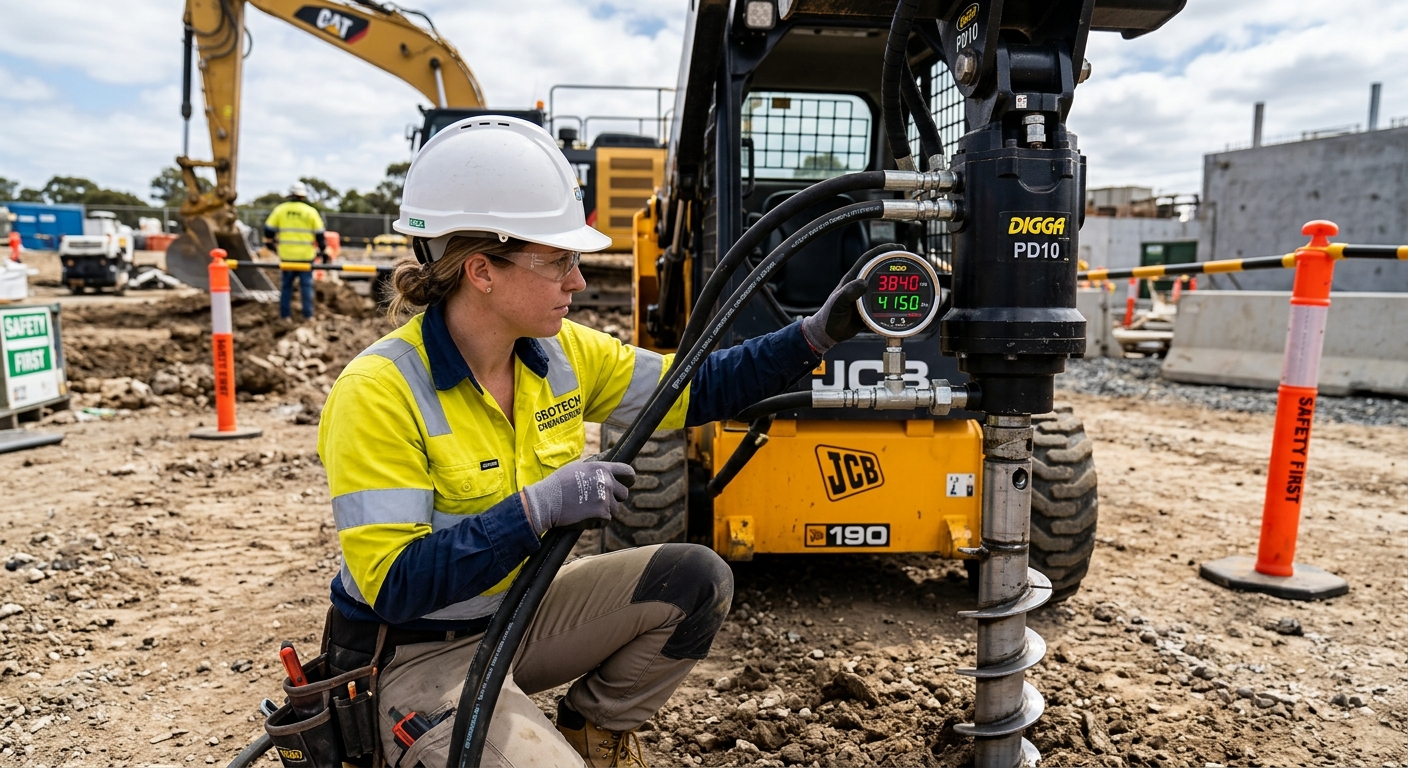
- Real-time torque monitoring during installation ensures each pier reaches specified load capacity before acceptance
- ICC-ES certified systems meet Missouri building codes for engineered foundation support
If you're researching foundation pier repair options, understanding how helical piers work in St. Louis's unique soil conditions is the first step toward a permanent solution. Call (314) 555-0190 today for a free soil analysis and pier placement assessment.
How Helical Piers Work in St. Louis Clay Soil
St. Louis sits on expansive clay soil that swells up to 4 inches when wet and shrinks dramatically during drought, creating the heaving and settlement cycles that crack foundations. Helical piers bypass this unstable active zone entirely by extending 60 to 100 feet down to stable soil layers or bedrock that remain unaffected by surface moisture fluctuations. The helical plates rotate into the ground like a screw, compacting soil around the shaft and creating friction resistance along the entire length of the pier. This distributed load transfer means your foundation rests on soil that won't shrink, swell, or shift regardless of seasonal weather patterns that plague shallow repairs.
Components and Installation Depth
A complete helical pier system consists of a lead section (the bottom shaft with helical plates), extension shafts bolted together to reach target depth, and a foundation bracket that connects the pier to your existing footing or beam. Installation depth varies based on soil conditions — geotechnical testing determines where stable bearing strata begins, typically 40 to 80 feet below grade in the St. Louis metro area. The deeper the pier, the greater the stability, which is why helical piers outperform shallow concrete piers that rest within the active clay zone. You get engineered depth calculations specific to your property, not guesswork.
How Helical Pier Foundation Repair Works
Helical pier foundation repair works by installing steel piers to load-bearing depth, then hydraulically lifting your foundation back to its original elevation before permanently securing it to the pier system. The process combines precision engineering with proven construction techniques, delivering measurable results you can verify with elevation readings before and after installation. Unlike mudjacking or polyurethane injection that only fills voids beneath slabs, helical pier installation creates new structural support points that prevent future settlement. Most St. Louis homeowners see doors and windows return to normal operation within hours of pier installation, with cracks in drywall and brick veneer stabilizing immediately as the foundation stops moving.
The Installation Process Step-by-Step
Installation begins with excavation of small access points next to your foundation — typically 3 feet by 3 feet — exposing the footing or beam where the bracket will attach. Technicians position the lead section of the helical pier and use a hydraulic drive head to rotate it into the ground, monitoring torque readings in real time to confirm the pier is engaging stable soil. Extension shafts are bolted on as the pier advances downward, continuing until torque readings reach the engineered specification for your home's structural load (usually 3,000 to 5,000 foot-pounds). Once target depth and torque are achieved, a steel bracket is bolted to the pier and secured beneath your foundation. Hydraulic lifts then raise your foundation incrementally, transferring the load from unstable soil to the helical pier system, and locking it in place with steel shims and foundation-grade fasteners.
Load Transfer and Torque Specifications
Load transfer happens the moment the foundation bracket is secured to the helical pier and hydraulic jacks begin lifting. As your home's weight shifts from settling soil to the pier, torque specifications ensure the pier can handle the load without rotating or settling itself — engineers calculate required torque based on soil bearing capacity and structural load per pier. In St. Louis clay, a pier supporting 50,000 pounds typically requires 4,000+ foot-pounds of installation torque, verified with calibrated torque meters during the entire installation. This data becomes part of your permanent repair record, providing documentation for future home sales and warranty claims. You get written verification that every pier meets or exceeds structural engineering requirements.
Why Helical Piers Outperform Other Repair Methods
Helical piers outperform other methods because they're the only foundation repair system that reaches stable soil below the active zone while providing immediate load transfer and measurable lift. Concrete piers poured in place settle over time as clay shrinks beneath them. Mudjacking fills voids but doesn't prevent future settlement. Push piers work in some soil types but struggle in loose or sandy conditions common along the Mississippi River floodplain. Helical piers install in any soil type, any weather, any season — they work in frozen ground, saturated clay, and drought-hardened soil equally well. The mechanical advantage of the helical plates pulling the pier into stable strata means you get consistent results regardless of surface conditions.
- No concrete curing time — foundation is stabilized the same day piers are installed
- Transferable warranties of 20 to 30+ years protect your investment and home resale value
- Minimal landscaping disruption — small excavation points backfilled and restored same day
- Year-round installation schedule — no waiting for weather windows or ground conditions to improve
For pier-and-beam foundations, crawlspace homes, or slab-on-grade construction, helical piers deliver permanent stabilization that outlasts every alternative. Call (314) 555-0190 to schedule your free foundation inspection and repair estimate.
Helical Piers for Pier-and-Beam Foundation Repair
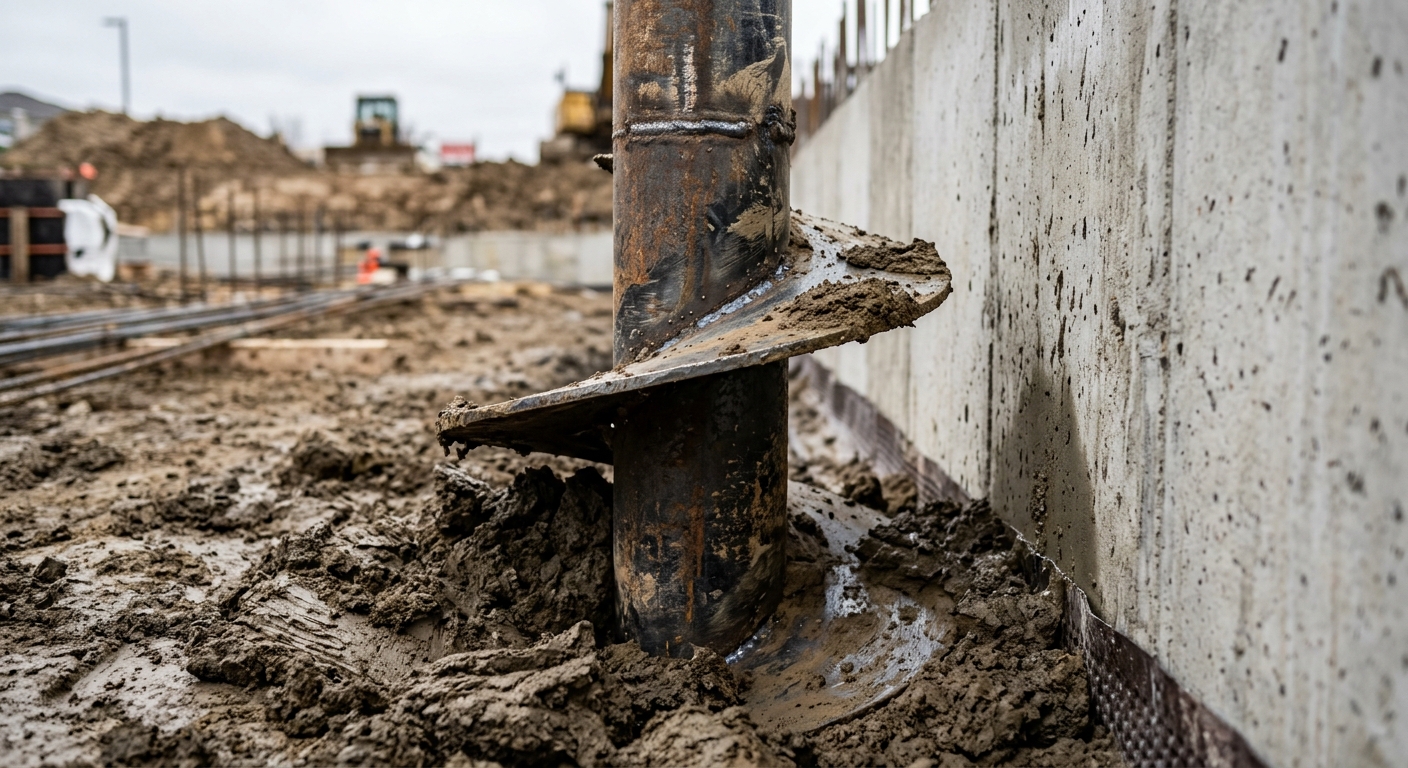
Pier beam foundation repair using helical piers is the permanent solution for St. Louis's extensive inventory of pre-1960s homes built on crawlspace foundations. These older structures typically rest on brick or concrete piers spaced 6 to 8 feet apart, supporting wooden beams that carry the floor joists. Over time, these original piers settle into expansive clay, causing sagging floors, cracked plaster, and structural instability. Helical pier systems replace or reinforce failing piers with engineered steel anchors that extend to stable soil, restoring structural integrity without the cost and disruption of full foundation replacement. You get the structural performance of a new foundation at a fraction of the cost.
Crawlspace Foundations and Helical Pier Installation
Crawlspace foundations allow direct access to the underside of your home, making helical pier installation faster and less invasive than slab repairs. Technicians work from inside the crawlspace, driving piers at existing beam locations or adding new support points where settling has occurred. The low-profile hydraulic equipment fits through standard crawlspace access doors, eliminating the need for extensive excavation or landscape removal. Each pier is installed vertically or at a slight angle to engage load-bearing soil beneath the footprint of your home, then connected to the beam with adjustable steel brackets that allow for future leveling if needed. The entire repair happens beneath your home, leaving your yard, driveway, and landscaping untouched.
Permanent Solution vs. Temporary Jacking
Temporary jacking uses adjustable screw jacks or stacked blocks to lift sagging beams — a quick fix that fails within months as the supports settle into the same unstable clay that caused the original problem. Piers for foundation repair that reach stable soil provide permanent load transfer that prevents future settlement. While jacking costs less upfront, homeowners in Ballwin, Chesterfield, and Clayton who chose temporary repairs typically need re-leveling every 2 to 4 years, spending more over time than a single helical pier installation would cost. Permanent helical pier systems eliminate the cycle of sag-and-jack by anchoring your foundation to soil that doesn't move, delivering one-time repair costs and decades of stability.
Why St. Louis Pier-and-Beam Homes Need Deep Anchoring
St. Louis pier-and-beam homes were built when shallow piers seemed adequate — builders had no understanding of expansive clay behavior or long-term soil mechanics. Original piers extend only 18 to 36 inches below grade, placing them entirely within the active moisture zone where clay swells and shrinks seasonally. As decades of wet/dry cycles occur, these shallow piers sink incrementally, dropping your beams and floors over time. Deep anchoring with helical piers extends 40 to 80 feet below this active zone, reaching Ordovician limestone bedrock or dense glacial till that provides consistent bearing capacity year-round. You get foundation support that works with Missouri geology instead of fighting it.
If your historic St. Louis home has sagging floors or visible pier settlement, helical pier foundation repair restores structural stability while preserving the character and value of your property. Contact us at (314) 555-0190 for a crawlspace inspection and engineered repair plan.
Types of Foundation Repair Piers: Helical vs. Push Piers vs. Concrete
Choosing the right pier type determines whether your foundation repair lasts 5 years or 50 years. Helical piers, push piers, and poured concrete piers all support foundations, but they work in fundamentally different ways and deliver vastly different long-term performance in St. Louis soil conditions. Understanding when to use helical piers vs. push piers — and why concrete piers fail in expansive clay — helps you make an informed decision that protects your home and budget. The right repair method depends on soil type, structural load, installation access, and whether you need immediate stabilization or can wait for curing times.
When to Use Helical Piers vs. Push Piers
Helical piers are the first choice when soil conditions include loose fill, organic soils, or when installation must happen year-round regardless of ground conditions. The helical plates pull the pier into stable soil mechanically, creating load capacity through both end bearing (bottom plate resting on firm soil) and friction along the shaft. Push piers, by contrast, are driven straight down using your home's weight as the driving force — they work well when stable soil is relatively shallow (20 to 40 feet) and when existing structural weight is sufficient to push the pier to depth. In St. Louis, helical piers handle the variable clay conditions across St. Louis County, Jefferson County, and St. Charles County more reliably than push piers, which can stall in hard clay layers or punch through soft zones without adequate load transfer.
Why Concrete Piers Fail in Expansive Clay
Concrete piers fail in expansive clay because they're poured in drilled shafts that fill with swelling clay over time, creating upward pressure (frost heave or clay heave) that lifts the pier or lateral pressure that cracks the concrete. Even when poured to 8 or 10 feet depth, concrete piers remain within the active moisture zone where seasonal clay movement continues. As clay shrinks during drought, gaps form around the concrete shaft, reducing friction support. When clay swells during wet periods, pressure fractures the concrete or pushes the pier upward. Helical piers avoid this failure mode entirely — the steel shaft and helical plates remain structurally intact regardless of clay movement, and the open shaft design (no concrete mass) prevents heave forces from developing.
Soil Conditions and Load Capacity Comparison
Soil conditions determine which pier type delivers the highest load capacity at the lowest cost. In dense clay with shallow bedrock (common in parts of South St. Louis and Affton), push piers may reach stable soil faster and install at lower cost per pier. In areas with deep clay deposits, organic fill, or variable subsurface conditions (typical in West County subdivisions built on former farmland), helical piers provide superior load capacity and installation reliability. Load capacity comparison shows helical piers consistently delivering 50,000 to 70,000 pounds per pier in St. Louis clay when installed to engineered torque specifications, while concrete piers in the same soil often settle within 10 to 15 years as clay shrinkage creates voids beneath the base. Push piers match helical pier capacity when driven to bedrock, but they require adequate existing structural load to achieve full depth — not always available in single-story homes or detached garages.
- Helical piers: Best for all soil types, year-round installation, new construction and repair applications
- Push piers: Best for heavy structures, shallow bedrock, retrofit applications with high existing loads
- Concrete piers: Obsolete technology in expansive clay — only appropriate for stable sandy or gravelly soils
- Cost comparison: Helical and push piers typically $1,500-$3,000 per pier installed; concrete piers appear cheaper initially but fail sooner
For a site-specific recommendation based on your soil conditions and foundation type, call (314) 555-0190 to schedule a free geotechnical assessment and pier system comparison.
Signs Your St. Louis Home Needs Foundation Pier Repair
Recognizing the early warning signs of foundation settlement saves you thousands of dollars by allowing helical pier installation before structural damage becomes severe. Most St. Louis homeowners notice cosmetic issues first — small cracks in drywall, doors that stick seasonally, or minor floor slopes — and delay repair until major structural distress appears. Foundation pier repair costs increase dramatically once settling causes beam failure, fractured foundation walls, or plumbing breaks, so acting on early symptoms protects both your home's structure and your repair budget. You can reverse minor settlement completely with helical piers, but severe settling may require additional structural work even after pier installation.
Cracks, Doors, and Sloping Floors
Cracks in interior drywall that run diagonally from door and window corners indicate differential settlement — one part of your foundation is sinking faster than another, creating stress fractures throughout the structure. Doors that stick in humid weather but close freely in winter signal seasonal foundation movement as clay soil swells and shrinks. Sloping floors — measured as more than 1 inch of drop over 20 feet — show significant beam or pier settlement that requires immediate helical pier stabilization. Exterior symptoms include stair-step cracks in brick veneer, gaps between walls and ceilings, or separation between the chimney and main structure. In St. Louis homes built on expansive clay, these signs appear gradually over years, worsening each wet/dry cycle until pier systems transfer loads to stable soil.
Cost and Timeline for Helical Pier Installation
Cost for helical pier installation typically ranges from $12,000 to $36,000 for average St. Louis homes requiring 8 to 12 piers, depending on foundation type, soil conditions, and accessibility. Each pier costs $1,500 to $3,000 installed, including excavation, pier materials, hydraulic lifting, bracket installation, and site restoration. Timeline for residential projects runs 1 to 3 days from start to finish — foundation inspection and engineering on day one, pier installation and lifting on day two, final torque verification and site cleanup on day three. Large homes or complex pier-and-beam repairs may extend to 4 or 5 days. You receive a written quote detailing the number of piers required, installation locations, expected lift amounts,
Frequently Asked Questions
What Is a Helical Pier System?
A helical pier system uses steel shafts with helical plates welded at intervals, designed to anchor deep into stable soil or bedrock beneath your foundation. These piers are mechanically screwed into the ground until they reach load-bearing strata, then hydraulically lifted to stabilize and often lift settled foundations. In St. Louis, Missouri, where clay soils expand and contract, helical piers provide permanent support by transferring the weight of your structure to deeper, more stable soil layers. The system works for both residential and commercial properties experiencing foundation settlement.
Why Choose Helical Piers Over Other Foundation Solutions?
Helical piers offer immediate load-bearing capacity without curing time, minimal soil disruption, and installation in virtually any weather condition. Unlike concrete pilings that require excavation and curing, helical piers can be installed quickly with compact equipment, making them ideal for tight access areas common in St. Louis neighborhoods. They're engineered to precise torque specifications, ensuring predictable performance. The system causes less landscape damage than traditional underpinning methods and can be installed year-round, even during Missouri's wet seasons when other foundation repair methods may be delayed.
How deep do helical piers go?
Helical piers typically extend 15 to 30 feet below grade in the St. Louis area, though depth varies based on soil conditions and load requirements. Installation continues until the piers reach competent load-bearing soil or bedrock, determined by monitoring torque readings during installation. In areas with expansive clay soils common throughout Missouri, piers may need to go deeper to bypass unstable layers. The engineer-specified depth ensures each pier reaches adequate bearing capacity to support your structure. Our technicians use calibrated equipment to verify proper installation depth and torque for every project.
Can helical piers be installed on older homes?
Yes, helical piers are an excellent solution for older homes in St. Louis, including historic properties with brick, stone, or block foundations. The compact installation equipment can access tight crawl spaces and basements common in homes built before 1950. Helical piers provide support without requiring extensive excavation that could damage original masonry or disturb period landscaping. The system works with various foundation types including pier and beam, slab, and basement foundations. Many older Missouri homes experience settlement due to aging clay soils, and helical piers address this without compromising structural integrity or historical character.
How long does the installation take?
Most residential helical pier installations in St. Louis take one to three days, depending on the number of piers required and site accessibility. A typical project requiring 8 to 12 piers can often be completed in a single day with minimal disruption to your property. The process involves no curing time, so stabilization is immediate. Weather rarely delays installation since the system doesn't rely on concrete or specific temperature conditions. Commercial projects or homes requiring extensive underpinning may take longer. Our team provides a detailed timeline during your free inspection and works efficiently to minimize inconvenience to your household.
Are helical piers better than push piers?
Helical piers and push piers both provide effective foundation support, but helical piers offer advantages in certain St. Louis soil conditions. Helical piers use torque-rated installation to verify load capacity in real-time and work well in varied soil types without requiring the structure's weight for installation. Push piers rely on hydraulic pressure against the existing foundation and perform best when driving to bedrock. For lighter structures, additions, or new construction, helical piers are often preferred. The best choice depends on your specific foundation type, soil conditions, and load requirements, which we assess during a professional evaluation.
What areas do you serve?
We provide helical pier foundation repair throughout St. Louis, Missouri, and surrounding communities in St. Louis County, St. Charles County, Jefferson County, and parts of Illinois metro east. Our service area includes Clayton, University City, Webster Groves, Kirkwood, Florissant, Chesterfield, O'Fallon, and other nearby municipalities. We're familiar with regional soil conditions, including the expansive clay soils prevalent throughout the greater St. Louis area that frequently cause foundation settlement. Whether your property is in the city or suburbs, our experienced team brings the same quality equipment and expertise to every job site.
Do you offer financing?
Yes, we offer flexible financing options for helical pier foundation repair projects in St. Louis to make permanent foundation solutions accessible and affordable. Foundation repair is a critical investment in your property's safety and value, and we work with reputable lenders to provide various payment plans tailored to your budget. Financing approval is typically quick, and terms vary based on project scope and creditworthiness. We provide transparent, detailed quotes before any work begins so you understand all costs. Contact us to discuss financing options during your free foundation inspection and learn how we can structure a solution that works for your financial situation.
What are Push Piers?
Push piers, also called resistance piers, are steel pier sections hydraulically driven through unstable soil using your home's weight as resistance until reaching bedrock or load-bearing strata. The system consists of a bracket attached to your foundation footing and interlocking steel tubes pushed deep into the ground. Once stable depth is reached, the foundation is hydraulically lifted and permanently stabilized. Push piers work exceptionally well in St. Louis where bedrock depth is predictable. Unlike helical piers that are screwed in, push piers are driven straight down, making them ideal for heavier structures and deep bedrock applications common in Missouri.
What are the Advantages of Using Helical Piers?
Helical piers provide immediate load capacity, minimal yard disruption, year-round installation capability, and predictable performance verified by torque monitoring. They're installed with compact equipment suitable for tight access areas and require no soil excavation beyond small access points. The system works in virtually any soil type, including the challenging expansive clays found throughout St. Louis. Installation produces little vibration or noise, and there's no concrete curing delay. Helical piers are engineered solutions with load capacities verified during installation, offering long-term stability backed by transferable warranties that add value to your Missouri property.
When is the Best Time to Correct Foundation Issues?
The best time to address foundation problems in St. Louis is immediately upon noticing signs like cracks, uneven floors, or sticking doors and windows. Foundation damage worsens progressively as soil movement continues through seasonal cycles of moisture and temperature changes. Early intervention with helical pier installation prevents minor settlement from becoming major structural failure requiring costlier repairs. Missouri's clay soils expand and contract year-round, so delaying repair allows ongoing damage. While helical piers can be installed in any season, addressing issues before winter freeze-thaw cycles or spring rains cause additional movement protects your investment and prevents secondary damage to plumbing, framing, and finishes.
How much does helical pier foundation repair cost in St. Louis?
Helical pier foundation repair in St. Louis typically costs between $1,200 and $1,800 per pier installed, with most residential projects requiring 6 to 15 piers depending on foundation size and severity of settlement. Total project costs generally range from $8,000 to $25,000, though extensive commercial work or challenging access can increase investment. Factors affecting price include soil conditions, pier depth, number of piers needed, and structural load requirements. Every foundation situation is unique, so we provide free on-site inspections with detailed written estimates. Investing in permanent helical pier stabilization protects your property value and prevents exponentially costlier repairs if settlement continues unchecked.