Foundation inspection St. Louis services provide homeowners and property buyers with certified structural analysis and documented proof of your home's structural integrity. When you spot cracks in your basement walls, uneven floors, or doors that won't close properly, you need answers fast — not guesswork. Our licensed structural engineers deliver PE-stamped foundation reports within 48–72 hours, giving you the documentation required for insurance claims, real estate transactions, and repair planning across St. Louis, Clayton, Webster Groves, and the wider metro area.
Structural Foundation Inspection: What's Included
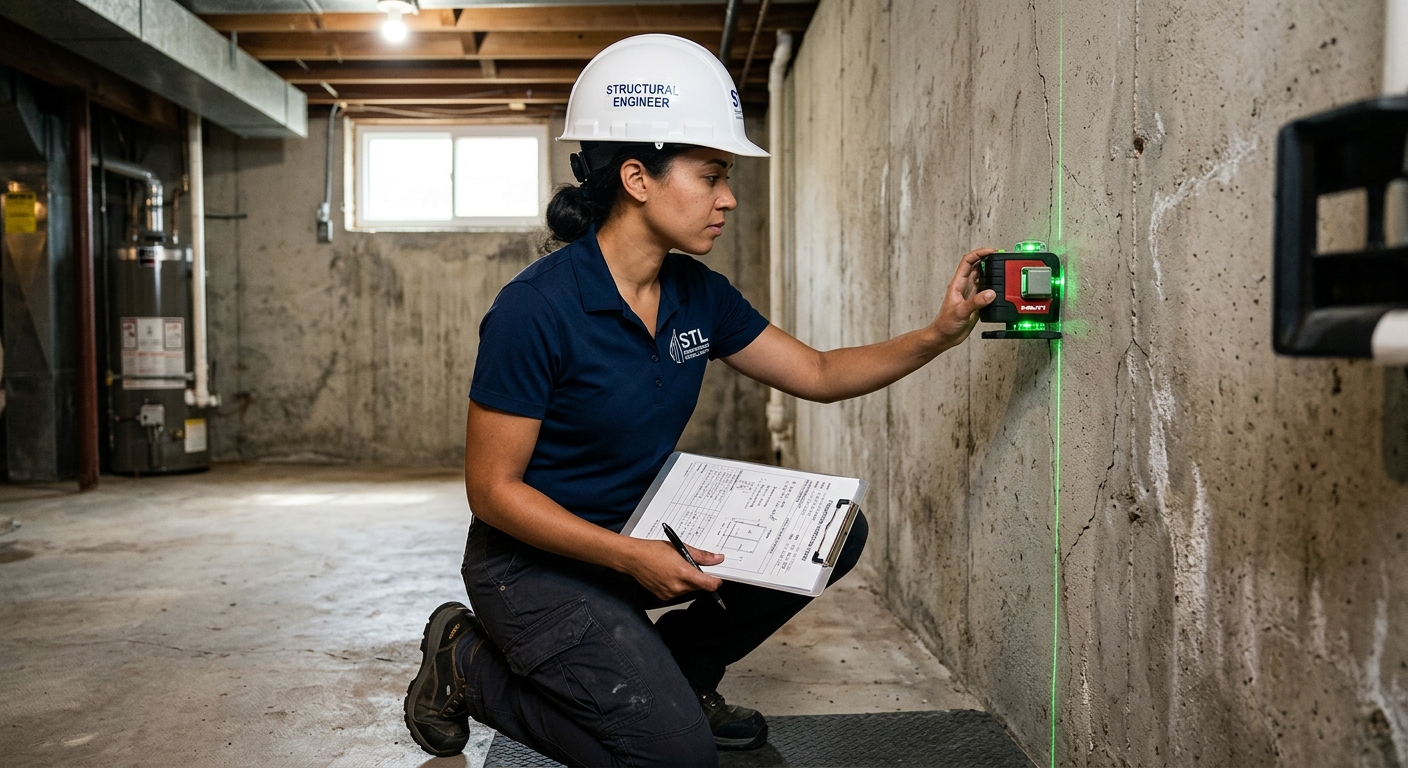
A structural foundation inspection goes far beyond a basic visual walkthrough. Our certified engineers conduct comprehensive analysis of every load-bearing component in your home's foundation system, identifying both visible damage and hidden structural compromise. You receive a complete evaluation that meets lender requirements, insurance standards, and provides the clarity you need to make informed decisions about your property.
Load-bearing wall assessment and foundation wall evaluation
Every load-bearing wall in your home transfers the weight of your structure down through the foundation and into the soil beneath. Our engineers assess vertical load distribution, identify wall deflection or bowing, and measure any lateral movement that could signal foundation settlement. We inspect interior and exterior foundation walls for structural integrity, checking for signs of excessive load stress, improper support, or compromise to the original engineering design. This evaluation determines whether your foundation can safely support the building above it or if reinforcement is needed.
Crack mapping, measurement, and documentation with photos
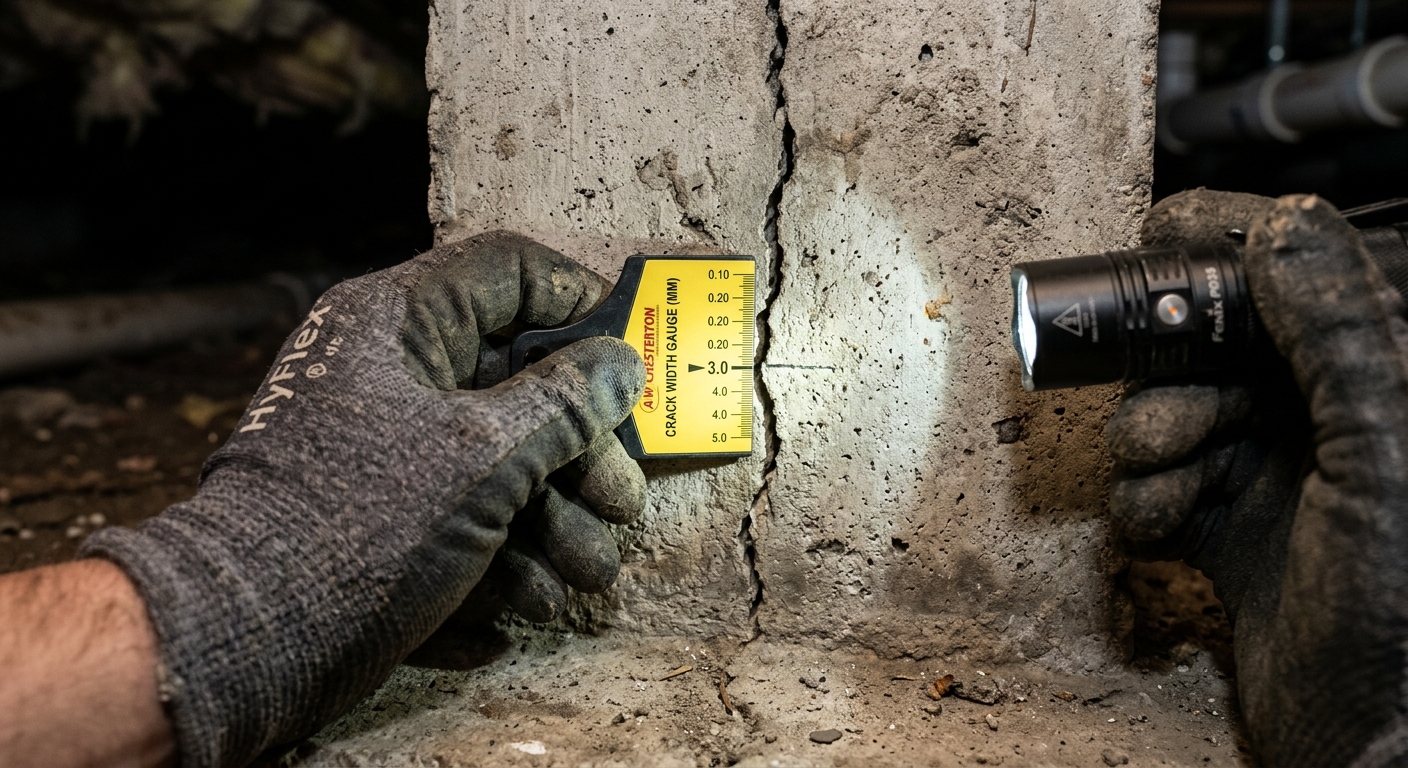
Not all cracks indicate serious damage — but some do. We measure every crack wider than ⅛ inch, document its location, direction, and width, and photograph it for your permanent record. Horizontal cracks, stair-step patterns in block foundations, and cracks wider than ¼ inch are red flags for structural movement. Our crack mapping creates a baseline for monitoring future changes and provides the visual evidence insurance adjusters and buyers need to understand the scope of foundation issues in your St. Louis home.
- Digital photography of all cracks with measurement overlays
- Classification by severity: cosmetic settling vs structural compromise
- Crack location mapping on foundation plan diagrams
- Before-repair documentation for insurance claim substantiation
- Ongoing monitoring recommendations for borderline issues
Moisture intrusion testing and water damage assessment
Water is the enemy of every foundation. We use calibrated moisture meters to detect hidden water intrusion inside foundation walls, test for active leaks, and assess damage from past flooding or chronic seepage. Hydrostatic pressure from saturated soil pushes water through even microscopic cracks, leading to mold, efflorescence, and accelerated structural deterioration. Our moisture testing identifies the source — poor grading, failed drainage systems, or high water tables — so repairs address the root cause, not just the symptoms.
Foundation Engineer Inspection vs. Contractor Assessment
A foundation engineer inspection delivers the credentialed analysis and stamped documentation that insurance companies, mortgage lenders, and attorneys require for high-stakes decisions. Understanding the difference between contractor assessments and professional engineer evaluations saves you time, money, and potential legal headaches when foundation damage enters the picture.
When you need a licensed structural engineer (insurance claims, FHA loans, legal disputes)
Insurance carriers won't process foundation damage claims over $10,000 without a PE-stamped structural engineer report. FHA 203(k) rehabilitation loans require engineer certification before approving foundation repair financing. If you're involved in a real estate lawsuit, boundary dispute, or construction defect case, only a licensed structural engineer's testimony holds weight in court. Contractor inspections are valuable for basic assessments and repair planning, but they lack the legal authority and technical depth required when financial or legal stakes are high.
- Insurance claims requiring structural damage documentation
- FHA, VA, and USDA loan approval for homes with known foundation issues
- Pre-purchase inspections where buyers demand engineer certification
- Legal disputes involving construction defects or property damage
- Municipal building department requirements for major foundation repairs
PE-stamped reports: what lenders and insurers require
A Professional Engineer stamp on your foundation report carries legal weight that unsigned contractor assessments cannot match. The PE stamp certifies that a state-licensed structural engineer personally inspected your property, applied engineering principles to the analysis, and stands behind the findings with their professional liability. Lenders use PE-stamped reports to determine loan eligibility and repair escrow amounts. Insurance adjusters rely on them to approve or deny claims. Buyers request them to negotiate price reductions or demand seller-paid repairs before closing. The cost difference is real — but so is the credibility gap between stamped and unstamped foundation documentation.
Cost difference: contractor inspection vs. professional engineer diagnosis
Understanding the foundation damage assessment cost breakdown helps you choose the right level of service for your situation. Contractor visual inspections in St. Louis typically run $200–$350 and provide basic identification of visible cracks, drainage problems, and obvious settlement. Structural engineer inspections with PE-stamped reports cost $500–$800 but include elevation surveys, soil analysis, engineering calculations, and legally defensible documentation. If you're filing an insurance claim, refinancing, or need courtroom-quality proof, the engineer route is non-negotiable. For preliminary damage assessment or minor cosmetic issues, a contractor inspection may suffice — but you'll likely need the engineer report eventually if damage is confirmed.
Foundation Damage Assessment Cost in St. Louis
Pricing transparency matters when you're budgeting for foundation inspection services. The foundation damage inspection cost varies based on your home's size, foundation type, accessibility challenges, and the depth of analysis required for your specific situation. Here's what drives pricing in the St. Louis metro market and what you can expect to pay for each service level.
Contractor inspection pricing: $200–$350 for visual assessment
A contractor-level foundation inspection covers visual examination of your foundation walls, crack documentation with photos, moisture detection using handheld meters, and a written summary of findings. This service works well for routine pre-listing inspections, initial damage assessment before deciding on next steps, or situations where third-party certification isn't required. The inspection typically takes 60–90 minutes onsite and produces a 3–5 page summary report within a few days. You won't receive engineering calculations, soil analysis, or a stamped certification — but you'll get a qualified professional's opinion on the condition of your foundation and recommended next steps.
Structural engineer report cost: $500–$800 with stamped recommendations
PE-stamped structural engineer reports cost more because they deliver comprehensive analysis backed by professional liability insurance and state licensing requirements. Your engineer performs everything included in a contractor inspection plus elevation laser surveys to measure floor level variations, soil compaction testing, hydrostatic pressure calculations, and load-bearing capacity analysis. The final report includes detailed photos with annotated measurements, foundation plan diagrams showing damage locations, repair method recommendations with cost ranges, and a Professional Engineer's stamp certifying the findings. This documentation satisfies insurance adjusters, mortgage underwriters, real estate attorneys, and building inspectors when foundation integrity is questioned.
What affects inspection price: square footage, crawlspace access, report scope
Several factors push inspection costs above base pricing. Homes over 3,000 square feet require additional time for thorough assessment. Crawlspace foundations with limited access add difficulty and time compared to full basements or slab-on-grade construction. If you need rush delivery — a 24-hour report turnaround for a closing deadline — expect expedite fees. Multiple-structure properties, homes with additions built on different foundation types, and pre-1950 limestone rubble foundations all increase complexity and cost. Custom report requests for litigation support, detailed repair specifications, or engineering stamped repair plans add to base pricing. Requesting these details upfront helps you get accurate quotes and avoid surprise charges.
If you're comparing quotes from multiple providers in St. Louis or surrounding areas like Kirkwood, Chesterfield, or Florissant, make sure you're comparing equivalent service levels — a contractor visual inspection and a PE-stamped structural engineer report are not the same deliverable. Call (314) 798-9554 for a free consultation and transparent pricing based on your specific property and documentation needs.
Foundation Survey and Evaluation Process
A thorough foundation survey and evaluation follows a systematic process designed to uncover both obvious damage and hidden structural compromise. Our engineers use industry-standard tools and testing protocols to deliver accurate, repeatable measurements that document your foundation's current condition and predict future behavior under St. Louis clay soil conditions.
Visual inspection and elevation laser survey techniques
Visual inspection forms the foundation of every assessment — we examine interior and exterior walls, basement floors, crawlspace piers, and grade conditions around your home's perimeter. Our engineers look for crack patterns, wall bowing, mortar deterioration, and signs of previous repairs. We follow this with elevation laser surveys that measure floor level variations across multiple points in your home. Even a ½ inch drop over 10 feet can indicate settling or heave in progress. The laser survey creates a topographic map of your foundation, showing high and low spots that reveal where soil movement has affected your structure.
Soil analysis and hydrostatic pressure testing
St. Louis sits on expansive clay soil that swells 10–15% when wet and shrinks during drought — creating the shrink-swell cycle responsible for most foundation movement in the region. We test soil compaction around your foundation perimeter, assess drainage conditions, and measure hydrostatic pressure levels against foundation walls. Saturated soil exerts tremendous lateral force that can crack walls, push them inward, and allow water intrusion through even hairline cracks. Understanding your soil's behavior helps us predict future foundation movement and recommend drainage improvements that prevent recurring damage.
- Clay soil moisture content testing to assess expansion potential
- Drainage flow evaluation around foundation perimeter
- Hydrostatic pressure measurement during wet conditions
- Soil compaction testing beneath pier and beam supports
- Grade slope analysis for surface water management
Settlement and heave mapping for St. Louis clay soil conditions
Settlement occurs when soil beneath your foundation compresses or erodes, allowing the structure to sink. Heave happens when expanding clay lifts portions of your foundation upward. Both create cracks, floor slopes, and structural stress — but they require different repair approaches. Our evaluation process maps areas of settlement vs heave, identifies which sections of your foundation are moving, and determines whether movement is active or stabilized. This diagnostic work is critical for designing effective repairs that address the underlying soil mechanics, not just cosmetic damage.
Foundation Problem Diagnosis: Settling, Water Intrusion & Structural Issues
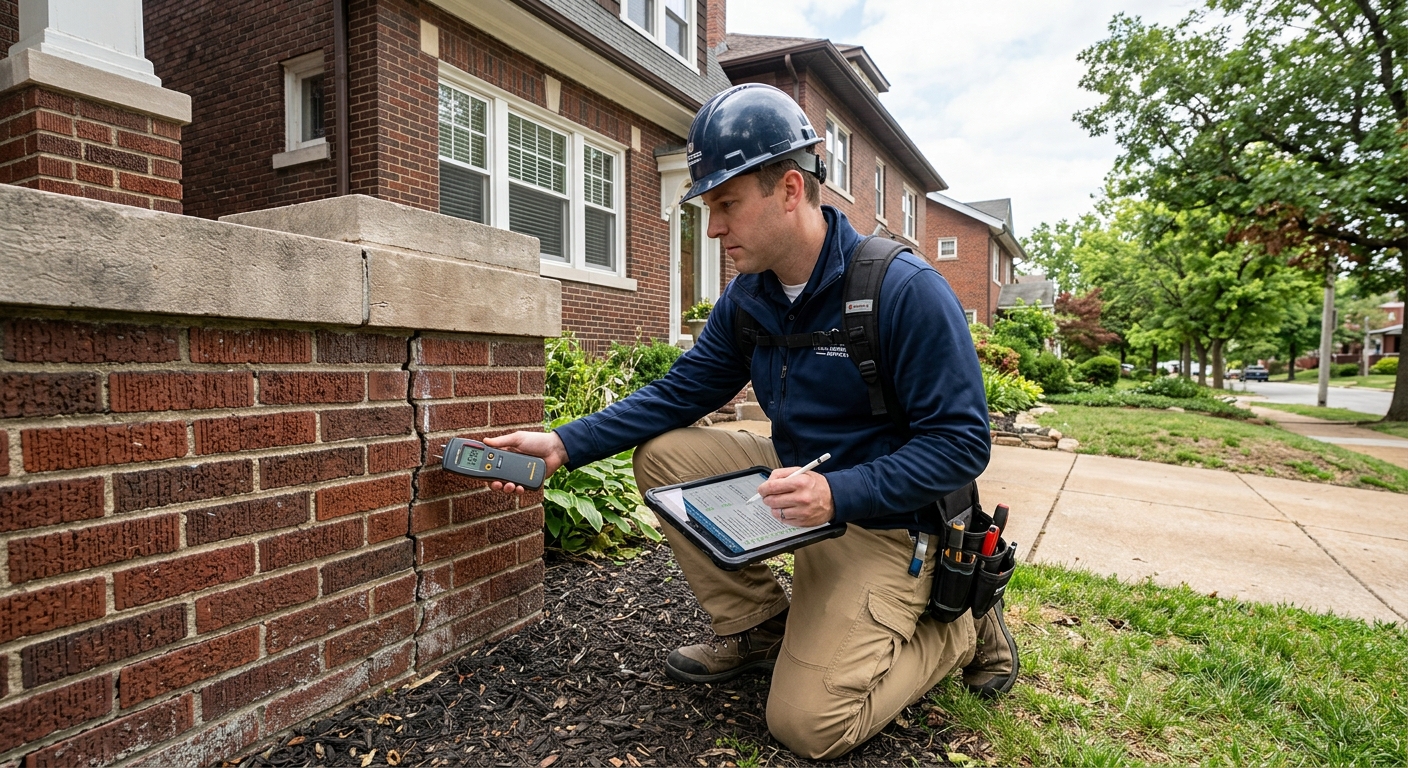
Accurate foundation problem diagnosis separates cosmetic aging from serious structural compromise. Our engineers identify the root cause of damage — whether it's soil movement, water intrusion, structural overload, or construction defects — so repairs target the actual problem and deliver lasting results.
Identifying settlement vs. heave in clay soil shrink-swell cycles
Settlement and heave produce similar symptoms — cracks, uneven floors, sticking doors — but require opposite repair strategies. Settlement repairs involve underpinning with piers to support sinking foundation sections. Heave repairs focus on soil moisture control and sometimes removing upward pressure. We distinguish between the two by analyzing crack patterns, measuring floor elevation changes, and testing soil conditions. Vertical cracks near corners often indicate settlement. Cracks in the center of foundation walls combined with raised floors suggest heave. Accurate diagnosis prevents wasted money on repairs that don't match the actual problem.
Detecting structural load failures and pier-and-beam compromise
Pier-and-beam foundations rely on vertical supports that transfer building loads into stable soil or bedrock. When piers settle, deteriorate, or lose soil compaction beneath them, the structure above begins to sag. Our structural engineers assess every pier for proper load transfer, measure beam deflection, and verify that original load-bearing wall support remains intact. We also evaluate slab-on-grade foundations for load-related cracking caused by inadequate rebar reinforcement or sub-slab voids where soil has washed away or settled beneath the concrete.
Water intrusion diagnosis: drainage problems and hydrostatic pressure damage
Water intrusion destroys foundations from the inside out — rusting rebar, dissolving mortar, creating efflorescence, and allowing mold growth that compromises air quality. We diagnose whether water enters through poor surface grading, failed gutters and downspouts, high groundwater tables, or hydrostatic pressure from saturated clay soil. Each source requires different remediation — basement waterproofing systems, exterior drainage improvements, sump pump installation, or foundation crack injection. Our water intrusion diagnosis identifies all active and potential moisture pathways so repairs provide comprehensive protection.
Foundation damage rarely has just one cause — soil movement, water intrusion, and structural load issues often work together to accelerate deterioration. Our comprehensive diagnosis reveals all contributing factors so your repair plan addresses the complete problem. Contact us at (314) 798-9554 to schedule your detailed foundation problem diagnosis and receive a clear explanation of what's happening beneath your St. Louis home.
Foundation Report St. Louis: What Your Written Documentation Includes
Your foundation report St. Louis serves as legal documentation, repair planning guide, and negotiation tool in real estate transactions. The written report we deliver contains everything insurance adjusters, lenders, buyers, and contractors need to understand your foundation's condition and make informed decisions about next steps.
Photo documentation and crack measurements in your inspection report
Every report includes high-resolution photos of all identified damage with digital measurement overlays showing crack widths, wall deflection amounts, and floor elevation differentials. We photograph interior and exterior foundation views, drainage conditions, and any previous repair work. Each photo receives a caption explaining what the image shows and why it matters. Crack measurements appear in decimal inches with location descriptions tied to foundation plan diagrams. This visual documentation proves damage existence and severity to skeptical insurance adjusters, provides buyers with undeniable evidence in price negotiations, and gives repair contractors the information needed to bid accurately.
48–72 hour report turnaround for purchase and insurance deadlines
Real estate transactions and insurance claims operate on tight deadlines — you can't wait two weeks for a foundation report when closing is scheduled in 10 days. Our standard turnaround time is 48–72 hours from inspection completion to final report delivery. Rush service is available when purchase agreements, claim filing deadlines, or construction schedules demand faster delivery. The report arrives as a PDF emailed directly to you, your realtor, your lender, or your insurance adjuster — whoever needs it to move your transaction forward.
How buyers, sellers, and lenders use foundation reports in transactions
Buyers use foundation reports to negotiate price reductions, demand seller-paid repairs, or walk away from deals when damage exceeds their risk tolerance. Sellers order pre-listing inspections to price homes accurately, disclose known issues, and prevent last-minute deal collapse when buyer inspections reveal problems. Lenders require foundation reports before approving loans on homes with visible damage or where appraisers note structural concerns. Insurance companies use reports to approve or deny claims, determine payout amounts, and verify that repairs meet engineering standards. Your foundation report becomes a strategic asset — not just diagnostic information — that protects your interests in high-stakes financial decisions.
- Pre-purchase buyer inspection for due diligence and negotiation leverage
- Pre-listing seller documentation to support asking price or planned disclosures
- Lender-required structural certification for loan approval
- Insurance claim substantiation with PE-stamped damage documentation
- Legal evidence in construction defect or property damage disputes
Why St. Louis Homeowners Trust Us for Foundation Inspection
Choosing the right foundation inspection provider protects you from misdiagnosis, unnecessary repairs, and documentation that won't hold up when you need it most. Here's why homeowners across St. Louis, University City, Affton, and throughout the metro area rely on our certified engineers for foundation inspection and diagnosis services.
Licensed structural engineers with 15+ years diagnosing St. Louis clay foundation damage
Our team brings 15 years of specialized experience analyzing foundation behavior in St. Louis clay soil conditions. We understand how the region's expansive clay responds to seasonal moisture changes, how pre-1950 construction
Frequently Asked Questions
How much does a foundation inspection cost in St. Louis?
Foundation inspection costs in St. Louis typically range from $300 to $600 for a comprehensive structural assessment. The price varies based on your home's size, foundation type, and accessibility. Many foundation repair companies offer free initial inspections if you proceed with recommended repairs. A professional inspection includes a detailed foundation report, crack analysis, moisture assessment, and soil evaluation to identify the root cause of any foundation problems.
What happens during a foundation inspection in St. Louis?
A professional foundation inspection in St. Louis involves examining both interior and exterior areas of your home. The inspector checks for cracks in walls and floors, measures floor levelness, inspects crawl spaces or basements for moisture, examines doors and windows for alignment issues, and evaluates grading and drainage around your property. The process typically takes 45 to 90 minutes and concludes with a detailed foundation report outlining any problems, their severity, and recommended repair solutions.
Do I need a structural engineer for a foundation inspection in Missouri?
While not always required, hiring a licensed structural engineer for foundation inspections in Missouri provides the most thorough assessment. Engineers can calculate load-bearing capacities, identify structural deficiencies, and provide stamped reports often required for insurance claims or when selling your home. For routine inspections, experienced foundation repair specialists can identify most common issues. However, severe foundation damage, major settlement problems, or pre-purchase inspections benefit from a professional engineer's expertise and certification.
How quickly can you perform a foundation inspection in St. Louis?
Most foundation repair companies in St. Louis can schedule an inspection within 2 to 5 business days of your initial call. Emergency inspections for severe foundation problems like rapid cracking or significant settlement may be available within 24 hours. The inspection itself takes 45 minutes to 2 hours depending on your home's size and foundation complexity. You'll typically receive a detailed foundation report with findings and repair recommendations within 24 to 48 hours after the inspection.
What are the most common foundation problems found in St. Louis homes?
St. Louis homes frequently experience foundation issues due to expansive clay soils that shrink and swell with moisture changes. Common problems include horizontal and stair-step cracks in basement walls, foundation settlement from soil erosion, bowing walls from hydrostatic pressure, and gaps between walls and ceilings or floors. The region's freeze-thaw cycles and heavy rainfall also contribute to foundation movement. Early detection through professional inspection prevents minor issues from becoming costly structural failures requiring extensive foundation repair.
Are foundation inspections required when buying a home in Missouri?
Foundation inspections are not legally required in Missouri, but they're highly recommended during the home buying process. A standard home inspection includes a visual foundation check, but a specialized foundation inspection provides deeper analysis of structural integrity, hidden damage, and potential future problems. Many lenders require foundation inspections if the general home inspector identifies concerns. Discovering foundation issues before purchase gives you negotiating power and prevents unexpected repair costs that can range from thousands to tens of thousands of dollars.
What is included in a foundation inspection report in St. Louis?
A comprehensive foundation inspection report in St. Louis includes detailed documentation of all findings with photographs, measurements of cracks and settlement, floor elevation readings, moisture levels in basement or crawl space areas, drainage evaluation, and soil condition assessment. The report identifies the type and severity of foundation damage, explains the underlying causes, and provides prioritized repair recommendations with estimated costs. Professional reports also include diagrams showing problem locations and may offer maintenance suggestions to prevent future foundation deterioration in St. Louis's challenging soil conditions.
How can I tell if my St. Louis home needs a foundation inspection?
Warning signs that your St. Louis home needs a foundation inspection include cracks wider than one-quarter inch in basement walls or floors, doors and windows that stick or won't close properly, gaps between walls and ceilings or floors, sloping or uneven floors, and water intrusion in your basement. Exterior signs include foundation cracks, separation between the foundation and walls, chimney tilting, and soil pulling away from your foundation. If you notice any of these symptoms, schedule a professional foundation inspection immediately to prevent further structural damage.
Book your free foundation inspection
Tell us what you are seeing and where the home is. The inspection is free, there is no obligation, and you get a written estimate showing the repair method, the number of piers or anchors and the total before anything is scheduled.